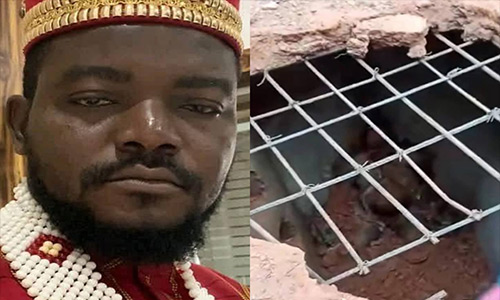


Farmklan is a digital crowd-funding platform that empowers small scale farmers with quality inputs, access to mechanization and premium market, quality training in best farm practices for improved productivity and livelihood. The startup company is less than a year in the agro-business industry in Nigeria yet it is already gaining traction and recording successes and attention across the globe. The Chief Executive Officer of Farmklan, Felix Nyikwagh had a chat with IMPACT NEWS on agriculture industry development in Nigeria and what Farmklan has for the industry. Excerpts;
Why did you choose agric-investment and not other subsectors within the agriculture value chain?
The food and agriculture industry is quite big with a lot of areas needing attention. One cannot cover all of the aspects. There is no one company that does all. There are opportunities here and there, so having looked at the entire spectrum, we find it better to situate ourselves in one space then as we gain traction we will explore others. At the moment Farmklan operates within the digital spaces where we earnest investments from subscribers. We know that a lot of people have disposable income especially the middle income earners and the low income earners. Some keep day time jobs and may not have time to go into agricbusinesss themselves. People have had bad experiences as well, they saved their money and send it to the village for families or friends to set up and manage farms for them. Most of the time it never works out, the few who try usually have bad story to tell. We looked at all of those dynamics and said, why not connect people who have some money to invest and do not know how to go about it with small holders farmers (who are at the base of the pyramid and lack financing opportunities, who do not have credit history to access funds from institutions like banks) and monitor them and at the end of the farming cycle the subscriber/investor takes a percentage of the profit with their principal returned to them, the small holder farmer who is on the field working also have something to smile. That is what we are doing, connecting the subscribers to the small holder farmers
So Farmklan is the link between the small holder farmers and investors?
Exactly. You just cannot trust the system until it is well structured to function. Before we onboard small holders farmers we would have done due diligence, run test on them, go through special levels of consultations before we are able to say these farmers have capability to absorb this level of input. We do not just give interventions to farmers more than their capacities can handle. If it is a hectare for each person in a cluster, we keep it at that. At the moment we are operating largely in Benue state which is our pilot state. As we gain traction, we will explore more states and more packages.
So Farmklan is focused more in Benue at the moment.
Aside Benue we also have a poultry farm in Bwari.
Are there off-takers for your farm produce?
One way of mitigating risk is having a sure market that will absorb what comes out of the farm. Even before we call people to invest, we would have sorted out all arrangement with those who will off-take produce at harvest. Usually we have prearranged buyers. We negotiate with them and how all of that will play out. All they are doing is that they are waiting for the produced to be ready and they buy it.
In Nigeria, insurance is a big deal especially with agric-business. How do you guarantee Return on Investments with the volatile and unpredictable turn of event?
We understand that production generally is risky. We have a competent team of professionals across all aspects of what we do. Those on the fields know their work thoroughly; combined experience of all members of the team is a rich blend. That also counts a great deal in managing farm operations and we continually review performance to ensure that everyone perform as they ought to in line with our set goals. That is a huge way of ensuring that everything goes as planned. To speak more on risk management, we have a partnership with an insurance company in guarantying that in worst case scenario, the investors gets back their capital.
We do not envisage that those things can happen carelessly. We take all measures that they do not occur, but if they do occur, we have in place risk mitigation systems where the investors will always get back what is due to them.
Do you think Nigeria is maximizing the economic potential in the agriculture sector?
If you look at the history of Nigeria’s economy, from the colonial era to this moment, at a point Nigeria was looked upon among other nations in West Africa as being one of the pillars in terms of wealth creation. There were lots of exports of agriculture products to other countries. Talk of the groundnut pyramids in the north, cocoa in the south and all of that. There were heavy investments by different government. Even after independence there was still a lot of efforts by military governments at different times. But then government at any given dispensation has priorities. Nigeria has not been fortunate to have good leadership either with democracy or military administration. In almost all encounters we have had with these different forms of government, there has been different policy thrust, different ways of looking at the economy. At a point it became obvious to the managers of nation’s commonwealth that oil was just the thing. Oil was looked upon as the darling sector. Government deployed it focus and resources into it.
Well, no one is denying the fact that oil contributes a whole lot to the GDP of the country we also know that all of that is coming because agriculture has been largely ignored. We know that there is lot of post-harvest losses in Nigeria. In Benue for instance, a lot of tomatoes and pepper get destroyed year in year out. A lot of orange plantations are in Benue but we do not have one single orang processing plant in Benue state. Every day you see lorries either leaving Benue to the east, north or to the Southwest to have those oranges processed and packaged. Some get spoilt on the way, sometimes they pluck those oranges from the plantations but there will be no truck to take them to those places where they will be processed.
The efforts of government in diversifying to non-oil sector appears commendable, somewhat looks sincere but the implementation drive sometimes does not come through. There is a collaboration drive between the Central Bank and the Ministry of Agriculture and Rural Development. They set up Nigeria Incentive-Based Risk Sharing System for Agricultural Lending (NIRSAL) which is also intervening well to some extent but there is still a whole lot to be done. The opportunities are enormous. Government is doing a lot but beyond government there have to be a lot of collaboration in the private sector. It is not what government all can shoulder, but to create an enabling environment that will increase private sector activities and partnerships between government and private sector actors.
What kind of partnership?
Bureaucratic bottlenecks, you want to set up a factory, importation of Agricultural equipment; I know government has relaxed import duties on agro-equipment but there have to be a more conscious efforts by government to really support the sector, come up with grants for the youths, rebrand the sector, make it more attractive to the youths because people have always seen agriculture as being peopled by the illiterates, and the poor, aging class. If in the same manner the youths are interested in working in the petroleum industry, the banking sector, if agricultural sector wears that kind of look it will increase the number of entrants into the industry and more productive persons would come out. Immediately they are tackling the issue and solution like what is happening in the digital agric space now, people are bringing in interventions. There is a lot of activities but there has to be increased effort by government to drive down some of the policies that have come up to implement those things and have real impact on people.
Food is life. It is not enough for Nigeria to produce food and export to other countries. How much of food produced in the country can be processed. We do not need to send cocoa to the UK or to the US to be processed. Can’t we send chocolates to these places in processed manner? Can’t we process stuff here and send to other countries? Why do we have to send them produce and they will processed and send back to us. The dream is to see cocoa produced in Ogun state to be in the shopping malls in Dubai and in London.
What is the impact of technology in today’s Agric-business?
Technology is presupposes advancement in systems and processes. It helps in a whole lot in saving man-hours. Where ordinarily a famer will spend hours in tiling the soil, there are simple equipment out there, small tractors that need less fuel and less technical skills to handle. There are technologies now available for small holder farmers that are at the base of the pyramid. Once you have technology that cuts across different players in the industry where you are not just serving the big farmers, where you are not just serving the middle farmers but the small farmers who can afford these technologies. Now that there is increased activities we now have people fabricating these things locally and increasing drive for more persons to participate in the agric space, you now have new technologies replacing the old system.
Technology is easing the work process, the value chain and making it more attractive for new persons to come into the industry.
When you have increased activities and more tech-solutions coming in there will be more youth participation like we are currently experiencing in Nigeria. From 2010 to now, government may have made much noise than active work but more still need to be done.
What are the current focuses of Farmklan in the agriculture value chain in Nigeria?
At the moment we are into production. We have on boarded three portfolios, piggery, rice plantation and poultry. We find the right market for them so they can produce, make more money than they have been making before and have betters standard of living. For the subscribers, we also make returns to them. As professionals we de-risk entry into the space by managing it well and making returns when due. As we gain traction we may begin to explore other areas. We are currently connecting investors to farmers, connecting farm produce to processors. It is a whole web and we are involved in the entire space.
Since conception of Farmklan, what has been the experience?
The journey so far has been exciting for us. We started from just having an idea into now not just making revenue but making impact. The joy is not in the numbers in terms of money made but in the impact created in productivity. Once we have more quality food available it gives us joy. We were registered on the 2nd of January 2020. We are still in our first year yet we have gained impressive traction.
Within the period we have been able to structure our company. We have been able to look at different ways to create more impact in the sector. We have received support from Agriclab Incubation programme courtesy of Ventures Platform, supported by the Embassy of Northern Ireland. We went into the incubation programme for four months learnt a whole lot from inventors, big players that have been able to reshape our approach to doing business. We are not just creating a business that will last a short while but a business that will have impact far beyond Nigeria. We are driving towards having a food secure environment for a prosperous continent.
The journey for us have been exiting, we have had time that we have to rejig our selling proposition, looked at different areas of getting better. We are looking at getting into the market and taking the best shot the first time.
We acknowledge that we have other players who operate within our niche. We are open to learning and we have leant a great deal. We are improving our systems, we are getting our tech in place, we are getting production system on point and giving confidence to the investors.
We were considered for World Bank study of SMEs in Nigeria on regulatory compliance framework within the same year we have been selected to be among the 30 most inspiring digital innovation across the world. It tells us that we are doing a whole lot. Some partners are also coming and indicating interest to collaborate with us. The farmers we are working with are happy, the testimonies we get from them encourage us that we are doing great work and it can only get better as the day rolls by.
Where do you see Farmklan in 2030?
Our vision is to create a world that is food secure and prosperous. Bring more quality food available to everyone. In 2030 we envisage Farmklan that have aggregated well over a hundred thousand small holders farmers. Farmklan that would have moved small holders farmers into becoming large producers. That is where we are heading towards. Where there will be increased productivity, better livelihood for everyone where Farmklan will take a centre state in the agric sector and explore more opportunities.