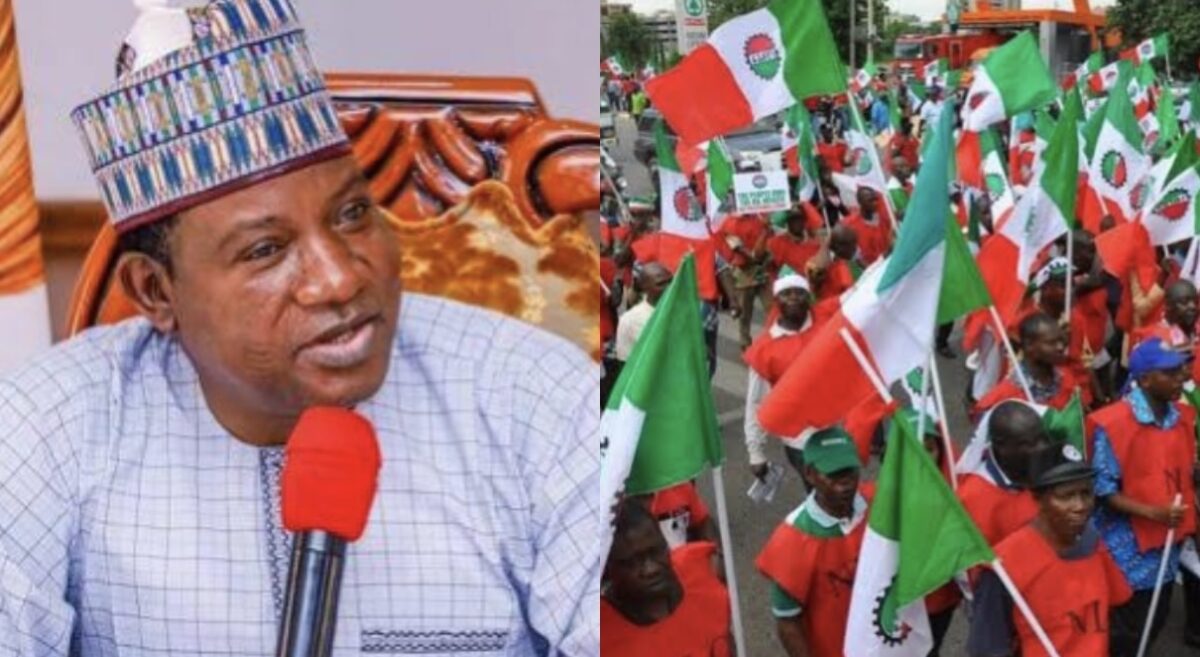
The Minister of Housing and Urban Development, Ahmed Dangiwa, at a meeting with Cement and Building Materials Manufacturers on Tuesday, has threatened that the federal government may allow massive importation of bags of cement into the country if price of product is not brought down.
The threat is coming a day after the Nigerian government and major cement manufacturers in the country agreed to bring down the price of the product across the country.
At a separate meeting on Monday, major cement manufacturers in Nigeria – Dangote, BUA and Lafarge – agreed that the price of a bag of cement will not exceed between N7,000 and N8,000.
The resolution was reached following a meeting between the Minister of Works, David Umahi, the Minister of Industry, Trade and Investment, Doris Uzoka-Anite as well as representatives of BUA Cement, Dangote Cement, Lafarge and Cement Producers Association on Monday.
The price of a bag of cement, used for construction across Nigeria, has increased to about N13,000 in many parts of the country amidst a cost-of-living crisis that has led to spikes in the prices of goods and services across the country.
While Nigerians wait to see if Monday’s agreement with the cement manufacturers will be implemented, the government on Tuesday warned that it might open the borders for cement importation if manufacturers of the product fail to bring down the prices.
Mr Dangiwa expressed concerns that in the past couple of months, the country had witnessed an alarming increase in the prices of cement and other building materials.
“Clearly, this is a crisis for housing delivery. An increase in essential building materials means an increase in the prices of houses,” the minister said.
“We are not the only country facing these challenges, many countries are facing the same type of challenges that we’re facing, some even worse than that.
“But, as patriotic citizens, we have to rally round the country when there is crisis, to ensure that we do our best to save the situation,” he said.
Dangiwa said the cement manufacturers are enjoying the benefits of government policies.
“The government stopped importation of cement in other to empower you to produce more and sell cheaper,” he said.
“Otherwise the government can open the borders for mass importation of cement, the price will crash, but you will have no business to do.”
He said the reasons given by cement manufacturers for the price increase – the high cost of gas and manufacturing equipment – were not enough for such astronomical pricing.
While cement manufacturers can control the prices they sell the product, wholesalers and retailers often, arguably based on their operational costs, sell at prices of their choosing.
Dangiwa, however, said the government wants the manufacturers to compel the wholesalers and retailers to sell at fixed prices.
He expressed his displeasure at the position of the Cement Manufacturer Association of Nigeria (CEMAN) that the association “does not interfere with the pricing of cement.”
He said the association should not just fold its arms when things were going wrong.
“One person cannot be selling at N3500 per bag and another selling at N7000 per bag and you cannot call them to order,” he said.
“The association is expected to monitor price control, otherwise the association has no need to exist.”