By Olatunbosun Obafemi
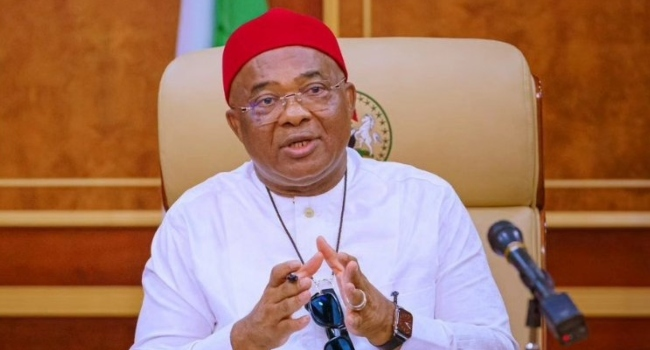
Imo State Governor, Hope Uzodimma, has approved a significant increase in workers’ wages, raising the state minimum wage for civil servants from N76,000 to N104,000. The announcement was made on Tuesday night during a meeting with leaders of various labour unions at the Government House, Owerri.
The governor also announced upward adjustments in other sectors. The minimum wage for doctors rose from N215,000 to N503,000, while lecturers in tertiary institutions will now earn at least N222,000, up from N119,000. Other categories of workers are also to benefit from the wage review.
Mr. Uzodimma said the decision was born out of the need to cushion the economic hardship being faced by Imo citizens, many of whom have had to endure insecurity, the COVID-19 pandemic, subsidy removal, and wage disputes in recent years.
“There is no way any government will do well if it doesn’t have a friendly and cordial relationship with organised labour,” he told the gathering. “When workers are paid well, productivity rises, families are happier, and the local economy grows. This is our way of investing in Imo people.”
He stressed that the wage increase was possible because of improvements in the state’s finances. According to him, Imo’s Internally Generated Revenue (IGR) has grown from about N400 million in 2020 to over N3 billion monthly, while federal allocations have risen from between N5 billion and N7 billion to about N14 billion.
The governor also disclosed that the state’s debt profile had been reduced from over N280 billion in 2020 to less than N100 billion, attributing the progress to financial discipline and reforms.
“When I assumed office, the major infrastructure in all sectors had collapsed. We had to expend resources to rebuild, particularly on roads and security. Despite the challenges, we have been able to reposition the state financially,” he said.
Mr. Uzodimma acknowledged that the removal of fuel subsidy by President Bola Tinubu had increased the cost of living but argued that the long-term benefits were beginning to materialise. He said the challenge before government now was to ensure that the positive effects of the policy reached ordinary citizens.
“It is a thing of joy that we have started seeing the dividends of that bold decision to remove fuel subsidy,” the governor explained. “What government is confronted with now is how to ensure the dividends trickle down to the common man on the street. Every responsible government must be transparent about how these reforms benefit the people.”
He further announced that beginning August 27, the state would commence payment of the last batch of gratuities owed to pensioners, amounting to N16 billion.
In the health sector, he said his administration had introduced an insurance scheme and equipped hospitals to ensure citizens receive what he described as “world-class treatment.” Imo has also keyed into the federal government’s plan to establish 1,000 businesses in every active electoral ward.
The governor urged labour unions to maintain unity and foster good relations with government, warning workers against redundancy and unethical practices. “We have done our part. Now, we need value addition from our workers,” he added.
Responding, the state chairperson of the Nigeria Labour Congress (NLC), Uchechigemezu Nwigwe, hailed the wage increase as a landmark achievement. He described the development as a “victory for the entire workforce in the state,” adding that Mr. Uzodimma had rescued workers from the grip of economic hardship and elevated Imo among the highest-paying states in Nigeria.
With the wage increment, many observers believe the government has set a new standard for worker welfare in the country, though the sustainability of the policy will likely depend on continued fiscal discipline and the growth of the state’s revenue base.