By Olatubosun Obafemi
When I read the recent World Bank report estimating that 139 million Nigerians are living in poverty, I didn’t need a statistician to tell me it’s true – I live it every day. While the government may dismiss the figure as “unrealistic” or “out of context,” anyone walking through the streets of Lagos, Kano, Enugu, or any part of Nigeria knows that poverty is not a theory. It is the face of our reality – visible in the hungry child hawking sachet water at traffic lights, in the family skipping meals to afford transport fares, and in the graduate roaming the streets in search of jobs that no longer exist.
For me, the report only puts a number to what we already know: Nigeria is bleeding economically, and bad leadership has kept that wound open for decades. Whether it is 139 million or 100 million, the truth is that a majority of Nigerians are struggling to survive in a country blessed with immense natural and human resources.
The government’s attempt to downplay the World Bank’s findings by questioning the methodology misses the point. Poverty is not a debate; it is an experience. We don’t need to convert $2.15 into naira to know that people can’t afford decent food, healthcare, or housing. When an average worker earning ₦70,000 a month spends over half of it on transport and the rest on food that keeps rising daily, what kind of living standard is that?
As a Nigerian, I have watched successive governments make promises to lift millions out of poverty, yet the numbers keep increasing. Our leaders speak of reforms – subsidy removal, exchange rate unification, and fiscal adjustments – but these policies often push the poor deeper into hardship. Prices of food, rent, and fuel have tripled, while wages remain stagnant. What we call “economic reform” feels more like economic punishment for ordinary people.
I understand that reforms take time, but the question remains: who bears the pain while we wait for progress? Those in power talk about “shared sacrifice,” but it is the poor who are always asked to sacrifice the most – their comfort, dignity, and sometimes even their lives. Meanwhile, the political class continues to live in luxury, untouched by the inflation and insecurity that have become our daily companions.
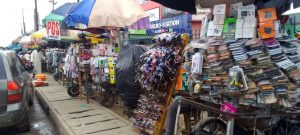
Walking through a typical Nigerian market today, you will see the evidence of poverty everywhere. Traders complain of poor sales; mothers beg for discounts on garri and rice; Keke Drivers buy fuel in small bottles because even a litre has become a luxury. The hardship is not imagined – it is lived.
The World Bank’s figure, whether exact or estimated, reflects the failure of governance – the result of decades of corruption, waste, and misplaced priorities. How can we claim to be the “giant of Africa” when over half of our population can’t afford basic necessities? How can leaders argue statistics when citizens are slipping deeper into despair?
Instead of disputing global poverty measurements, the Presidency should focus on tangible solutions – reviving industries, supporting agriculture, investing in education, and making healthcare affordable. The government talks about social intervention programmes like TraderMoni, N-Power, and conditional cash transfers. While these efforts are commendable, they often fail to reach those who need them most. Many beneficiaries are selected through political connections, leaving millions behind.
True poverty alleviation cannot be achieved through handouts or token reliefs. It requires bold investment in jobs, productivity, and human capital. When people can work, earn fairly, and live decently, poverty statistics will naturally fall. Until then, dismissing data won’t change the suffering on the streets.
As a Nigerian who experiences these daily struggles, I believe the conversation should move beyond defending numbers to defending lives. The government should see this report as a wake-up call – a mirror reflecting how far we’ve drifted from the promise of shared prosperity. We can’t continue to pride ourselves on reforms that look good on paper but translate into hunger for the people.
The World Bank may have presented a bleak picture, but the real tragedy would be for our leaders to ignore it. Poverty is not just an economic issue; it is a moral failure of leadership. Until governance becomes people-centered – until policies translate into food on the table, jobs for the youth, and hope for families – Nigeria will remain rich in potential but poor in reality.
For those of us living the consequences, poverty is not a statistic. It is the story of our lives – one we hope our leaders will finally start rewriting with sincerity, empathy, and justice.