

The life-imprisonment sentence handed down to Nnamdi Kanu, leader of the Indigenous People of Biafra (IPOB), has once again forced Nigeria to confront a persistent and uncomfortable truth: the country appears to operate two contrasting legal interpretations of terrorism – one for the South and another for the North.
While the federal government maintains that terrorism is condemned uniformly, the lived reality of judicial outcomes, political reactions, and prosecutorial enthusiasm suggests otherwise. Kanu’s sentence has become the most emblematic symbol of this disparity, revealing not just legal inconsistency but a deeper structural imbalance in how Nigeria defines threats to national security.
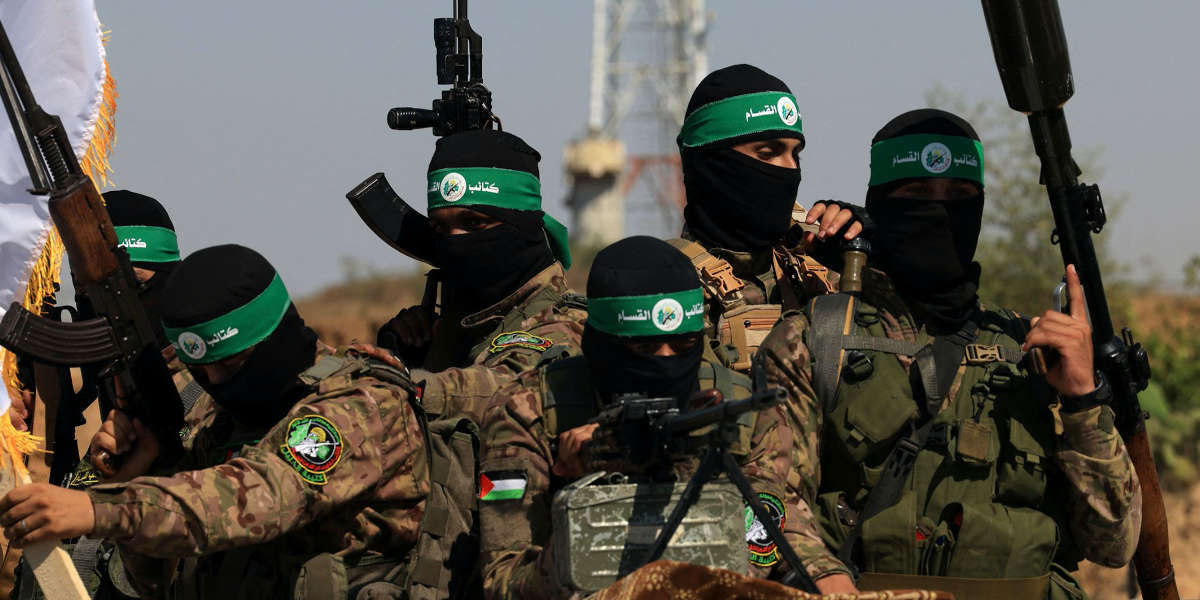
For more than a decade, Nigeria has been ravaged by violent extremism in the North – first Boko Haram, then ISWAP, and now sprawling networks of rural bandits wreaking havoc across Borno, Zamfara, Katsina, Kaduna, Sokoto, Niger, and Kebbi. These groups have massacred villagers, abducted hundreds of schoolchildren, imposed levies on citizens, razed entire communities, and displaced millions. Yet in case after case, their apprehended members often receive surprisingly lenient prosecutorial treatment. Many suspects languish uncharged for years; others vanish into opaque “deradicalisation” programmes; and still others are quietly released back into society because they are deemed “repentant” or “low-risk.”
Now juxtapose this with the relentless and aggressive legal pursuit directed at Nnamdi Kanu. His rhetoric, broadcasts, and the activities of IPOB undoubtedly contributed to instability in the South-East. But the speed and intensity with which the state moved – across borders, through extraordinary rendition, culminating in a life sentence – stands in glaring contrast to the hesitant, negotiated, and often indulgent approach taken toward Northern terror groups whose violence has been exponentially more devastating. It is this contrast that fuels the widespread perception that Nigeria operates two definitions of terrorism: one uncompromising, punitive, and politically charged in the South; another cautious, negotiable, and often indulgent in the North.
But the discrepancy becomes even more apparent when placed beside the case of Sunday Adeyemo, popularly known as Sunday Igboho, the Yoruba self-determination activist who, like Kanu, agitated for a breakaway republic. Igboho’s home was raided by the DSS, he was declared wanted, and allegations of terrorism were floated. Yet after his arrest in Benin Republic, the Nigerian government suddenly lost its prosecutorial zeal. No extraordinary rendition, no dramatic extradition campaign, no feverish political outcry. Today, Igboho is a free man -speaking, traveling, and continuing his activism. Two separatists, both from the South – one is crushed with the full weight of the state; the other is quietly allowed to walk free. What explains this selective intensity?
The disparity is not merely in outcomes but in the very architecture of state response. In the North, political figures and traditional rulers frequently advocate “dialogue” and “amnesty” for insurgents and bandits. Some state governments have negotiated directly with them, paid ransoms, or offered material incentives. The language used is soft, even sympathetic: “misguided youths,” “non-state actors,” “bandits.” The word “terrorist” itself was withheld for years despite overwhelming evidence.
In the South, the vocabulary shifts dramatically. Separatist tendencies are instantly framed as “terrorism,” “insurrection,” or “threat to constitutional order.” IPOB is banned. Military raids are routine. No governor calls its members “misguided youths.” No amnesty committees. No deradicalisation centres. No negotiating tables. Only the full, unforgiving force of the state.
Critics argue that this undermines the principle of equal citizenship. If terrorism is defined by the harm inflicted on civilians, then surely the mass slaughter, mass abductions, and large-scale destruction perpetrated by Northern violent groups warrant harsher and more decisive legal action than separatist rhetoric or sit-at-home orders. Yet in reality, insurgents who have murdered entire villages are quietly “rehabilitated,” while a separatist leader faces life behind bars. This inversion of justice deepens public distrust and widens Nigeria’s already fragile regional fault lines.
Government supporters claim Kanu’s case is unique because it involves secession – a threat to the sovereignty of the state. They argue that insurgents in the North may be violent but do not seek to break up the country. But this argument collapses under scrutiny. The law defines terrorism based on violence against civilians, not the political aspirations behind it. And if secession itself is the ultimate crime, then Sunday Igboho should be the second man serving a life term. Instead, he is free.
Kanu’s sentence is therefore not just a legal decision – it is a political statement, one that inadvertently exposes the uneven, inconsistent, and regionally biased manner in which Nigeria enforces its anti-terrorism laws. Until all perpetrators of violence – regardless of geography, ethnicity, or ideology – face the same legal consequences, claims that the law is neutral will continue to ring hollow.