By Nchetachi Chukwuajah with Agency Report
The Federal Government has fixed December 2028 as the deadline for the final transition from analogue to digital television broadcasting, targeting 40 million households nationwide with 100 free-to-air channels.
The Director General of the National Broadcasting Commission (NBC), Charles Ebuebu, disclosed this in an interview with the News Agency of Nigeria (NAN) in Abuja on Tuesday, July 14.
Ebuebu said the December 2028 deadline marked the final analogue switch-off, adding that the switchover would take place in phases.
“We put a timeline for analogue switch-off. Before that time, a lot of things will be put in place. This is just phase one,” he said.
Ebuebu said subsequent phases would cover pay television services, studio development, and designated production centres for content creators.
He said audience measurement was also progressing, with a proof of concept completed in about 7,000 homes in Lagos, while implementation had commenced in Abuja.
According to him, the commission will make the phases public after consultations with key stakeholders, including the Broadcasting Organisation of Nigeria, to secure their buy-in.
The NBC boss said the analogue switch-off would free up valuable spectrum for other uses, describing it as a strategic national asset.
Ebuebu said the spectrum would be professionally valued before allocation to users such as telecommunications, application, and financial services companies.
“I won’t put a sum to it, but it is valued at upwards of about $50 billion. Consultants will determine its actual value before allocation,” he said.
Ebuebu said the commission was developing a policy based on expert input and international best practices with regard to obsolete broadcasting equipment.
He said the Digital Switch Over White Paper required broadcasters to separate content production from transmission, with transmission handled by signal distributors such as NIGCOMSAT.
According to him, obsolete analogue equipment may be repurposed where possible, while the government will be approached to absorb unusable assets to prevent environmental hazards arising from industrial waste.
On the reach of the project, the NBC boss said the renewed Digital Switch Over (DSO) project is targeting at least 40 million television households with up to 100 free-to-air channels nationwide.
Ebuebu said the renewed Digital Switch Over strategy had replaced the previous terrestrial transmission model, which achieved limited nationwide coverage.
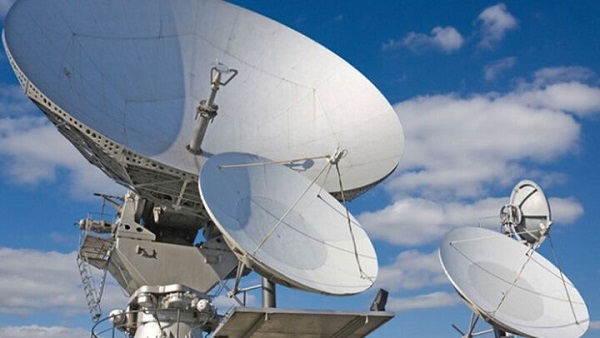
He said the satellite-based platform would provide wider coverage and significantly increase access to free television services across the country.
“We are gunning for 40 million TV households. Count 40 million homes at a minimum. That’s what we’re targeting,” he said.
According to him, the satellite platform will provide up to 100 free-to-air television channels across the country.
Ebuebu said the previous terrestrial model was launched in eight states by the last administration, and the platform carried between 24 and 28 channels, depending on the location.
“The previous DSO plan combined terrestrial broadcasting for 75 percent to 80 percent nationwide coverage with satellite services for areas where terrain, such as mountains, blocked terrestrial signals.
“After launching in eight states, it became clear that terrestrial broadcasting had covered less than a quarter of Nigeria, revealing major infrastructure and coverage limitations.
“Achieving nationwide terrestrial coverage would require about 160 transmission towers, costly imported equipment, and more than three years to complete, prompting a change in the DSO implementation strategy.
“We, therefore, decided to go by satellite, which covers Nigeria completely from day one,” he said.
Ebuebu said the renewed project already transmits more than 73 channels nationwide and targets 100 channels in the coming months.
He explained that the NBC remains the broadcasting regulator, while Nigerian Communications Satellite Limited provides satellite and ground services for the DSO.
“We are the regulator of broadcast media in Nigeria, whether radio, TV, online and all of that. NIGCOMSAT, on the other hand, is providing satellite services and ground services for the DSO.
“They are using their satellite capacity, which covers not just Nigeria but the whole of sub-Saharan Africa, to provide carriage for the DSO,” he said.
Ebuebu said viewers can now watch channels from every part of Nigeria regardless of their location.