


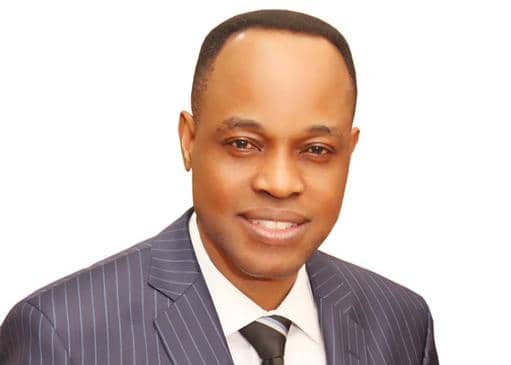
By Odesola JF., PhD
Every year, when thousands upon thousands of people gather for the Redeemed Christian Church of God (RCCG) Convention, there are inevitably voices on social media ready to explain the crowd away. Some critics dismiss the attendees as idle people, people with nothing better to do, or followers who have simply surrendered their minds to religious influence.
That description, however, does not tell the whole story.
In fact, it misses the reality of who actually gathers at the RCCG Convention.
The Convention crowd is made up of people from different walks of life—young and old, educated and less educated, rich and poor, professionals and artisans, business owners and employees, men and women, Nigerians and people from different parts of the world. They do not all come because they have nothing else to do. Many come precisely because they have plenty to do, but they have decided that God deserves a place in their lives.
That distinction matters.
These Are People With Real Lives and Real Responsibilities
Take a moment to look beyond the size of the crowd and consider the individuals within it.
Among those attending are captains of industry, managing directors of multinational companies, bankers, senior executives, lawyers, doctors, engineers, academics, entrepreneurs, civil servants, investors, professionals, artisans and people running small and large businesses.
These are people with board meetings to attend, companies to manage, employees to supervise, businesses to build, families to care for and difficult decisions to make.
A managing director does not suddenly become idle because he attends a Christian Convention.
A banker does not abandon intelligence because she chooses to pray.
An entrepreneur does not become unsuccessful because he spends days seeking God.
A professor does not lose his academic credentials because he kneels in worship.
A young professional does not become lazy because he believes that spiritual strength is important to his future.
If anything, their willingness to make time for God demonstrates that they recognize something many societies have forgotten: success is not only about what a person can achieve with his hands; it is also about what gives meaning and direction to those achievements.
Pastor Adeboye’s Message Has Always Been About Blessing
At the centre of much of the RCCG’s massive gathering is Pastor Enoch Adejare Adeboye, a man whose ministry has become one of the most recognizable Christian stories to emerge from Africa.
Enoch Adejare Adeboye has consistently presented the gospel as an invitation to know God, live responsibly and experience the transforming power of faith.
His message is not reserved for the rich.
It is not reserved for the poor.
It is not reserved for university graduates.
It is not reserved for those without formal education.
It is not reserved for business executives.
The beauty of the gospel is that everybody can come.
The wealthy person can come and seek God.
The struggling person can come and seek God.
The professor can come.
The mechanic can come.
The banker can come.
The farmer can come.
The student can come.
The widow can come.
The entrepreneur can come.
The unemployed can come.
That is one of the remarkable features of the Christian faith: at the foot of the cross, social status does not determine spiritual worth.
Why Should Anyone Be Ashamed of Seeking God?
There is something curious about the way religious commitment is sometimes treated in public conversations.
If thousands of people gather for a football match, it is called passion.
If thousands gather for a music concert, it is called entertainment.
If thousands gather for a political rally, it is called civic participation.
But when thousands gather to pray, worship and listen to the Word of God, some people suddenly begin asking whether they are idle or have been manipulated.
Why?
People are entitled to question religious institutions. They are entitled to disagree with pastors, doctrines and practices. Healthy criticism is part of a free society.
But criticism should not require us to insult ordinary people who are exercising their faith.
A person who chooses to spend part of his holiday seeking God is not automatically foolish.
A mother who leaves her comfortable home to attend a prayer gathering is not necessarily brainwashed.
A successful businessman who joins thousands of believers in worship has not necessarily lost his sense of judgment.
Human beings are more complex than social media labels.
The Extraordinary Story of Pastor Adeboye
Whether one is a member of RCCG or not, it is difficult to deny the scale of what has happened through Pastor Adeboye’s life and ministry.
His story encompasses extraordinary longevity, institutional growth, global reach and influence across generations.
From Nigeria to different parts of Africa and beyond, the RCCG has developed an international presence that has made the ministry impossible to ignore.
One does not have to agree with everything Pastor Adeboye says or represents to acknowledge the historical significance of his journey.
That is an important distinction.
Recognition is not the same as worship.
Respect is not the same as agreement.
Acknowledging achievement is not surrendering one’s critical thinking.
Imagine a person who does not enjoy a particular football club but still acknowledges that the club has produced exceptional players and achieved remarkable things. That recognition does not make the person a supporter.
In the same way, someone can disagree with aspects of Pastor Adeboye’s theology or ministry and still recognize the extraordinary dimensions of his influence.
A Phenomenon of Grace
There are careers that last a few years.
There are organizations that become popular for a season and disappear.
There are public figures whose influence rises quickly and fades just as quickly.
Then there are people whose lives become part of the history of their generation.
Pastor Adeboye belongs to the latter category.
His story is, in many respects, a phenomenon of grace.
The journey from an academic background into full-time Christian ministry, followed by decades of leadership and the expansion of a global Christian movement, is not an ordinary story.
It is a story of calling, discipline, sacrifice, perseverance and, from the perspective of his faith, divine grace.
History will not easily overlook it.
Look at the Person Beside You
Perhaps the best way to understand the Convention crowd is not to look at the statistics but at the individual sitting beside you.
The man raising his hands during worship may be a chief executive who spent the previous week negotiating a multimillion-naira business deal.
The woman praying beside you may be a senior banker carrying enormous professional responsibilities.
The young man singing passionately may be an entrepreneur building his first company.
The elderly woman may have spent her entire life trusting God through hardship.
The student may be praying for direction concerning his future.
The pastor may be praying for wisdom to care for thousands of people.
They are not all the same.
They have different stories, different struggles, different dreams and different reasons for coming.
But they have one thing in common: they are seeking God.
And perhaps that is the simplest explanation of all.
Let Us Disagree Without Dehumanising People
Social media has made it remarkably easy to reduce millions of people to a stereotype.
But behind every photograph of a Convention crowd are human beings.
They have mortgages, school fees, businesses, marriages, disappointments, hopes, fears, unanswered prayers and testimonies.
They laugh.
They cry.
They struggle.
They succeed.
They fail.
They begin again.
And sometimes, when life becomes too complicated for human strength alone, they come together to pray.
There is nothing inherently foolish about that.
Critics can disagree with RCCG. They can question its methods, doctrines or leadership. But dismissing millions of sincere worshippers as idle minds is neither fair nor intellectually convincing.
The better question is not, “Why are all these people gathering?”
Perhaps the better question is, “What are they finding there that keeps bringing them back?”
For many, the answer is simple: hope, fellowship, worship, direction, encouragement and faith in God.
That is why the Convention crowd cannot simply be dismissed.
They are not merely a crowd.
They are teachers, traders, executives, students, parents, professionals, entrepreneurs, farmers, artisans, retirees and leaders.
They are people with responsibilities.
They are people with dreams.
They are people with stories.
And above all, they are people seeking God.
Whatever one’s opinion of Pastor Adeboye may be, greatness of such magnitude deserves honest recognition. His life and ministry represent a remarkable chapter in contemporary African Christianity.
Pastor Adeboye is, indeed, a phenomenon of grace—and his story is one that history will not easily overlook.