


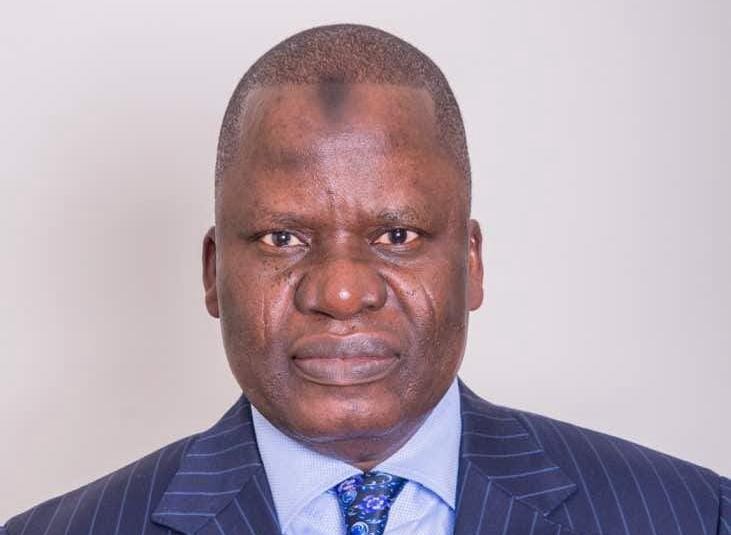
By Suleyman A. Ndanusa, PhD, OON
This conversation did not begin with the present management of the Central Bank of Nigeria. It arose largely from the balance sheet and governance experience of the preceding dispensation under Governor Godwin Emefiele.
During that period, the CBN moved well beyond the familiar boundaries of central banking. It became deeply involved in development finance interventions, direct lending to selected sectors, extensive foreign exchange management, multiple exchange rate arrangements and substantial financing of the Federal Government through Ways and Means advances. The Bank was no longer merely setting the price of money; it was increasingly deciding where money should go, who should receive it and, in some cases, which parts of the economy deserved preferential support.
Some of these interventions were introduced in response to genuine economic emergencies. Nigeria faced recession, oil price shocks, foreign exchange shortages, the COVID-19 pandemic and serious production constraints. It would therefore be unfair to pretend that every intervention was unnecessary or that none produced benefits.
The problem was not simply that the CBN acted. The deeper questions concerned the scale of its activities, the accumulation of risks, the blurring of monetary and fiscal responsibilities, the adequacy of governance controls and the completeness and timeliness of public disclosure.
By the end of that era, the CBN balance sheet carried the footprints of extensive intervention loans, large Ways and Means advances, foreign exchange swaps and forward commitments, liquidity injections and other quasi fiscal operations. The delayed publication of audited financial statements further limited the ability of citizens, markets and oversight institutions to understand the Bank’s financial condition as those exposures accumulated.
The experience taught Nigeria an important lesson that central bank governance cannot be assessed only through interest rate announcements, exchange rate movements and carefully worded communiqués. The balance sheet must also be watched. It is often where policy decisions eventually report for duty even when public explanations arrive late.
This historical context is important for another reason. It would be unfair to attribute every loss, settlement or balance sheet weakness recorded in 2023 and 2024 to the present CBN management. A new management team does not inherit only the offices, official vehicles and portraits of former governors. It also inherits outstanding contracts, earlier policy commitments, unsettled obligations and the consequences of past decisions.
Some of the heavy costs now appearing in the accounts may therefore represent the price of recognising, settling or unwinding exposures created during the preceding dispensation. Cleaning an untidy room is expensive, but the cleaning bill should not automatically be blamed on the person holding the broom.
The present management deserves recognition for beginning to restore orthodox monetary policy, reducing intervention lending, restraining direct monetary financing, settling foreign exchange obligations and rebuilding net reserves. These are important improvements and should be acknowledged fairly.
But fairness to the present leadership does not require silence about the remaining disclosure gaps. Indeed, the best way to separate inherited problems from current decisions is through complete, timely and clearly explained financial reporting. Where the accounts identify the origin, movement and settlement of major exposures, the public can distinguish yesterday’s commitments from today’s policies.
That is why scrutiny of the CBN balance sheet should not be mistaken for an attack on the institution or its present management. It is one of the safeguards required to protect both. Proper disclosure can show what was inherited, what has been corrected, what remains outstanding and what new risks if any are being created.
The lesson from the previous dispensation is therefore not that the CBN should become timid. It is that extensive powers require strong governance, clear boundaries and transparent accounts. The greater the discretion exercised by a central bank, the stronger the obligation to explain how that discretion affected its balance sheet and the wider economy.
The Central Bank of Nigeria supervises banks, prescribes reporting standards, demands regular returns and sanctions institutions that fail to comply. That is exactly what a responsible regulator should do.
But it raises a fair question of who ensures that the regulator itself meets the high standards it sets for everyone else?
This is not an argument for weakening the CBN. Quite the opposite. A strong central bank needs public confidence, and public confidence grows when its accounts are complete, timely and clearly explained. The institution that asks commercial banks to open their books should keep its own windows reasonably clear.
Why should the ordinary Nigerian care about the CBN balance sheet? Most people do not wake up in the morning asking about foreign assets, derivative contracts or Open Market Operations. They are more concerned about the price of rice, the cost of transport, the interest on a business loan and what the naira can buy.
Yet these everyday concerns are connected to the CBN balance sheet. It tells us how money entered the economy, how much was lent to government, what happened to foreign reserves, how liquidity was created and what the Bank later paid to withdraw it. The balance sheet may look like an accountant’s territory, but its consequences eventually arrive in everybody’s kitchen.
Garreth Rule’s Bank of England paper, Understanding the Central Bank Balance Sheet, describes the balance sheet as an important guide to what a central bank is doing and how effectively it is achieving its objectives.
Nigeria’s case is especially interesting because the CBN has historically worn many hats. It has been monetary authority, banker to government, manager of foreign reserves, lender of last resort, development financier and occasional economic fire brigade. When one institution wears too many hats, its balance sheet eventually begins to resemble a crowded wardrobe.
The CBN’s published figures show that its total assets increased from approximately ₦87.9 trillion in 2023 to ₦117.6 trillion in 2024. That is an increase of about ₦29.7 trillion, or 33.8 per cent.
It sounds impressive. But a central bank’s balance sheet cannot be judged merely by its size. An elephant is larger than a horse, but that does not make it faster.
The real question is: what caused the increase?
External reserves recorded on the balance sheet rose from approximately ₦29.97 trillion in 2023 to ₦54.72 trillion in 2024. The increase of ₦24.75 trillion accounted for about 83 per cent of the entire growth in the balance sheet.
However, the country’s gross reserves measured in dollars did not rise by 82.6 per cent. They increased from approximately $33.22 billion at the end of 2023 to $40.19 billion at the end of 2024 about 21 per cent.
Why the large difference?
Part of it came from the weaker naira. When foreign assets are translated into naira at a much higher exchange rate, their naira value rises dramatically.
Suppose the CBN holds one dollar. At an exchange rate of ₦900, that dollar is worth ₦900 in the accounts. If the exchange rate moves to ₦1,400, the same dollar is now recorded as ₦1,400. The balance sheet has gained ₦500, but the vault has not gained another dollar.
This does not mean the improvement was imaginary. It means we must separate three things: new dollars accumulated, foreign obligations reduced, and accounting gains resulting from the weaker naira. If we mix them together, we may end up congratulating the thermometer for the rise in temperature.
The more encouraging development is the reported improvement in Nigeria’s net foreign exchange reserves.
Gross reserves are the headline figure. Net reserves are what remain after accounting for short-term foreign currency obligations, including swaps and forward commitments. They tell us more about the amount that is genuinely available to defend the naira and meet external payments.
Nigeria’s net reserves reportedly declined from $14.59 billion in 2021 to $8.19 billion in 2022 and only $3.99 billion in 2023. They then recovered strongly to $23.11 billion at the end of 2024.
That deserves commendation. It suggests that the present CBN leadership has reduced substantial short-term FX obligations and improved the quality of the country’s external buffer. This is more meaningful than simply reporting that foreign assets are now worth more naira.
But the good news should be accompanied by fuller disclosure. The public should be able to see a straightforward calculation of gross reserves, less swaps, less outstanding forward contracts, less other short term foreign obligations, equals net usable reserves.
The reported direction is encouraging. The road connecting the figures should now be properly signposted.
The liability side of the balance sheet tells another important story.
Total deposits increased from approximately ₦38.18 trillion in 2023 to ₦52.38 trillion in 2024. Currency in circulation rose from ₦3.65 trillion to ₦5.44 trillion. CBN instruments issued increased from about ₦17.40 trillion to ₦24.27 trillion.
Together, these three categories increased by approximately ₦22.86 trillion about 77 per cent of the total expansion of the balance sheet.
In plain language, substantial liquidity entered the financial system, and the CBN had to take steps to prevent too much of it from pushing prices and the exchange rate further out of control.
The Bank uses Open Market Operations, commonly called OMO, for this purpose. It issues interest bearing securities and collects money from banks and investors. This reduces the amount of money immediately available for lending and spending.
The CBN reportedly issued about ₦11.8 trillion in OMO bills in 2024, compared with approximately ₦630 billion in 2023. The cost of liquidity management was also reported at about ₦3 trillion.
The process can be compared to mopping a floor while somebody is still pouring water from the other side of the room. The cleaner may be hardworking, but the water supply deserves attention.
This is why fiscal and monetary policy must be properly coordinated. If government operations inject large amounts of money into the economy while the CBN pays heavily to withdraw it, the public sector is pressing the accelerator and the brake at the same time. The vehicle may remain on the road, but the fuel bill will be impressive.
There are, however, positive developments.
Net loans and receivables at Bank level reportedly declined from approximately ₦16.12 trillion in 2023 to ₦11.98 trillion in 2024 a reduction of about ₦4.15 trillion. The CBN also reportedly recovered about ₦253 billion from beneficiaries of earlier intervention programmes.
The retreat from extensive development finance activities should be welcomed. A central bank cannot effectively fight inflation while simultaneously operating as an agricultural lender, industrial financier, development bank and emergency budget office.
Returning the CBN to its central responsibilities price stability, monetary stability, reserve management and financial-system soundness is not economic abandonment. It is institutional discipline.
The treatment of Ways and Means advances nevertheless requires careful explanation.
Ways and Means are temporary advances by the CBN to the Federal Government to address short term revenue shortages. Over time, these advances grew far beyond what many Nigerians would understand as temporary.
Approximately ₦22.7 trillion of the advances was eventually converted into longer term government securities. This is known as securitisation.
Securitisation changed the legal and accounting form of the debt. It did not automatically remove the money previously injected into the economy. The government still owes the obligation, and the CBN still holds the asset.
The furniture was rearranged. It did not necessarily leave the room.
This is why the CBN balance sheet must be read together with the Federal Government’s balance sheet. An asset belonging to the CBN is often a liability owed by the government. Interest income earned by the Bank may be interest expenditure paid by the Treasury. Nigeria cannot become richer merely because one public institution gives another public institution an IOU.
Currency in circulation also rose sharply from ₦3.65 trillion to ₦5.44 trillion, an increase of approximately 49 per cent.
Some of this may reflect inflation, higher nominal transactions, restoration of cash availability following the currency redesign difficulties, and the importance of cash in Nigeria’s informal economy.
It should not automatically be called reckless money creation. The public demands cash, and the central bank must normally meet legitimate demand. But an increase of this size should be compared with economic growth, inflation, digital payments and the amount of cash being held outside the banking system.
It may tell us something about informality, confidence in electronic channels and the lingering memory of cash scarcity. Nigerians are forgiving people, but their wallets sometimes remember longer than official communiqués.
The financial results present another difficulty. Some reports describe the CBN as having returned to profit, while others show a loss at the consolidated Group level.
Both may be referring to different reporting entities.
The CBN’s separate accounts may produce one result, while the consolidated accounts which include subsidiaries produce another. Therefore, saying that “the CBN made a profit” is incomplete unless we identify which accounts are being discussed.
We must also distinguish ordinary operating income from revaluation gains. A weaker naira can increase the reported naira value of foreign assets and create an accounting gain without producing new foreign currency.
A central bank is not established mainly to make a profit. It may record a loss while successfully protecting financial stability. It may also report a profit because exchange rate movements increased the accounting value of its assets. Profit matters, but it is not the principal test of monetary-policy success.
Of greater concern is the reported decline in consolidated equity from approximately ₦2.01 trillion in 2023 to ₦1.01 trillion in 2024, even as total assets increased substantially.
A central bank is not the same as a commercial bank and does not face identical capital rules. It can continue operating even with weak accounting capital because it issues the national currency. But persistent financial weakness can reduce policy flexibility, create dependence on government support and ultimately place pressure on the Bank’s operational independence.
The reported losses on settled derivative contracts also deserve closer attention. These reportedly increased from approximately ₦6.3 trillion in 2023 to ₦13.9 trillion in 2024.
A derivative is simply a financial contract whose value depends on another variable, such as an exchange rate. Central banks may use swaps and forward contracts to manage foreign exchange markets or provide foreign currency.
The public needs to know what contracts produced these losses, when they were entered into, what objectives they served and whether corresponding assets or gains appeared elsewhere in the accounts.
If these costs arose from settling inherited FX commitments, that context should be stated clearly. Cleaning an untidy room is commendable, but the household still deserves to know what caused the mess and how much the cleaning cost.
This brings us to the major issue: the completeness of the CBN’s financial reporting.
The CBN website provides full consolidated and separate financial statements up to 2022. For 2024, the document publicly listed is a summary statement containing comparative figures for 2023. A separate full 2023 audited statement is not listed in the same archive.
The summary contains useful headline numbers, but it does not give the public all the detailed notes needed to examine reserves, derivatives, intervention loans, government exposures, maturity dates, possible losses and the precise composition of major assets and liabilities.
This does not prove wrongdoing. But it prevents the public from independently confirming that every material matter has been adequately explained.
There is a difference between publishing figures and achieving transparency. A restaurant may publish the total amount of soup prepared. The customer may still wish to know what entered the pot.
The standard expected of the CBN should not be lower because it is a regulator. It should be higher precisely because it is a regulator.
If a commercial bank submitted incomplete returns, delayed its audited accounts or failed to explain material exposures, it would probably receive a letter from the CBN and the letter might not begin with “Dear Esteemed Partner.”
The CBN should willingly observe the same spirit of timeliness, completeness and accountability that it demands from institutions under its supervision. Regulatory credibility begins with regulatory example.
The IMF’s Central Bank Transparency Code offers a useful international benchmark. It encourages central banks to publish audited financial statements, explain the composition and risks of foreign reserves, report the results of monetary operations, and clearly disclose financial transactions with government.
The Bank of England publishes weekly information covering more than 90 per cent of its balance sheet, consolidated data quarterly, and detailed annual reports and accounts. Nigeria does not have to copy another country mechanically. But we should understand where international practice is heading.
The next phase of CBN reform should therefore be disclosure reform.
The Bank should publish its complete audited consolidated and separate financial statements, with all accompanying notes, within a clear and preannounced timetable. Any delay should be publicly explained.
It should provide a simple reconciliation from gross foreign reserves to net usable reserves. It should disclose the broad volume, maturity and risk profile of outstanding swaps, forwards and other material commitments.
Government exposures, intervention loans, liquidity support and OMO liabilities should be presented separately. The accounts should distinguish operating income from realised gains, unrealised revaluation gains and monetary policy costs.
The respective results of the CBN and its consolidated Group should be clearly identified. Quasi-fiscal operations activities that resemble government spending but are conducted through the central bank should be disclosed, properly costed and gradually returned to the budget where they belong.
Governance reporting should also be strengthened. The responsibilities of the Board, management, Audit Committee, internal audit and external auditors should be clearly explained. Material audit concerns and the steps taken to correct them should be disclosed without compromising genuinely confidential operations.
Most importantly, Nigeria should invite an assessment under the IMF Central Bank Transparency Code and publish both the findings and a time bound implementation plan.
That would not amount to surrendering sovereignty or admitting failure. It would show confidence. Only an institution willing to examine itself can convincingly demand examination of others.
The public must also raise its expectations. Parliament, professional bodies, economists, civil society, the media and the financial community should stop treating the CBN accounts as a private discussion among accountants.
The balance sheet affects inflation, interest rates, exchange rates, public debt, business credit and employment. It eventually affects the market woman, the pensioner, the manufacturer, the banker and the young graduate searching for work.
The improvements should be acknowledged. Net reserves have recovered. Short term FX obligations appear to have been reduced. Intervention lending is being wound down. Direct monetary financing is being restrained. These are important steps towards restoring monetary discipline and credibility.
But reform cannot stop at better numbers. It must include better disclosure.
Independence and accountability are not enemies. Independence without accountability can become discretion. Accountability without operational independence can become interference. A credible central bank requires both.
The final recommendation is therefore simple.
The CBN should publish fully, explain plainly, reconcile consistently and submit itself confidently to independent scrutiny. It should align its reporting, governance and transparency practices with the IMF Central Bank Transparency Code and the practices of leading central banks.
The regulator must not merely enforce the standard.
It must become the standard.
Suleyman A. Ndanusa, PhD, OON, is an economist, lawyer, strategic studies scholar, and public policy thinker and practitioner with extensive experience in financial markets, regulation, governance, national Security and development.