


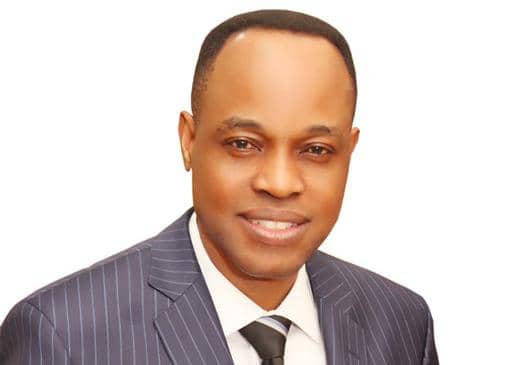
By Odesola JF., PhD
There is nothing wrong with asking questions.
There is nothing wrong with asking the church whether it can do more for society.
There is nothing wrong with asking pastors and Christian institutions to examine their impact beyond the walls of their sanctuaries.
In fact, the church should not be afraid of honest questions.
But there is also a danger in asking legitimate questions from an incomplete premise.
That is why I read the recent intervention by Ejike Ifeanyi with mixed feelings.
He asks: if millions of Nigerians can be mobilised in churches every Sunday to give financially, why can those same millions not be mobilised into productive economic structures?
He asks where the big Christian industries are.
Where are the manufacturing companies?
Where are the technology hubs?
Where are the pharmaceutical plants?
Where are the agricultural processing industries?
Where are the massive vocational training institutions?
He asks whether, after decades of preaching, conferences, prayers, offerings and tithes, Nigerians should not be seeing more measurable transformation.
These are legitimate questions that lacked depth.
But before we rush to answer them, I would like to ask another question:
Why are we asking the church questions that should first be directed to the government?
What Is the Government’s Responsibility?
The church is a spiritual institution.
Government is a political and administrative institution.
They have overlapping responsibilities toward society, but they are not the same institution.
If millions of Nigerians pay taxes, the first question should be: what has government done with those taxes?
If millions of Nigerians vote, the question should be: what has government done with the mandate it received?
If governments collect revenue from oil, customs, VAT, corporate taxes, personal income taxes and other sources, Nigerians are entitled to ask what happened to those resources.
Where are the functional roads?
Where are the reliable electricity systems?
Where are the world-class public hospitals?
Where are the industries that should provide mass employment?
Where are the modern public technical colleges?
Where are the agricultural value chains?
Where is the environment in which manufacturing companies can flourish?
Where are the policies that make it easier for ordinary Nigerians to build sustainable businesses?
These questions are not attacks on government because someone may misunderstand what we are getting at.
They are legitimate questions of accountability.
And if we are going to demand that churches build factories employing tens of thousands of people, then surely we must first ask those constitutionally entrusted with governing Nigeria what they have done with the enormous resources placed under their management.
The church cannot become a substitute for government.
The Most Important Statistical Question Has Been Missed
There is another problem with the argument.
The millions of people who attend Nigerian churches are not merely church members sitting in pews waiting for their pastors to create businesses for them.
They are already participating in the Nigerian economy.
They are doctors.
Lawyers.
Engineers.
Farmers.
Teachers.
Bankers.
Architects.
Manufacturers.
Traders.
Software developers.
Contractors.
Transporters.
Civil servants.
Entrepreneurs.
Investors.
Importers and exporters.
Restaurant owners.
Hospital owners.
School proprietors.
Real-estate developers.
Pharmacists.
Technicians.
Artisans.
And yes, many are employers of labour.
So when someone says, “What has the church built?” we should ask a basic statistical question:
What percentage of the Nigerian business community is made up of Christians who are members of churches?
Where is the study measuring the economic contribution of church members as individuals?
Because this is where the argument becomes misleading.
A Christian businessman who employs 500 people does not cease to be an economic contributor because his business is not registered in the name of his church.
A Christian doctor who establishes a hospital has contributed to society.
A Christian entrepreneur who builds a technology company has contributed.
A Christian farmer who employs workers and processes agricultural products has contributed.
A Christian manufacturer who establishes a factory has contributed.
A Christian banker financing businesses has contributed.
A Christian professional who pays taxes and employs people has contributed.
And in many cases, these people were encouraged by their churches to work hard, acquire skills, become entrepreneurs, invest and create value.
You cannot remove the individual Christian from the economic equation simply because his business is not called “Christian Industry Limited.”
The Church Is Already in Many of the Places Being Requested
It is therefore important to examine the facts before concluding that the church has only been preaching and collecting offerings.
Take education.
The Redeemer’s University, owned by the Redeemed Christian Church of God, is a major example of a faith-based institution operating at tertiary level. The university hosts the Institute of Genomics and Global Health, formerly the World Bank-supported African Centre of Excellence for Genomics of Infectious Diseases, and it has recorded significant performance in national and international university assessments.
Then there is the Redeemer’s College of Technology and Management, established to provide technical, vocational, entrepreneurial and industry-oriented education. Its programmes include engineering, environmental science, management, science and technology.
Is this not precisely the kind of technical and vocational development being demanded?
It may not be enough.
It may need to grow.
It may need to become bigger.
It may need stronger industry partnerships.
But it exists.
That distinction matters.
What About Healthcare?
The same question applies to healthcare.
Faith-based organisations have historically played significant roles in Nigerian healthcare.
The Christian medical tradition in Nigeria is not new.
Churches have established hospitals, maternity centres, clinics, medical outreaches and health programmes.
And this is not simply a matter of religious propaganda. Recent academic research examining church contributions in Lagos and Ogun found that respondents identified churches as significant sources of educational support, healthcare interventions and empowerment programmes.
The RCCG itself has continued to invest in healthcare through Redeemer’s Health Village.
Recently, the facility performed its first robotic-assisted surgery, demonstrating that a Nigerian faith-based institution can participate in advanced medical technology rather than merely conducting basic medical outreach.
Again, one can reasonably argue that more should be done.
But it is inaccurate to suggest that nothing is being done.
Economic Empowerment Is Also Happening
The same applies to entrepreneurship and skills acquisition.
Research on Pentecostal economic empowerment in Nigeria has documented church-based interventions involving skill acquisition, vocational training and start-up support in agricultural, technological and service sectors.
Another study specifically examining RCCG’s socio-economic impact reported that members participating in major church festivals identified opportunities for business connections and business ideas.
This is important because sometimes transformation is not always found in a church-owned factory.
Sometimes it is found in a church member who received encouragement, training, capital or an opportunity and subsequently established a business.
Sometimes the church’s economic contribution is indirect.
A young person learns a skill.
A graduate gets a scholarship.
A widow receives capital.
A young entrepreneur receives mentorship.
A professional is encouraged to establish a business.
A farmer receives assistance.
A member connects with another member and obtains a contract.
A business grows because thousands of believers patronise one another.
That economic ecosystem is real.
But Should the Church Do More?
Yes.
Absolutely.
I have no difficulty saying that.
The church should constantly ask itself:
Can we do more?
Can we train more young people?
Can we support more entrepreneurs?
Can we establish more technical institutions?
Can we promote ethical business?
Can we create stronger business networks among members?
Can we support innovation?
Can we invest more in research?
Can we partner with universities?
Can we establish venture funds with appropriate governance?
Can we support agricultural value chains?
Can we encourage Christian professionals to collaborate across denominational lines?
Yes.
There is always room for improvement.
But there is a difference between saying “the church can do more” and saying “the church has done nothing.”
The first is constructive.
The second is simply unfair.
The Question About Tithes and Offerings Needs More Nuance
The writer also connects millions of people giving tithes and offerings with the possibility of establishing industries.
But church offerings are not automatically a national development fund.
Christians give for various purposes: worship, evangelism, missions, pastoral work, welfare, administration, humanitarian assistance, education, infrastructure and other legitimate religious purposes.
Furthermore, not every Christian belongs to the same church.
There is no single Nigerian “Christian treasury.”
The Catholic Church is not the Anglican Church.
The Anglican Church is not RCCG.
RCCG is not MFM.
MFM is not Baptist.
Baptist is not Methodist.
And none of these institutions controls the personal finances of every Christian who attends them.
Therefore, the argument that “millions give money to church, therefore the church should establish a mega-manufacturing conglomerate” requires much more economic and institutional analysis.
And Then There Is Martin Luther King Jr.
The reference to Martin Luther King Jr. is useful—but it should be understood properly.
Dr. King demonstrated that Christian faith can inspire social action.
He helped establish and lead the Southern Christian Leadership Conference, which coordinated nonviolent civil-rights campaigns. The SCLC worked on citizenship education, desegregation, voting rights and later economic inequality, including the Poor People’s Campaign.
That is a powerful lesson.
But there is another lesson.
King’s movement operated within a particular historical, political and constitutional context.
The SCLC was specifically formed as a civil-rights organisation to coordinate campaigns against racial segregation and disenfranchisement.
So we should learn from King without pretending that Nigeria’s churches must reproduce the exact institutional structure of the American civil-rights movement.
The broader principle, however, is valuable:
Faith should have consequences in society.
I agree completely.
But those consequences can take many forms.
“Who Will Fix Nigeria?”
There was also a statement attributed to a pastor saying he would not vote again until things improve.
That deserves serious reflection.
If citizens withdraw from civic participation, who will improve the system?
If Christians refuse to vote, who will vote?
If Christians refuse to participate in public life, who will make decisions that affect their children?
If good people withdraw completely from politics, can they complain when governance does not reflect their values?
This is why I have consistently believed that Christians should not stay aloof from politics.
But again, political responsibility is not the responsibility of pastors alone.
Citizens must participate.
Christians must participate.
Professionals must participate.
Young people must participate.
Women must participate.
And government officials must be held accountable.
Revival Must Produce Results—but Not Every Result Belongs to the Church
I agree with one important point in the original argument:
We should desire a Christianity that produces transformed lives.
But let us define transformation properly.
If a drunkard becomes sober, that is transformation.
If a violent man becomes a responsible husband, that is transformation.
If a young person who would have become a criminal becomes an engineer, that is transformation.
If an unemployed graduate becomes an entrepreneur, that is transformation.
If a corrupt official repents, that is transformation.
If a business owner refuses to exploit workers because of Christian conviction, that is transformation.
If a Christian politician refuses to steal public money, that is transformation.
If a doctor treats the poor with dignity, that is transformation.
If a successful businessman employs 1,000 people fairly, that is transformation.
The church does not have to own the factory for Christianity to have influenced the factory.
We Should Ask Better Questions
Therefore, perhaps the better question is not:
“Why hasn’t the church built everything?”
A better question is:
“How can the church, government, business community, universities and civil society work together to build the Nigeria we desire?”
That is a much more productive conversation.
Let government govern well.
Let churches fulfil their spiritual and social responsibilities.
Let businesses create wealth.
Let universities produce knowledge.
Let entrepreneurs innovate.
Let citizens participate.
Let professionals contribute expertise.
Let philanthropists invest.
Let churches encourage their members to become employers rather than perpetual dependants.
Let Christians enter politics with integrity.
Let pastors preach salvation and responsible citizenship.
Let science and faith work without unnecessary hostility.
Let prayer and productivity walk together.
Nigeria Does Not Need a War Between Faith and Development
The choice is not between prayer and factories.
It is not between revival and technology.
It is not between preaching and manufacturing.
It is not between evangelism and entrepreneurship.
Nigeria needs all of them.
We need churches that pray.
We need governments that govern.
We need businesses that produce.
We need universities that research.
We need industries that manufacture.
We need farmers who produce.
We need engineers who build.
We need scientists who innovate.
We need politicians who serve.
And we need citizens who take responsibility.
So, to Ejike Ifeanyi, I would say this respectfully that with facts:
Keep asking questions.
The church should not be afraid of scrutiny.
But please, ask the complete question with much depth.
Do not look only at what the church owns.
Look at what millions of Christians are doing across the Nigerian economy.
Do not count only church-owned factories.
Count Christian-owned businesses.
Do not count only church hospitals.
Count Christian doctors and medical professionals serving Nigerians.
Do not count only church schools.
Count the Christian teachers, professors and educationists educating the next generation.
Do not count only church technology companies.
Count the Christian software developers, engineers and entrepreneurs building Nigeria’s digital economy.
And above all, do not ask the church to carry the entire burden of a responsibility that belongs to the entire society.
The church must do its part.
Christians must do their part.
Businesses must do their part.
Citizens must do their part.
And, above all, government must do the job for which government exists.
We can challenge the church.
We can challenge pastors.
We can challenge Christian institutions.
But let us also challenge government with the same courage.
Let us demand accountability from those entrusted with public resources.
Let us demand good governance.
Let us demand functional infrastructure.
Let us demand security.
Let us demand reliable power.
Let us demand policies that allow businesses to thrive.
Let us demand an environment where factories can operate profitably and employ thousands.
Because ultimately, the church was never designed to replace the Nigerian state.
It was designed to transform people.
And transformed people—Christians included—should then go into society and transform their professions, businesses, communities, institutions and nation.
That, perhaps, is the real conversation we should be having.
Nigeria does not need less Christianity.
It needs Christianity that produces responsible citizens, honest leaders, excellent professionals, courageous entrepreneurs, compassionate employers, innovative scientists and people whose faith is visible not only in what they say on Sunday but in what they do from Monday to Saturday.
So yes, let us ask the church:
“What more can you do?”
But let us also ask government:
“What have you done with the authority and resources entrusted to you?”
And let us ask ourselves:
“What am I personally doing to build Nigeria?”
That is a harder question.
But perhaps it is the question that will take us further.
You can pray for Nigeria and build Nigeria.
You can preach Christ and create jobs.
You can worship God and become an inventor.
You can give to the church and invest in the economy.
You can believe in miracles and still believe in engineering.
You can seek revival and pursue excellence.
The answer is not either/or.
Nigeria needs both faith and action.
And the church, like every other institution in Nigeria, should always be willing to ask itself how it can do more.
But when we ask that question, let us do so with facts, fairness, proper statistics and intellectual honesty – not assumptions.
Because sometimes, before we ask what the church has failed to build, we should look around more carefully at what its people have already built.