

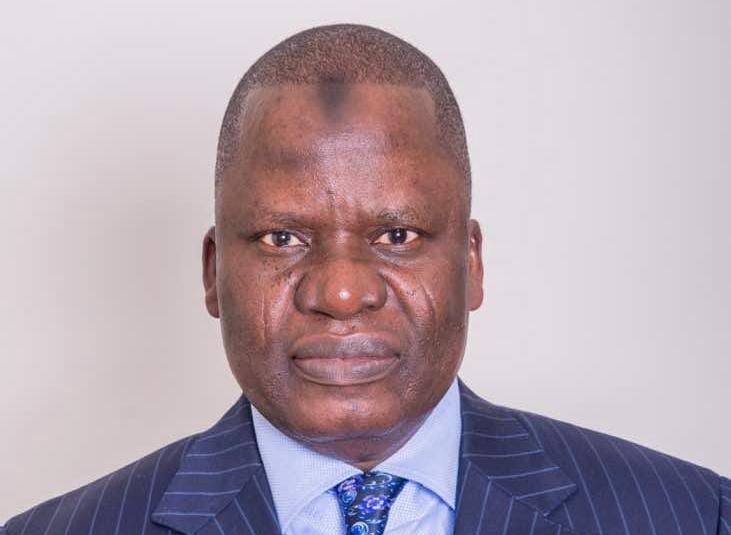
By Suleyman A. Ndanusa PhD OON
I have chosen to review Prof. Uche Uwaleke’s article, “Rebuilding Public Trust in Government Borrowing: The Case for Scaling Up Sukuk Financing in Nigeria,” alongside Vanguard’s report by Johnbosco Agbakwuru, “$21.7bn External Borrowing Plan Is Investment, Not Debt – Oyedele.” The two pieces approach a question at the heart of Nigeria’s development debate. How can the country finance its urgent needs while protecting fiscal sustainability and restoring public confidence in government borrowing?
Prof. Uwaleke makes the case for a greater role for Sukuk in financing infrastructure. Because Sukuk can be structured around identifiable assets and projects, he argues, it offers a way to make the purpose and use of borrowed funds more visible. He recommends expanding domestic issuances, considering international Sukuk and strengthening accountability through project specific disclosures, ring fenced accounts, independent audits and regular public reports.
The Vanguard report presents Finance Minister Taiwo Oyedele’s defence of the proposed $21.7 billion external financing plan. The Minister describes it as a multi-year investment programme for infrastructure and other development priorities, arguing that the assets created and economic benefits generated could exceed the cost of financing. He also clarifies that the entire amount has not yet been borrowed and may not all be drawn. The report distinguishes concessional financing from development partners from the plan’s commercial component.
The Minister’s emphasis on the purpose of borrowing is well placed. A country with substantial infrastructure needs cannot expect to finance every worthwhile project from current revenue. Borrowing can help build roads, power systems, schools and hospitals whose benefits extend well beyond the year in which the money is raised. When projects are carefully selected and competently delivered, they can support growth, improve public services and expand economic opportunity.
Yet calling a borrowing plan an investment does not make the liability disappear. If funds are borrowed, the government assumes an obligation to repay them, whether or not they are used to create productive assets. The investment case rests on whether projects are well chosen, completed on time and within budget, and yield benefits commensurate with their full financing and operating costs. Some projects may generate broad social and economic returns without producing a direct revenue stream from which to repay a loan. Government must therefore explain not only what a project is expected to achieve, but also how its financing obligations will be met.
The distinction the Minister draws between a financing plan and money already borrowed is equally important. A request for approval does not mean that every proposed facility has been contracted, disbursed or spent. Nor does approval necessarily mean that the full amount will be drawn. Public discussion should distinguish the proposed borrowing ceiling from the sums eventually approved, contracted, disbursed and translated into completed projects. Each stage has different implications for public debt and the budget.
This is where Prof. Uwaleke’s argument for Sukuk merits serious consideration. Nigeria has experience with sovereign Sukuk issuances directed towards road projects, offering a practical basis for examining whether the instrument could play a larger role in infrastructure financing. Its project linked structure may help bring the intended use of funds into sharper view. But that advantage should not be mistaken for a guarantee of transparency or value for money. Naming an asset or project in an issuance document does not, by itself, ensure that funds are properly disbursed, procurement is sound or construction meets the required standard.
The safeguards Prof. Uwaleke proposes are therefore essential to his case. For each issuance, the public should be able to see which projects are being financed, where they are located, what they are expected to cost, who is responsible for delivery and when they are due for completion. Disbursements should be linked to verified expenditure. Independent technical reviews and regular public reporting should show not only how much has been spent, but what has been built and whether it meets agreed standards. Delays, cost increases and changes in project scope should also be disclosed. These practices would serve the public interest whether the financing comes through Sukuk or conventional borrowing.
The two pieces together make a strong case for comparing financing options project by project. Such a comparison should consider the full cost of financing, including fees and structuring expenses; the repayment and grace periods; the currency of the obligation; any security or asset requirements; and the conditions attached to each facility. It should also assess whether a project’s ownership, revenue profile and delivery arrangements are suited to a Sukuk structure.
International Sukuk could broaden Nigeria’s investor base, but issuing in dollars or euros would not remove foreign exchange risk. The government would still owe repayment in the currency borrowed, while much of the economic activity and revenue generated by domestic projects would be in naira. This risk applies to conventional foreign currency borrowing too. The relevant question is not which label is more attractive, but which financing structure offers the best overall terms for the project and can be managed responsibly over time.
The distinction between concessional and commercial financing also deserves close attention. These facilities may differ considerably in price, maturity, conditions and flexibility. Concessional loans may offer lower rates and longer repayment periods, while commercial facilities may carry different costs and risks. A facility-by-facility account of the proposed plan would allow lawmakers and the public to assess those differences and understand how each loan relates to the project it is meant to finance.
Prof. Uwaleke is right to place public confidence at the centre of the debate. Confidence will depend, in part, on whether borrowing is followed by visible results and whether citizens can trace the path from approval to expenditure to completed project. His discussion would be stronger, however, if the debt service to revenue figure specified the period covered, the definition of revenue used and the source of the calculation. It would also help to distinguish clearly between total domestic public debt and Federal Government domestic debt when presenting the figures.
The article’s account of the Fiscal Responsibility Act should likewise be made more precise. Section 41, as amended by the Finance Act 2021, sets out the borrowing framework. Section 44 specifies conditions that include stating the purpose of borrowing, providing a cost benefit analysis, obtaining prior authorization and applying the proceeds to long-term capital expenditure. Raising funds through Sukuk does not remove the obligation to meet these statutory requirements; nor does compliance alone guarantee that a project will be well executed.
The National Assembly, in considering the proposed financing plan, should therefore look beyond the headline amount. It should have clear information on the projects to be financed, the facilities proposed for each, the total cost and repayment profile, the expected disbursement timetable and the arrangements for monitoring delivery. It should also consider how each facility fits within Nigeria’s broader debt strategy and whether the expected public benefits justify the financial obligations being assumed.
Taken together, the two pieces invite a balanced conclusion. The Minister’s argument that borrowing can finance productive investment deserves to be tested against evidence about the projects and their expected returns. Prof. Uwaleke’s proposal to expand Sukuk deserves careful consideration, provided the instrument is compared fairly with other options and supported by strong, enforceable safeguards. The central issue is not simply how much government can borrow or which instrument it chooses, but whether the financing is affordable, the projects are sound, and the resulting benefits endure.
Nigeria’s borrowing strategy should ultimately be judged by what citizens can see and verify: the quality of the assets created, the value they add to the economy and the openness with which public money is managed. Every loan, whether raised through Sukuk or a conventional facility, should leave behind more than a repayment schedule. It should leave behind infrastructure and opportunity worthy of the obligations undertaken in the public’s name.
Suleyman A. Ndanusa, PhD, OON, is an economist, lawyer, strategic studies scholar, and public policy thinker and practitioner with extensive experience in financial markets, regulation, governance, national Security and development.