

From Colonial Masters to Self-Imposed Oppressors: The Tragedy of a Nation That Has Refused to Learn
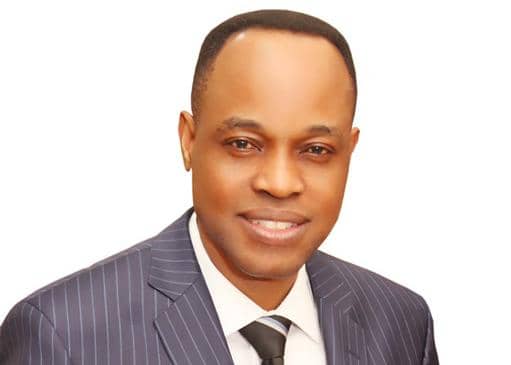
By Prof. Odesola JF
There comes a time when silence becomes complicity, patience becomes suffering, and the continued celebration of political mediocrity becomes an insult to the intelligence of an entire generation. I must confess that I am increasingly irritated by the kind of politics being practised in Nigeria. It is not necessarily because politics is dirty everywhere, but because Nigeria appears to have perfected a system in which deception is celebrated, selfishness is rewarded, incompetence is defended, and the suffering of ordinary citizens has become an acceptable price for the comfort of a privileged few.
One question continues to trouble my mind: When will Nigerians wake up from this political deception?
How long will a people continue to be deceived by the same political tricks, recycled promises, manufactured ethnic sentiments, religious manipulation and empty political propaganda? How long will we continue to applaud leaders who have consistently failed to provide the basic necessities of life while presenting themselves as indispensable national heroes?
What exactly are we practising in Nigeria? Is it democracy, or have we simply replaced foreign colonial masters with local oppressors?
1. We Have Replaced Foreign Colonialism with Internal Colonialism
Nigeria gained political independence from Britain in 1960. The expectation was that independence would give Nigerians the opportunity to determine their destiny, manage their resources and build a nation where every citizen could enjoy dignity, justice and equal opportunities.
Unfortunately, more than six decades after independence, one cannot escape the uncomfortable feeling that we have merely changed the identity of those exercising power.
The colonial masters may have departed, but the mentality of domination appears to have remained.
Today, we see a political class that increasingly behaves as though Nigeria belongs to them and the rest of the population exists merely to serve their interests. We see privileged individuals enjoying government privileges, travelling in expensive convoys, occupying luxurious residences and accessing opportunities that ordinary citizens can only dream about.
Meanwhile, the ordinary Nigerian struggles to pay school fees, afford healthcare, secure employment, buy food and provide decent accommodation for the family.
What is the difference between being oppressed by a foreign colonial authority and being oppressed by a privileged group of one’s own countrymen?
Independence should mean more than changing the people who occupy government offices. It should mean freedom from oppression, economic exploitation, injustice and institutionalised inequality.
A country cannot genuinely claim to be free when the majority of its citizens are trapped in poverty while a small political establishment continues to enjoy the benefits of collective national resources.
2. Our Democracy Has Become an Expensive Political Performance
Democracy is supposed to be government of the people, by the people and for the people. It should give citizens the opportunity to choose their leaders, hold them accountable and participate meaningfully in decisions affecting their lives.
But what kind of democracy are we practising when the people become important only during election periods?
During campaigns, politicians suddenly remember the villages, forgotten communities, neglected roads and abandoned schools. They visit traditional rulers, religious leaders, market women, young people and community associations. They distribute rice, money, wrappers and other temporary gifts.
They make promises that sound almost heavenly.
They promise employment, security, electricity, good roads, affordable education, functional hospitals and economic prosperity.
Yet, after elections, the people who were once treated like kings are often abandoned like strangers.
The politician who once entered a village on foot may suddenly become inaccessible. The man who begged for votes now requires several layers of protocol before an ordinary citizen can approach him.
Is this democracy?
Democracy should not be reduced to the ability to organise elections every four years. Elections are important, but they are not the ultimate measure of democratic success.
A government that wins an election but refuses to listen to the people, respect institutions, protect fundamental rights and provide accountable leadership has failed an important test of democracy.
The ballot should not be a four-year licence for political impunity.
3. The High Class Has Become Increasingly Comfortable with the Suffering of the Lower Class
One of the most disturbing features of Nigerian society is the widening gap between the privileged and the struggling majority.
There appears to be an increasing class division in which those who occupy positions of influence enjoy a different Nigeria from the one experienced by ordinary citizens.
For some Nigerians, electricity comes from alternative power sources. For others, darkness is a daily experience.
For some families, their children attend expensive schools abroad. For millions of others, parents struggle to pay modest school fees in public schools where facilities and teaching resources are inadequate.
Some people access quality medical treatment overseas, while ordinary citizens are left to navigate overcrowded hospitals and inadequate healthcare facilities.
This is not merely an economic problem; it is a moral problem.
There is something fundamentally wrong with a society in which the comfort of the privileged depends on their ability to insulate themselves from the suffering of everyone else.
A responsible political leader should be troubled when public schools are collapsing, even if his own children attend the best private institutions.
A responsible governor should be concerned about the condition of public hospitals, even if he can afford treatment in London, Dubai or America.
A responsible public servant should be concerned about the quality of roads used by ordinary citizens, even if government vehicles and security escorts make his own journeys comfortable.
Leadership is not simply about enjoying privileges. It is about carrying the burden of responsibility for others.
4. Our Political Elites Must Stop Confusing Privilege with Intelligence
Another unfortunate development is the emergence of an elite class that appears to believe that wealth, political connections, foreign exposure and educational qualifications automatically translate into wisdom and competence.
They speak sophisticated English, occupy important offices, attend international conferences and associate with influential personalities. Yet, when confronted with the basic challenges of governance, their performance often raises serious questions.
What is the value of an educated political elite that cannot provide practical solutions to the problems of its people?
Education should produce enlightened minds, responsible citizens and problem-solvers. It should develop the capacity to think critically, understand society and create opportunities for others.
Unfortunately, some of our so-called elites have become defenders of a system that benefits them, regardless of its consequences for the larger population.
They defend political failures because they have personal connections with those in power. They justify questionable decisions because their interests are protected. They criticise one government while excusing similar failures under another, depending on which political party they support.
This is not intellectual leadership. It is political opportunism.
A truly enlightened elite should be the conscience of society, not the public relations department of political failure.
5. What Is the Value of Travelling Abroad Without Learning Anything?
I am particularly concerned about the frequent foreign travels undertaken by some Nigerian political leaders.
There is absolutely nothing wrong with international travel. In fact, international exposure is important for national development. Leaders should visit countries that have made progress in education, healthcare, transportation, agriculture, technology, urban planning and public administration.
However, the real question is: What do our leaders learn from these journeys, and how much of that knowledge is translated into national development?
When a Nigerian delegation visits Singapore, what practical lessons are brought home about disciplined public administration, urban development and efficient governance?
When leaders travel to Japan, do they study the country’s remarkable approach to infrastructure, technological innovation, education and institutional discipline?
When they visit Rwanda, do they examine the country’s experience with public-sector efficiency, urban cleanliness, national reconstruction and development planning?
When they visit the United Kingdom, do they study the National Health Service, parliamentary accountability, local government administration and the importance of strong public institutions?
When they visit the United Arab Emirates, do they examine long-term planning, infrastructure development, investment promotion and the deliberate building of internationally competitive cities?
Or are these journeys simply opportunities for photographs, luxury accommodation, official allowances and impressive social media announcements?
Foreign travel should have measurable outcomes.
If a governor travels to a country to study waste management, Nigerians should eventually see improvements in waste collection and environmental management in his state.
If a minister visits a country to study vocational education, there should be evidence of improved technical training and employment opportunities at home.
If a delegation visits countries with efficient public transportation, the lessons should influence transport policy and infrastructure development.
Otherwise, such journeys become expensive exercises in international tourism at public expense.
A leader who travels abroad repeatedly but refuses to learn, adapt and implement good practices is wasting not only public money but also an opportunity to improve the lives of millions.
International exposure without domestic transformation is expensive sightseeing.
6. We Have Turned Politics into a Battle of Personalities Rather Than Ideas
One of Nigeria’s greatest political weaknesses is our inability to separate public policy from personal loyalty.
Instead of examining what a political party intends to achieve, we sometimes become more interested in who belongs to the party.
Instead of asking whether a policy is working, we ask whether the person implementing it is from our preferred political camp.
If our preferred politician makes a mistake, we defend him. If an opposing politician introduces a good policy, we dismiss it.
This attitude has damaged our political judgement.
Consider the ordinary citizen who supports a politician because they share the same ethnic background, religious affiliation or geographical identity. That citizen may continue defending the politician even when insecurity increases, roads deteriorate, public services collapse and economic opportunities disappear.
At what point do we begin to ask questions?
A politician is not a family member whose mistakes must be defended unconditionally. A political party is not a religious denomination whose leadership must never be questioned.
Political leaders are public servants. Their loyalty should be to the Constitution, the country and the people.
We must develop a political culture in which good policies are supported regardless of who introduces them, while bad policies are criticised regardless of who implements them.
Nigeria needs citizens who can think independently, not political followers who surrender their judgement at the altar of party loyalty.
7. The People Are Also Responsible for the Political Condition of the Nation
While it is easy to blame politicians, we must also have the courage to examine ourselves.
The Nigerian electorate cannot completely escape responsibility for the political environment we have created.
When citizens sell their votes for temporary financial benefits, they weaken their own democratic power.
When we accept money to vote for incompetent candidates, we mortgage our future and that of our children.
When we celebrate politicians who distribute food during campaigns but fail to provide functional schools, hospitals and roads, we encourage a political system that prioritises temporary gifts over sustainable development.
When we allow ethnic and religious sentiments to determine our political choices, we make it easier for politicians to manipulate our differences.
A bag of rice may provide temporary relief, but it cannot replace a functioning economy.
A small amount of money received during an election cannot compensate for four years of unemployment, insecurity, poor healthcare and rising living costs.
We must begin to understand that political decisions have consequences beyond election day.
The vote is not a commodity to be sold. It is a responsibility to be exercised with wisdom.
We cannot continue electing leaders based on sentiments and then complain about the consequences of their leadership.
8. Nigeria Needs Leaders Who Understand Service, Not Just Power
What Nigeria needs is not another generation of political celebrities. We need leaders who understand the meaning of public service.
Leadership should be measured by the quality of life of the people, not by the size of a leader’s convoy.
It should be measured by the number of children who receive quality education, the number of citizens who gain meaningful employment, the safety of our communities, the accessibility of healthcare and the opportunities available to ordinary Nigerians.
We need leaders who understand that government is a responsibility, not a personal inheritance.
We need governors who can walk into public schools without embarrassment, ministers who can visit public hospitals without fear of what they will discover, and legislators who can engage ordinary citizens without treating them as inferior.
We need political leaders who are willing to make sacrifices, reduce waste, strengthen institutions and build systems that will continue to function even after they leave office.
Above all, we need leaders who are not afraid of accountability.
A good leader does not surround himself with people who only tell him what he wants to hear. He surrounds himself with competent people who can challenge his assumptions, question his decisions and offer better alternatives.
The greatest evidence of leadership is not the number of people who praise you, but the number of lives that become better because you occupied a position of responsibility.
9. The Next Generation Must Refuse to Inherit Our Political Blindness
Perhaps the greatest tragedy would be for the younger generation to inherit the same political attitudes that have held Nigeria back for decades.
Young Nigerians deserve more than the opportunity to become campaign coordinators, social media defenders and political errand runners.
They deserve opportunities to participate in governance, contribute ideas, develop businesses, access quality education and compete fairly for public opportunities.
We cannot continue telling young people that they are the leaders of tomorrow while systematically excluding them from meaningful participation today.
They should not have to travel abroad to discover that good governance is possible.
They should not have to leave Nigeria to experience reliable electricity, functional public transportation, accessible healthcare and an efficient public service.
The country should become a place where talent is recognised, hard work is rewarded and opportunities are not reserved for those with political connections.
Our young people must also understand that leadership is not necessarily about occupying political office. It begins with responsible citizenship, integrity, community participation, intellectual development and the courage to challenge injustice.
The future of Nigeria will not be secured by changing political slogans. It will be secured by changing political values.
CONCLUSION: WHEN WILL NIGERIANS WAKE UP?
My irritation with Nigerian politics is not an expression of hatred for Nigeria. It is an expression of disappointment with what we have allowed our country to become.
I believe Nigeria has enormous potential. We have intelligent people, natural resources, entrepreneurial energy, cultural diversity, religious institutions, academic talent and a population capable of extraordinary achievements.
What we appear to lack is the consistency of responsible leadership, institutional discipline and a collective determination to put national interest above personal ambition.
We must stop confusing political survival with national progress.
We must stop celebrating political leaders simply because they belong to our ethnic group, religion, party or circle of influence.
We must stop defending incompetence because the person involved is our political favourite.
We must stop treating public resources as the personal property of those who temporarily occupy government offices.
And we must stop allowing a small privileged class to determine the destiny of an entire nation.
Nigeria does not need another set of colonial masters wearing Nigerian clothes. Nigeria needs genuine democratic leadership that respects the dignity, rights and aspirations of every citizen.
The question is no longer whether Nigeria has enough resources or enough intelligent people to develop. The more important question is whether we have the political courage to dismantle the selfish structures that keep the country underdeveloped.
When will we begin to demand accountability?
When will we stop selling our future for temporary political benefits?
When will our elites become the conscience of the nation rather than beneficiaries of its failures?
When will our leaders return from foreign trips with practical ideas that transform our communities?
And when will we finally understand that democracy is not about the comfort of those in power but the welfare and freedom of the people?
A nation cannot make meaningful progress when its leaders are more interested in remaining in power than in improving the lives of the people.
Nigeria must wake up. Its citizens must wake up. Its political class must wake up.
We cannot continue doing the same things, rewarding the same failures and expecting a different Nigeria.
The time has come to move from political deception to political consciousness, from selfish leadership to responsible governance, and from the mere celebration of independence to the actual enjoyment of freedom.
Our children deserve a better country than the one we have inherited.
And history will not only judge those who governed Nigeria; it will also judge those of us who watched, understood what was happening and chose to remain silent.
Nigeria belongs to all of us, not to a privileged political class. It is time we started acting like it.