

By EmEm Nsini-Godwin
With the Independent National Electoral Commission (INEC) set to close the submission of candidates’ particulars for the 2027 general election on July 11, attention has shifted from the presidential flagbearers to the choice of their running mates, a decision many political observers believe could significantly influence the outcome of the election.
While most major political parties have concluded their presidential primaries, consultations over vice-presidential nominees have intensified as parties race to meet INEC’s deadline. Under Nigeria’s Constitution, the Vice President serves as Chairman of the National Economic Council (NEC), is a member of the Federal Executive Council (FEC), and assumes presidential responsibilities whenever the President is unable to discharge the functions of office.
Historically, the choice of a running mate has played a pivotal role in Nigerian presidential elections. Political alliances such as Olusegun Obasanjo and Atiku Abubakar in 1999, as well as Muhammadu Buhari and Yemi Osinbajo in 2015, demonstrated how regional balance, political experience and electoral appeal can strengthen a presidential ticket.
APC Yet to Confirm Running Mate
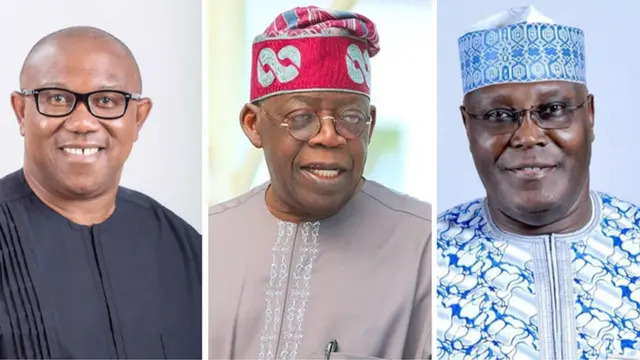
President Bola Ahmed Tinubu, who secured the presidential ticket of the All Progressives Congress (APC), is seeking a second term after assuming office in 2023. Tinubu previously served as Governor of Lagos State from 1999 to 2007 and remains one of the party’s most influential leaders.
Although there has been widespread speculation that incumbent Vice President Kashim Shettima will be retained as Tinubu’s running mate, the APC has yet to make an official announcement.
ADC Ticket Takes Shape
The African Democratic Congress (ADC) has nominated former Vice President Atiku Abubakar as its presidential candidate. Reports indicate that former Rivers State Governor Rotimi Amaechi has emerged as his running mate despite previously expressing his own presidential ambitions.
NDC Announces Presidential Ticket
The Nigerian Democratic Congress (NDC) has confirmed former Anambra State Governor Peter Obi as its presidential candidate. Obi, who contested the 2023 presidential election under the Labour Party, was formally adopted by the NDC following the party’s convention.
The party has also announced former Kano State Governor Rabiu Musa Kwankwaso as Obi’s running mate.
PDP Remains Divided
The Peoples Democratic Party (PDP) continues to grapple with internal divisions, resulting in rival factions presenting separate presidential candidates.
One faction, reportedly backed by the Minister of the Federal Capital Territory, Nyesom Wike, nominated former Senator Sandy Onor, who represented Cross River Central Senatorial District in the National Assembly.
The rival faction, led by Kabiru Tanimu Turaki, has reportedly adopted former President Goodluck Jonathan as its presidential candidate. However, neither faction has officially announced a vice-presidential nominee.
Other Parties Await Running Mate Decisions
The Allied Peoples Movement (APM) has nominated Oyo State Governor Seyi Makinde as its presidential candidate.
The Social Democratic Party (SDP) has retained businessman and lawyer Adewole Adebayo as its presidential candidate.
Meanwhile, the People’s Redemption Party (PRP) has nominated former Cross River State Governor Donald Duke to fly its flag in the presidential election.
As of the latest developments, the SDP, PRP and APM have yet to officially announce their running mates.
With INEC’s July 11 deadline fast approaching, political parties are under increasing pressure to finalise their presidential tickets. Beyond constitutional requirements, the choice of a vice-presidential candidate remains a critical strategic decision that could shape regional alliances, strengthen party cohesion and ultimately influence the outcome of Nigeria’s 2027 presidential election.