


By Emem Nsini-Godwin
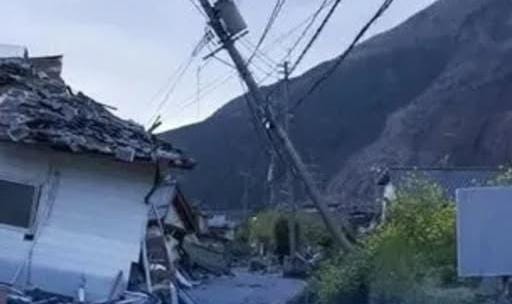
A powerful 7.1-magnitude earthquake struck Japan’s southern Kumamoto Prefecture on Tuesday afternoon, July 28, 2026, knocking out power to tens of thousands of homes, disrupting transport services, and prompting tsunami and aftershock warnings across the Kyushu region.
The earthquake struck at 4:35 p.m. local time, registering shindo 7 – the highest level on Japan’s seismic intensity scale – according to the Japan Meteorological Agency (JMA).
A second tremor, with a preliminary magnitude of about 5.0, occurred roughly 30 minutes later, prompting authorities to warn residents to remain on alert for further strong aftershocks.
Following the quake, the JMA issued a tsunami warning for the Ariake and Yatsushiro seas, forecasting waves of up to one metre and urging residents to stay away from coastal areas until the alert is lifted.
Japan’s Chief Cabinet Secretary, speaking at an emergency news conference, said tsunami waves of about one metre were expected, while public broadcaster NHK reported that waves of that height may already have reached parts of the affected coastline.
The government also issued emergency earthquake warnings for seven prefectures on Kyushu Island—Kumamoto, Nagasaki, Kagoshima, Fukuoka, Saga, Oita, and Miyazaki—as emergency response teams were mobilised across the region.
According to reports, several buildings collapsed near the epicentre, while the fire department in the city of Uki said it had received a surge of emergency calls following multiple fires that broke out after the quake.
The earthquake also caused widespread power disruptions, with approximately 45,000 households and business premises losing electricity, according to Kyushu Electric Power.
Despite concerns over nuclear safety, the utility company confirmed that the three nuclear reactors operating in the affected region continued to function normally.
The Nuclear Regulation Authority also reported that no abnormalities had been detected at any nuclear facility, while Kyushu Electric Power separately confirmed that its Sendai and Genkai nuclear power stations sustained no damage and continued operating safely.
Emergency authorities have urged residents to remain vigilant as aftershocks are expected in the coming days, while rescue and assessment teams continue to evaluate the full extent of the damage.
Japan, one of the world’s most earthquake-prone nations, sits along the Pacific Ring of Fire, where frequent seismic activity has led to some of the strongest building standards and disaster preparedness systems globally. Authorities continue to monitor the situation closely and have advised the public to follow official safety instructions.