

To account for the proposed minimum wage increase, the Nigerian Government may be required to introduce a supplementary budget, as the negotiated amount could exceed the initial allocation in the 2024 budget.
As the agreed-upon minimum wage increase might be higher than the initial allocation in the 2024 budget, the Federal Government may need to present a supplementary budget to accommodate the difference.
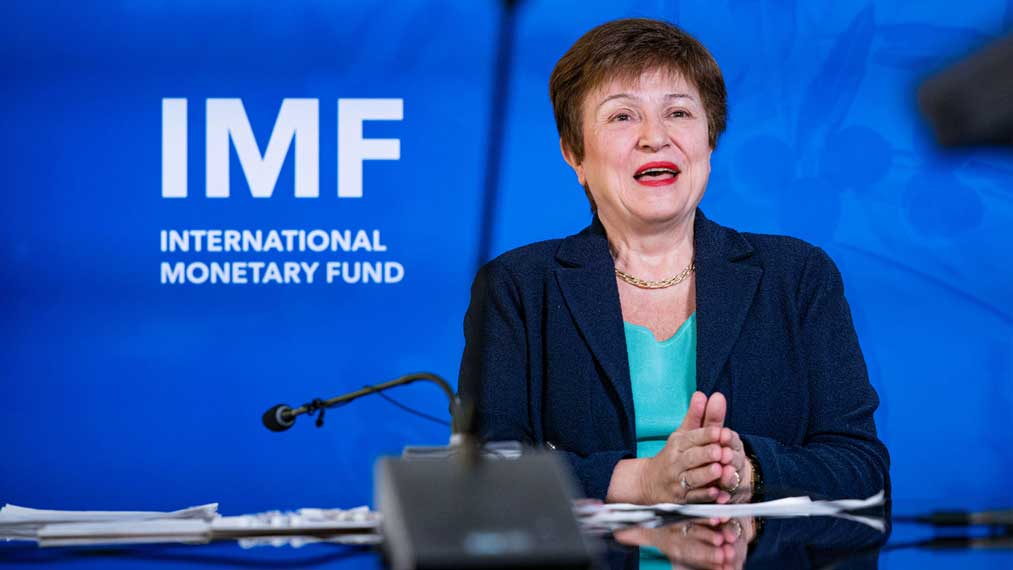
The International Monetary Fund, IMF, who gave this recommendation in its latest staff country report for Nigeria reported that a supplementary budget may be needed to accommodate the outcome of the ongoing wage structure negotiations which may exceed what they had included in the 2024 budget.
The report also stated that Increasing the domestic and external borrowing ceilings might be necessary for the government to avoid additional borrowing from the central bank’s Ways and Means to ensure adequate funding for the proposed minimum wage increase.
Since the beginning of the year, Organised Labour and the government have been engaged in ongoing discussions regarding a new minimum wage, with the aim of alleviating the economic challenges faced by workers.
Recent economic reforms in Nigeria, such as the removal of fuel subsidies and the unification of the foreign exchange market, have led to an increase in the cost of living, placing a greater financial burden on citizens.
While the Nigeria Labour Congress (NLC) is pushing for a significant increase in the minimum wage from N30,000 to N615,000 , there are indications that the tripartite committee may recommend a more modest increase to N70,000, taking into account various economic factors and the need for a sustainable minimum wage.
Although the government allocated N6.48 trillion for personnel costs in the 2024 budget, the international lender suggests that this amount may be inadequate to cover the proposed minimum wage increase and other personnel-related expenses, potentially necessitating additional funding or adjustments to the budget.
The IMF has noted that Nigeria’s budget deficit for 2024 is likely to exceed initial projections due to factors such as the reintroduction of subsidies for fuel and electricity, as well as the mounting interest expenses on the nation’s debt.
Nigeria’s Minister of Finance, Wale Edun, previously announced the government’s intention to decrease the budget deficit from 6.1% in the 2023 budget to 3.8% in the current appropriation, emphasizing a focus on revenue generation and reduced borrowing to achieve these fiscal goals
The report read in part, “Staff projects a higher fiscal deficit than anticipated in the 2024 budget, but broadly unchanged from 2023. The drivers are lower oil/gas revenue projections, reflecting IMF oil price forecasts but incorporating recent production gains; higher implicit fuel and electricity subsidies; continued suspension of excise measures included in the MTEF; and higher interest costs.
“Staff factors in an under-execution of capital expenditure in line with past outcomes and estimates an FGN deficit of 4.5 per cent of GDP relative to the 2024 budget target of 3.4 per cent of GDP. For the consolidated government, this implies a projected deficit of 4.7 per cent of GDP in 2024—compared to 4.8 per cent of GDP in 2023 measured from the financing side—which is appropriate given the large social needs and factoring in a realistic pace of revenue mobilisation.
“Over the medium-term, staff projects consolidation in the non-oil primary deficit. With rising interest costs, government debt stabilises towards the end of the projection period.”
The report further advised the government to explore alternative sources for fulfilling its financing requirements, particularly emphasizing the potential of domestic market borrowing and external loans to meet the country’s budgetary needs.
It said, “Based on staff’s projections, the authorities must raise the domestic and external borrowing ceilings to prevent renewed recourse to CBN financing. With higher interest rates, banks and nonbanks should have sufficient appetite—as indicated by market sources—conditional on careful management of system liquidity, including a likely reduction in the currently high cash reserve requirement.
“Staff projects that the government’s 2024 net financing needs can be met from the market and external borrowing. Domestic market financing needs to increase by 1.5 per cent of GDP over 2023. In addition, the government wants to retire outstanding ways and means borrowing from the CBN of 2.5 per cent of GDP through the issuance of further domestic securities.
It added, “While staff agrees that ways and means financing should be brought to zero by end-2024 in line with the law, the authorities may need to consider other options to avoid crowding out private sector credit, including drawing down the government’s deposits at the CBN built up in 2023 or a second securitisation operation to tackle this legacy problem.
“While external financing is costlier than when Nigeria last accessed Eurobond markets, staff supports an opportunistic issuance, also given upcoming maturities in 2025. A Eurobond issuance and some official financing are factored into staff’s projections as an integral part of the 2024 financing mix.”