

By Elizabeth Godwin
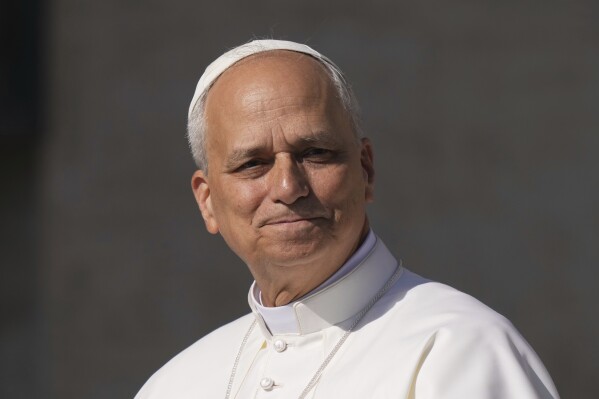
Pope Leo held his first official phone conversation with Palestinian Authority President Mahmud Abbas on Monday, as the Vatican deepens its diplomatic engagement in response to the worsening humanitarian crisis in Gaza and rising violence across the West Bank.
The Vatican reported that the pope used the call to reiterate his strong appeal for international humanitarian law to be fully respected. He emphasized the critical obligation to protect civilians and religious sites, and condemned the indiscriminate use of force as well as the forced displacement of populations.
“The Holy Father repeated his appeal for international humanitarian law to be fully respected, emphasising in particular the obligation to protect civilians and sacred places, the prohibition of the indiscriminate use of force and of the forced transfer of the population,” the Vatican stated.
Pope Leo also called for urgent access to humanitarian aid, underlining the need to support those most vulnerable to the consequences of the ongoing conflict.
The call with Abbas came just days after Pope Leo spoke by phone with Israeli Prime Minister Benjamin Netanyahu. That conversation followed an Israeli airstrike on Gaza’s only Catholic church, which killed three people and drew international condemnation.
In his Angelus address on Sunday, Pope Leo condemned the “barbarity” of the war in Gaza and once again urged both sides to pursue a peaceful resolution to the conflict.
The Vatican has consistently supported a two-state solution to the Israeli-Palestinian conflict and was one of the first European-based entities to formally recognize the State of Palestine, signing an agreement with Palestinian authorities in 2015. The Holy See has maintained longstanding diplomatic ties with both Israel and Palestine, often acting as a moral voice in moments of regional upheaval.
In 2014, under Pope Francis, both Abbas and then-Israeli President Shimon Peres visited the Vatican to pray for peace and plant an olive tree together in the Vatican Gardens—an enduring symbol of hope that now feels more urgent than ever.
As violence intensifies, Pope Leo appears poised to make diplomacy and humanitarian advocacy a central pillar of his early papacy.