By Nchetachi Chukwuajah
Contemporary Nigerian creatives have been urged to ensure the preservation of the arts, literary culture and creative spirit of Ibadan through their works.
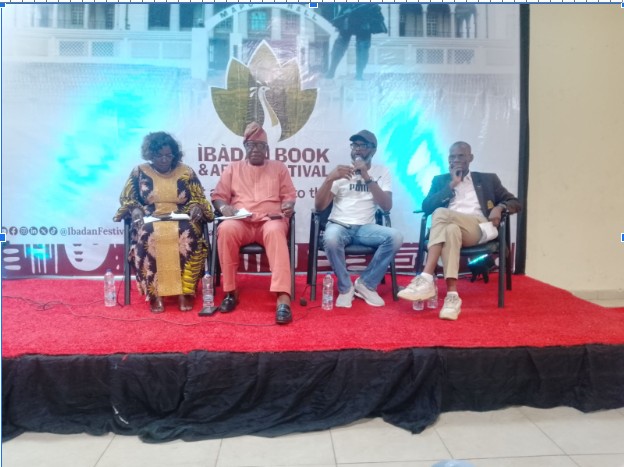
This charge was given at the inaugural Ibadan Book and Arts Festival (IbaFest), held on Saturday, October 24, at the International Conference Centre, Ibadan, Oyo State.
The festival, which featured panel sessions, literary reading sessions, artistic performances, and creative interactions, had speakers reflect on the influence of Ibadan on their artistry and creative journey.
In his keynote address, Emeritus Professor Dan Izevbaye reflected on the city’s rich literary heritage and the role of contemporary creatives in the preservation of that heritage and culture even in the face of technology.
During one of the panel sessions on ‘Ibadan as Nigeria’s Creative Capital,’ anchored by Professor Doyin Aguoru with Prof Aderemi Raji-Oyelade, Olubunmi Familoni, and Prof Hyginus Ekwuazi as panellists, the history and evolution of creativity in Ibadan in the face of digitisation and globalisation was discussed.
The panellists also made a case for the re-imagination of the city’s potential by contemporary creatives, urging them to draw from the lessons of creative heroes’ past to re-invent their journeys leveraging technology.
Prof Raji-Oyelade, in a poetic presentation, said, “The Ibadan of today may appear faded, but beneath the surface, it is humming with reinvention. And then tomorrow comes today. The promise, the question, the invitation –can there be another Ibadan literary renaissance? Not as a repetition of the old but as a re-imagining, a rebirth of the digital de-colonial age.
“Perhaps the renaissance we await will not gather under one roof or one club, but across many networks of creative ships. Perhaps the next Mbaris will exist in the cloud and the next poetry clubs will thrive in digital spaces. Yet what remains constant and must remain so is Ibadan’s republican nature; its refusal to bow to orthodoxy, its celebration of arguments of multiplicity of voices.
“If we are to see another renaissance, we must rebuild the infrastructures of imagination, publishing houses that nurtured local talents, festivals that connect generations, archives that preserve memory, educational spaces that teach the courage to create, and agencies with creative funding for the creative capital. For Ibadan’s story must never be one of mere nostalgia; it is a story of cycles of being lost, of being found, one of rise, decline, and rebirth.”
Prof Ekwuazi submitted that the abundance of creative talents in Ibadan are such that cannot be bottled up, while Familoni stressed that the city allows creative juices to blossom and flourish, and has greatly inspired his work over the years.
Another panel session which examined cities as creative muse, anchored by ‘Joba Ojelabi, had documentary photographer/videographer, Ayo Adams, Ndidi Chiazor-Enenmor, and Sylva Nze Ifedigbo as panellists.
They reflected how everyday occurrences in the cities they have lived in inspire their work, but regretted that urbanisation is fast eroding communal living, as the demands of urban cities encourage individualism.