

By Nchetachi Chukwuajah
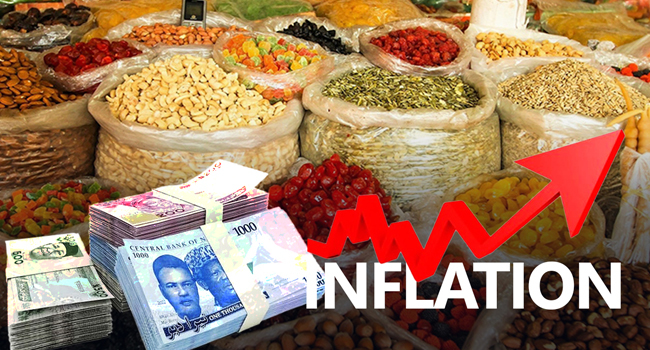
Nigeria’s inflation rate increased to 15.38 percent in March 2026 following an increase in food, transport, and accommodation costs during the month.
The National Bureau of Statistics (NBS) disclosed the rate increase in its latest Consumer Price Index (CPI) report released on Wednesday, April 15.
The increase in the inflation figure marks the first time the headline inflation rate has increased since March 2025, driven by higher food and transportation costs.
According to the CPI report, headline inflation increased from 15.06 percent in February 2026 to 15.38 percent in March 2026, representing a 0.32 percentage point increase on a year-on-year basis.
The NBS noted that the CPI rose to 135.4 points in March, a 5.4-point increase from the 130.0 recorded in February.
The report shows that on a month-on-month basis, inflation increased sharply, highlighting the pace of price increases within a short period.
It stated, “The headline inflation rate in March 2026 was 4.18 percent, which was 2.17 percent higher than the rate recorded in February 2026 (2.01 percent).”
An analysis of the inflation drivers showed that food and non-alcoholic beverages remained the biggest contributor to inflation, accounting for 5.55 percentage points of the headline figure.
It was followed by restaurants and accommodation services with 3.26 percentage points, while transport contributed 1.80 percentage points.
The data also shows that urban inflation stood at 14.64 percent year-on-year, while rural inflation was higher at 17.22 percent.
On a month-on-month basis, rural inflation soared to 6.73 percent, up from 0.71 percent recorded in February, indicating a significant surge in prices in rural communities.
The NBS said the food inflation rate in March 2026 was 14.31 percent on a year-on-year basis, compared to 25.22 percent in the same period of 2025. This represents an increase from the 12.12 percent recorded in February 2026.
On a month-on-month basis, food inflation stood at 4.17 percent, driven by persistent increases in staple food items such as yams, cassava, tomatoes, and potatoes.
Core inflation, which excludes volatile agricultural produce and energy, increased to 16.21 percent year-on-year from the 27.12 percent recorded in March 2025.
On a monthly basis, core inflation surged to 4.03 percent, reflecting the contribution of broader price increases beyond food to inflation.
The report further noted that the average inflation rate for the 12 months ending March 2026 stood at 20.05 percent, higher than 18.58 percent recorded in March 2025.
A state-by-state analysis of inflation showed that Bayelsa recorded the highest year-on-year inflation rate at 27.37 percent, followed by Sokoto at 26.03 percent, and Bauchi at 23.67 percent.
On the other hand, Osun recorded the slowest rise at 5.25 percent, followed by Kano at 9.85 percent, and Kaduna at 10.38 percent.
The report showed that on a month-on-month basis, Zamfara recorded the highest increase at 10.77 percent, followed by Bauchi at 9.37 percent, and Sokoto at 9.05 percent.
In contrast, Lagos, Akwa Ibom, and Rivers recorded the slowest increases on a month-on-month basis.
The NBS, however, noted that variations across states reflect differences in consumption patterns, warning that direct comparisons may be misleading due to varying weights assigned to goods and services.
The increase reflects the impact of the ongoing surge in global oil prices, which the World Bank said could directly add around 3.1 percentage points to Nigeria’s headline inflation.
It stated that the pass-through effects would lead to a rise in fuel prices, indirectly impacting transport, logistics, and food prices, and driving up the inflation rate.
“Overall, an increase in oil prices to about $80 per barrel… would directly add around 3.1 ppts to headline inflation under a full pass-through assumption,” the World Bank noted in its most recent Nigeria Development Update.