

Voter apathy remains one of the greatest threats to democracy in Nigeria. Indeed, it has eaten so deeply into the fabric of the nation’s political system that there is growing fear that, if left unchecked, it could gradually weaken democratic governance in the country.
Many Nigerians openly express disappointment and frustration with the government, yet fail to translate such grievances into meaningful political participation through active voting during elections. Complaints made only in private spaces achieve little. True democratic change can only occur when citizens actively participate in the electoral process. Without this participation, public lamentations amount to nothing more than empty cries without corresponding action.
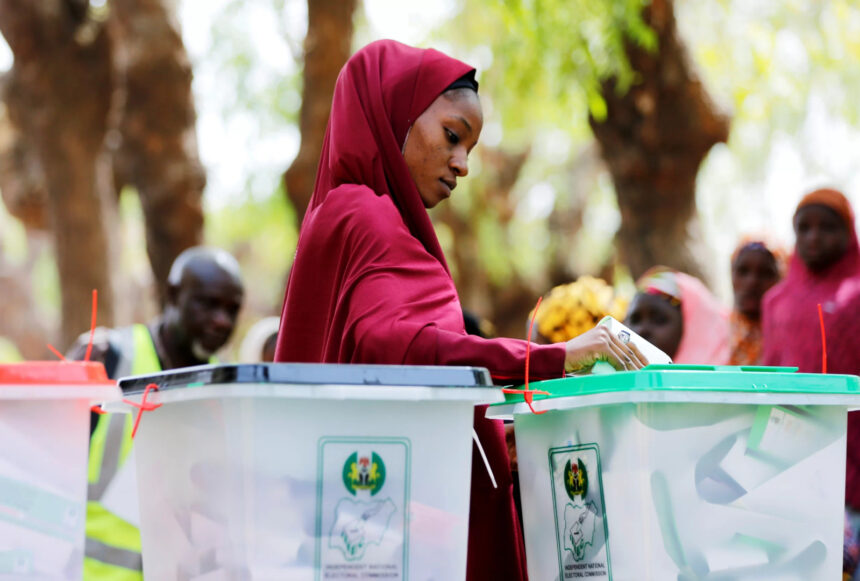
The statistics surrounding voter participation in Nigeria are alarming. A large percentage of eligible voters have never exercised their civic responsibility because they do not possess Permanent Voter Cards (PVCs). Even among those who have PVCs, many treat voting as a secondary activity, placing business, work, leisure, and personal engagements above participation in elections.
This disturbing trend once prompted former Nigerian President Goodluck Jonathan to question how many among those urging him to contest future elections actually possessed voter cards. His observation highlighted the contradiction between political enthusiasm and genuine electoral participation.
The power of citizens to influence governance lies in the ballot box. The PVC is not merely an identification document; it is a symbol of civic authority and democratic responsibility. Nigerians must therefore wield this power with seriousness, patriotism, and pride.
Unfortunately, vote-buying has become increasingly common during elections in Nigeria. The distribution of money, rice, and other food items at polling centres has become a disturbing norm rather than an exception. This practice poses a grave danger to the future of democracy in the country.
In functional democracies around the world, responsible citizens do not require financial inducement before exercising their right to vote. Selling one’s vote for temporary gratification is equivalent to sacrificing the future of the nation for personal gain. While poverty remains a major challenge, there must be limits to how much hardship can compromise civic conscience and national responsibility.
Accepting insignificant handouts from politicians while surrendering control of the nation’s wealth and future is both shortsighted and dangerous. It is therefore unrealistic to expect good governance from a system where many citizens neglect their civic responsibilities or trade their votes for material benefits. Democracy can only thrive when the electorate is informed, organized,

and actively engaged.
To reverse this trend, voter education must be intensified across the country. Relevant government agencies, the media, schools, civil society groups, and religious organizations must work together to enlighten citizens on the importance of voting and the dangers of electoral apathy. Nigerians must understand that voting is not optional but a fundamental civic duty.
At present, the electorate appears too disoriented and politically disconnected to exert meaningful influence on governance at the federal, state, and local government levels. This situation calls for urgent national reorientation.
Historically, voting rights in many societies were once restricted to men of certain status and economic standing because of the heavy responsibility attached to political participation. Although universal adult suffrage has now become the global standard, the responsibility attached to voting remains enormous. Refusing to vote is almost as harmful as voting in exchange for inducement.
As Nigeria approaches future general elections, government institutions, in partnership with non-governmental organizations and other stakeholders, must take immediate and practical steps to address voter apathy and electoral corruption. Even if these problems cannot be completely eradicated, reducing them significantly will help strengthen the credibility of elections and deepen democracy in Nigeria.
A vibrant democracy depends not only on leaders but also on active and responsible citizens. The future of Nigeria’s democracy therefore rests largely in the hands of the electorate. Citizens must rise above indifference, reject vote-buying, and participate actively in shaping the destiny of the nation through the ballot box.
Written By Comrade Akido Agenro, Coordinator, Democratic Orientation Movement
45 Ike-Oluwa Street, Iju-Ishaga, Lagos. Phone: 09066999967