

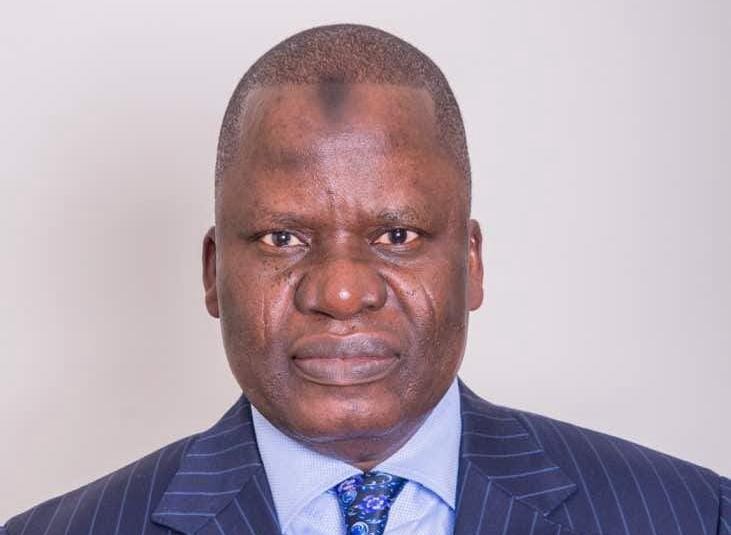
By: Suleyman A. Ndanusa, PhD, OON
Every generation inherits technological changes that eventually compel governments to rethink the way they regulate society. The industrial revolution reshaped labour and commercial law. Aviation transformed international regulation. The internet redefined telecommunications and commerce. Artificial intelligence is now challenging long established assumptions about privacy, liability and intellectual property.
Digital assets represent the latest chapter in that continuing story.
For much of the past decade, the public conversation in Nigeria revolved around a relatively simple question. Whether or not cryptocurrencies should be permitted or prohibited? It was a legitimate debate. Digital assets arrived with extraordinary speed, introducing unfamiliar questions around investor protection, financial crime, monetary sovereignty, taxation, capital flows and financial stability. Regulators understandably approached this new frontier with caution.
Today, however, Nigeria finds itself at a different stage of that journey.
The enactment of the Investment and Securities Act 2025 has provided a firmer legal foundation for digital asset regulation. The Securities and Exchange Commission has progressively introduced licensing and supervisory frameworks for digital asset market operators, while the Central Bank of Nigeria has continued to strengthen payment system oversight and pursue digital innovation through its own initiatives. Other public institutions responsible for taxation, cybersecurity, anti-money laundering, consumer protection and data governance have equally become active participants in the evolving digital financial landscape.
This evolution deserves recognition. It reflects a regulatory community that has gradually moved from uncertainty towards structured engagement.
Yet this progress also presents a new challenge.
The question before Nigeria is no longer whether digital assets should be regulated. Considerable progress has already been made in answering that question. The more important issue today is whether our existing regulatory architecture is sufficiently designed to govern an increasingly interconnected digital economy.
That distinction is subtle but profound.
Nigeria is no longer merely observing the digital asset revolution; it is participating in it. The country consistently ranks among the world’s leading markets for cryptocurrency adoption. Millions of Nigerians particularly young entrepreneurs, technology professionals and small businesses already use digital assets for savings, cross-border transfers, investment, commerce and international payments. Alongside this, Nigeria has developed one of Africa’s most vibrant fintech ecosystems, with innovation steadily expanding into blockchain applications, digital identity, supply chain management, trade finance and tokenisation.
Whether government likes it or not, digital assets are no longer knocking at Nigeria’s door. They are already inside the house.
This reality demands a shift in policy thinking.
The challenge confronting regulators is no longer confined to cryptocurrency trading. The emerging digital economy encompasses tokenised securities, programmable money, decentralised finance, stablecoins, smart contracts, digital identity systems and blockchain enabled commercial infrastructure. Tomorrow’s financial system will almost certainly look very different from today’s.
Our regulatory philosophy must evolve accordingly.
The fundamental difficulty lies in the fact that digital assets refuse to respect traditional institutional boundaries.
A single digital asset transaction may simultaneously involve investment regulation, payment systems, banking supervision, foreign exchange management, taxation, anti money laundering compliance, cybersecurity, consumer protection, data governance and, in certain circumstances, national security.
Each regulator sees the issue through the legitimate lens of its statutory mandate.
Yet no single institution sees the entire ecosystem.
It is rather like the familiar story of several observers attempting to describe an elephant while each touches only one part of its body. Each description is accurate, yet none captures the whole animal.
This is not evidence of regulatory failure.
It is evidence that technology has become more integrated than regulation itself.
That is why the next phase of reform should not simply produce more rules. It should produce better governance.
The distinction matters. Regulation establishes standards of conduct. Governance aligns institutions, information, incentives and accountability across an entire ecosystem. In an increasingly networked economy, effective governance may prove more valuable than ever expanding rule books.
Fortunately, Nigeria is not embarking upon this journey alone.
Around the world, regulators are quietly redesigning their institutional frameworks. The European Union has adopted a harmonised approach to crypto assets through the Markets in Crypto Assets Regulation (MiCA), recognising that fragmented national rules were increasingly inadequate for digital markets. Singapore continues to integrate digital asset supervision within the broader mandate of the Monetary Authority of Singapore, combining prudential oversight with innovation policy. The United Arab Emirates has positioned itself as a global digital asset hub through specialised regulatory arrangements supported by close coordination among financial authorities. The United Kingdom is progressively incorporating digital assets into its wider financial services architecture rather than treating them as a temporary regulatory anomaly.
These jurisdictions differ in institutional design.
What they share is a common recognition that digital finance requires coordinated governance rather than isolated supervision.
Nigeria should draw an important lesson from this experience.
The objective should not be to create yet another regulator. Nigeria already possesses capable institutions with clearly defined statutory responsibilities. The greater need is for an institutional mechanism that enables those responsibilities to operate coherently across the entire digital financial ecosystem.
One possible direction would be the establishment of a National Digital Asset Governance Council or a similarly constituted coordinating platform bringing together the Central Bank of Nigeria, the Securities and Exchange Commission, the Federal Inland Revenue Service, the Nigerian Financial Intelligence Unit, the National Information Technology Development Agency, the Nigeria Data Protection Commission, the Federal Competition and Consumer Protection Commission, relevant security agencies and representatives of industry and academia.
Its role would not be to issue licences or duplicate existing mandates. Rather, it would provide strategic coordination, horizon scanning, policy alignment, intelligence sharing, regulatory interoperability and forward looking assessment of emerging risks and opportunities.
In many respects, what Nigeria now requires is not another regulator but an ecosystem orchestrator.
That represents a different philosophy of governance.
The twentieth century concentrated largely on regulating institutions. Banks were supervised as banks. Stock exchanges were regulated as exchanges. Insurance companies operated within clearly defined regulatory boundaries.
The twenty first century is rapidly dissolving those boundaries.
Banks increasingly resemble technology companies. Technology firms provide financial services. Telecommunications companies facilitate payments. Artificial intelligence influences credit decisions. Digital assets combine features of securities, currencies, payment instruments and programmable contracts.
Tomorrow’s financial system will function less like a collection of separate industries and more like a connected ecosystem.
Our regulatory architecture must evolve accordingly.
This is perhaps the most important lesson offered by the rise of digital assets. Crypto is not simply another asset class requiring another set of regulations. It is an early signal that the architecture of financial governance itself is changing.
Nigeria has already demonstrated commendable courage by moving from regulatory uncertainty towards structured engagement. The next stage of reform is even more important. It requires us to move beyond regulating digital assets towards governing the digital economy.
That conversation has only just begun.
If Nigeria gets it right, the country will not merely regulate the future of finance. It will help shape it.
Suleyman A. Ndanusa, PhD, OON, is an economist, lawyer, strategic studies scholar, and public policy thinker and practitioner with extensive experience in financial markets, regulation, governance, national Security and development.