

Thousands of Muslim families in Mali’s capital, Bamako, have been forced to abandon plans to celebrate Eid-el-Kabir with their loved ones after a worsening jihadist blockade cut off major roads leading into the city.
The crisis, linked to fighters affiliated with Al-Qaeda’s Sahel branch, has disrupted transportation, crippled livestock supply chains and deepened economic hardship ahead of one of the most important Islamic celebrations in the country.
According to reports, armed jihadists have since late April imposed a partial blockade around Bamako, attacking major highways and setting several buses and freight trucks ablaze. The destruction of vehicles and persistent insecurity have left many transport operators unwilling to risk travelling to rural areas, while thousands of residents remain stranded in the capital.
For many Malians, Eid-el-Kabir, popularly known as Tabaski, is more than a religious observance. It is traditionally a period of family reunion, cultural celebration and communal sacrifice. However, this year’s celebration has been overshadowed by fear, insecurity and uncertainty.
Alpha Amadou, a resident of Bamako originally from Mopti in central Mali, lamented that he would be spending Eid away from home for the first time in decades.
“For the first time in 30 years living in Bamako, I’ll be celebrating Eid here this year,” he said.
At major motor parks across the capital, the usual festive rush reportedly disappeared as insecurity and fuel shortages paralysed movement.
A transport operator, who spoke anonymously, said the situation had badly affected businesses.
“Not only do we lack diesel to keep running, but we’ve also lost buses in recent incidents. It’s a huge economic blow,” he said.
Another transport manager disclosed that companies which usually moved tens of thousands of passengers during the Eid period had suspended operations entirely.
“Normally, we could transport more than 50,000 people from Bamako to other regions in a week for Tabaski. This year, we’re not planning any trips,” he stated.
Private travellers have also become targets.
A resident, Wara Bagayoko, said he could no longer risk travelling with his family to Segou as he had done for many years.
“It will be the first time in 30 years I won’t celebrate in my village. The road is too dangerous,” he said.
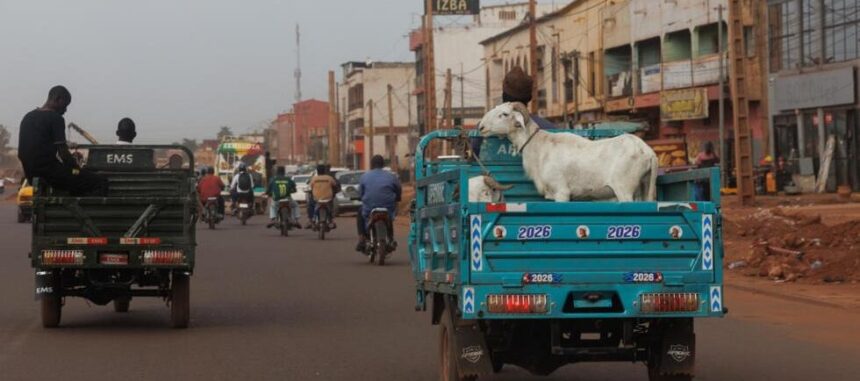
The blockade has also severely disrupted the livestock market, a key part of the Eid celebration where families traditionally slaughter sheep.
Livestock traders said many trucks conveying animals into Bamako had either been attacked or burned by jihadists, causing sharp shortages and massive price increases.
Transport costs for a single animal reportedly rose from about 2,500 CFA francs to as high as 18,000 CFA francs.
A livestock seller, Hama Ba, said the market situation had become devastating.
“Many trucks of sheep have been burned by jihadists. Normally, I’d have more than 1,000 animals, but today, not a single one,” he said.
Residents searching for affordable rams also expressed frustration over soaring prices.
“Sheep we used to buy for 75,000 francs are now going for 300,000,” one resident complained.
Beyond insecurity, Bamako is also grappling with worsening electricity blackouts, fuel scarcity and shortages of drinking water, further complicating preparations for the celebration.
Tailors producing festive outfits have reportedly struggled to complete orders because of prolonged power outages, while families fear food preservation problems during the holiday.
“How are we supposed to keep meat without electricity?” a concerned resident asked.
Although authorities recently announced the arrival of fuel supplies into Bamako, many residents say the damage has already been done, with countless families unable to reunite for this year’s Eid celebration.