


By Desire Emmanuel, with Agency Reports
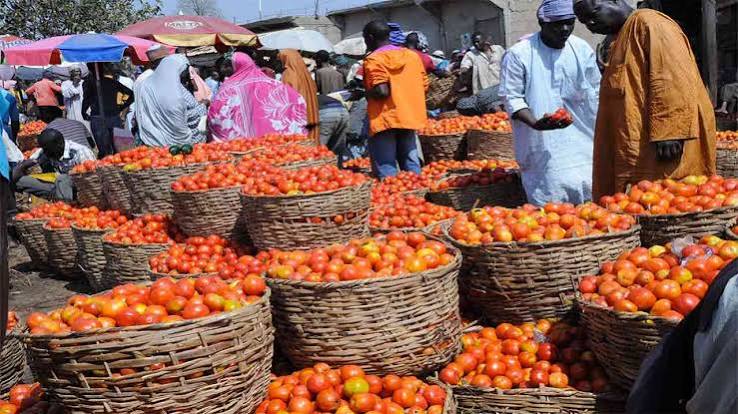
Some tomato traders on Saturday, June 6, have attributed the current scarcity and increase in prices of the highly important soup ingredient to persistent rainfall and flooding in key tomato-producing regions of Nigeria.
Currently, according to market survey, the price of a basket of tomatoes that was between N65,000 and N70,000 last month now goes for between N100,000 and N150,000.
One of the tomato wholesalers, who gave his name as Mr Uchenna Amanambu, told the News Agency of Nigeria (NAN) that heavy rainfall in Jos, Plateau State and Makurdi, Benue State, which are two major tomato-producing areas in the country, had affected farming activities and reduced output.
He added that flooding along major transportation routes had further disrupted the movement of vehicles carrying tomatoes to markets across the country, worsening the supply shortage.
Another wholesaler, Mrs Ifeoma Uzonna, said traders were struggling to maintain adequate supplies due to irregular deliveries from the northern part of the country.
“Before now, trucks arrived almost every week with large quantities of tomatoes, but these days, we receive fewer supplies and sometimes wait longer for deliveries. The scarcity has pushed prices up significantly,” she said.
Another major tomatoes trader, Mrs Celestina Ezeokafor, told NAN that the impact of the rains on farms had reduced harvests, forcing many consumers to cut back on purchases.
“Some customers who usually buy tomatoes in baskets now purchase half baskets or smaller quantities because of the high cost,” she said.
Retailers also reported changes in consumer behaviour as households increasingly seek more affordable alternatives.
Similarly, traders at Nkpor Market in Idemili South Local Government Area of Anambra State said the scarcity had affected both sales volume and consumers’ purchasing power.
Traders insist that the current price increase is not driven by profiteering but by a combination of reduced supply and rising transportation costs.
“The cost of moving goods has gone up and this ultimately affects market prices. Traders are not making excessive profits; we are simply adjusting to the realities of supply and transportation challenges,” said Mr Chinedu Nwafor.
Mrs Ngozi Chukwu, another tomato trader, advised households to utilise alternative ingredients such as pepper, onions and tatashe while waiting for tomato supplies to stabilise.