

By. Suleyman A Ndanusa PhD OON
Nigeria has become remarkably good at debating police reform.
Every few years, the conversation returns with renewed enthusiasm. More officers are proposed, larger budgets are demanded, better equipment is promised, fresh committees are inaugurated and, almost inevitably, the discussion circles back to state police. The actors change, the headlines change, but the script remains surprisingly familiar.
One sometimes wonders whether Nigeria has held enough conferences on police reform to establish another police force.
Yet insecurity has displayed an equally remarkable ability to ignore our communiqués.
Could it be because we have been asking the wrong question?
For decades, we have asked how to reform the police. Perhaps we should first ask something much simpler.
Who actually produces security?
The obvious answer is the police.
The truthful answer is society.
Long before a police officer arrives at the scene of a crime, a bank may already have detected an unusual financial transaction. A telecommunications company may hold the digital footprint of the suspects. A village head may know who entered the community the previous evening. A neighbour may have noticed what no surveillance camera captured. By the time justice eventually takes its course, prosecutors, judges and correctional institutions have all played their part. Even parents, schools and religious institutions have quietly influenced the outcome by shaping the values that discourage crime long before the law is ever called upon to intervene.
The police remain indispensable.
But they no longer work alone.
Security, like prosperity, is produced through the combined efforts of many institutions, communities and citizens.
Curiously, our governance conversation still behaves as though the police alone are responsible for producing it.
That, perhaps, explains why the debate has become trapped.
We devote enormous energy to governing the police , ts recruitment, welfare, funding, equipment and command structure. Necessary as these issues are, they concern the institution. They tell us remarkably little about the model through which security itself is created.
The distinction is subtle but profound.
An organisation can be efficiently managed while the model within which it operates has quietly become outdated.
Businesses understand this instinctively. They do not simply ask whether management is working hard; they periodically ask whether the business model still fits the world around it. Markets evolve. Technology advances. Customers change. Competitors innovate. Organisations that fail are often not poorly managed. They are simply operating yesterday’s model in today’s environment.
Crime has undergone exactly that transformation.
Kidnappers now operate across several states with astonishing coordination. Cybercriminals steal from victims they may never meet. Organised criminal networks communicate instantly, move money electronically and adapt their methods with impressive speed. Artificial intelligence is beginning to reshape both criminal enterprise and criminal investigation.
Meanwhile, much of our policing conversation still revolves around organisational charts.
It is rather like renovating a railway station while passengers have quietly started travelling by air.
This is why the debate over state police, important though it is, may not be the place to begin.
State police answer one question: where should policing authority reside?
They do not answer the more fundamental question: how should Nigeria produce security?
The two are not the same.
A weak policing model does not become stronger merely because it has been decentralised.
Photocopying an old blueprint thirty six times does not produce thirty six modern buildings.
It merely produces thirty-six copies of yesterday’s design.
The same reflection applies to funding.
The recent establishment of the Northern Nigeria Security Trust Fund is both timely and commendable. It recognises that insecurity cannot be addressed by government budgets alone and that the private sector, communities and public institutions all have a stake in building a safer society.
Yet the initiative also presents an opportunity to ask an even more important question.
If security deserves a new funding model, does it not also deserve a new policing model?
Before we decide how much money to invest, should we not first satisfy ourselves that we are investing in a model designed for the security challenges of the twenty first century rather than those of the twentieth?
Money can strengthen a good model.
It cannot rescue an obsolete one.
This is not a criticism of Security Trust Funds. Indeed, their trustees may ultimately make their greatest contribution not by raising larger sums of money but by asking deeper questions about the architecture they are financing. Funding security is essential. Governing the model through which security is produced may be even more important.
Perhaps this is the conversation Nigeria has not yet fully had.
The police should no longer be viewed simply as the nation’s principal security provider. Their more strategic role is to orchestrate a wider security ecosystem in which intelligence agencies, financial institutions, telecommunications companies, local governments, traditional institutions, private security providers, technology firms, the courts and, above all, citizens contribute distinct capabilities towards a common purpose.
Consider a kidnapping operation. The police investigate. Intelligence agencies connect the wider network. Telecommunications companies assist, under the law, with digital trails. Banks identify suspicious financial movements. Communities provide local knowledge. Prosecutors build the case. The courts determine guilt. Correctional institutions complete the process.
The success of the operation depends less on the brilliance of any single institution than on the quality of coordination among all of them.
The product is not policing.
The product is security.
Countries that have quietly transformed public safety seem to understand this instinctively. Japan built trust into neighbourhood policing. Singapore integrated policing with digital government, urban planning and public services. Estonia used secure digital identity and interoperable public systems to make law enforcement smarter rather than merely larger.
None of these countries copied another.
What they shared was a willingness to redesign how security is produced as society itself changed.
Nigeria’s greatest opportunity may lie there.
Not in creating another institution. We already have enough institutions to populate several organisational charts.
Not in multiplying committees. We have never suffered from a shortage of committees.
Nor even in believing that every security challenge can be solved by recruiting more officers or purchasing more vehicles.
Our greatest opportunity lies in developing the discipline of periodically examining the policing model itself.
Who produces security?
How do these actors work together?
Where does intelligence break down?
How does technology strengthen coordination?
How do we measure success?
And perhaps the most important question of all: is our policing model evolving as quickly as the criminals it is expected to confront?
These questions form what I describe as the Policing Model Canvas. It is not another institution or another layer of bureaucracy. It is simply a governance discipline , a way of ensuring that Nigeria continually examines not only the police, but the model through which public security is produced
The future of policing will not be determined simply by who commands the police, who funds the police or even who legislates for the police.
It will be determined by whether we have the courage to govern the policing model itself.
Because the safest societies are not necessarily those with the biggest police forces.
They are the ones that have learned, deliberately and intelligently, how to produce security.
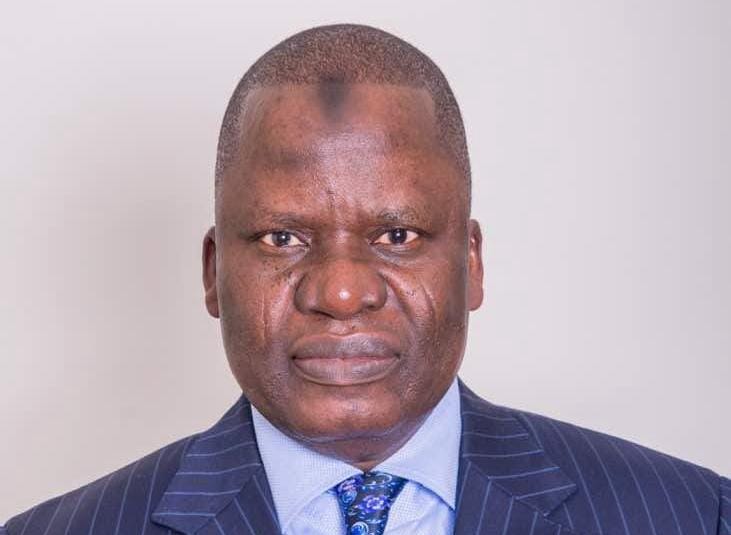
Suleyman A. Ndanusa, PhD, OON, is an economist, lawyer, strategic studies scholar, and public policy thinker and practitioner with extensive experience in financial markets, regulation, governance, national Security and development.