

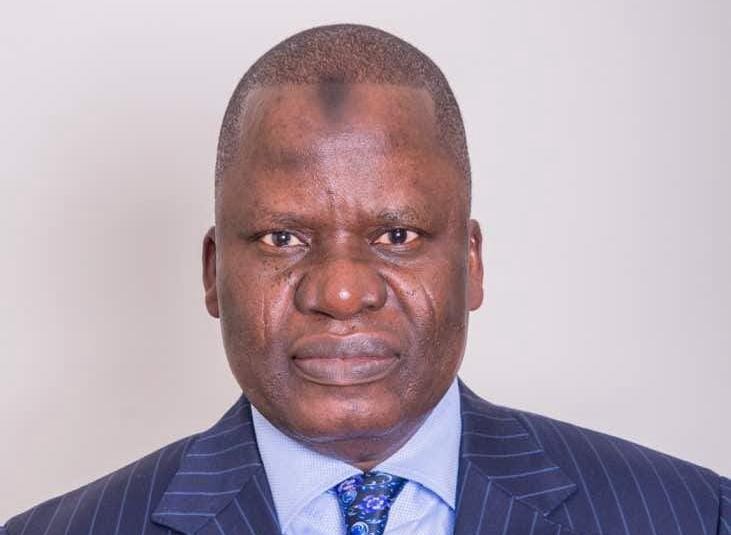
By Suleyman A\. Ndanusa PhD OON
Every time I enter the Abuja National Mosque, I go there as a Muslim. But somewhere between the gate and the prayer hall, the economist in me occasionally refuses to keep quiet.
It looks around.
And there is quite a lot to look at.
The Abuja National Mosque is one of the great landmarks of our capital city. Its golden dome has become almost inseparable from Abuja’s skyline. It is a place of worship, reflection, learning and community. For many of us who live in Abuja and regularly attend prayers and other religious activities there, it is also a familiar spiritual home.
But surrounding this magnificent institution is something else: land. Valuable land. In fact, in Abuja terminology, very valuable land.
And that raises a question which I hope will not disturb anyone’s ablution.
Are we making the best possible use of the enormous economic asset surrounding our National Mosque?
I ask the question not as a property developer searching for the next available plot in Abuja. Nor am I suggesting that every blade of grass around a mosque must immediately acquire a shop, office or apartment block. Some open space has value precisely because it is open. A national religious monument requires dignity, security, accessibility, parking, landscaping and room for large congregations.
But between preserving sacred space and leaving economically valuable assets substantially dormant lies a rather large territory worthy of conversation.
Islam, after all, has never required poverty as proof of piety.
Indeed, Islamic civilisation developed one of history’s most ingenious mechanisms for converting private and community wealth into perpetual social benefit: waqf. Land, buildings and other assets were endowed and made productive, with their income supporting mosques, schools, hospitals, scholars, travellers, the poor and numerous other public purposes.
The principle was beautifully simple. Preserve the asset. Make it productive. Spend its fruits on society.
Perhaps there is a lesson there for Abuja.
Imagine, for a moment, that carefully selected portions of the land associated with the National Mosque were developed not haphazardly and certainly not into another collection of Abuja plazas searching desperately for tenants but according to a coherent master plan built around the dignity and mission of the Mosque.
There could be appropriately located commercial facilities, offices, conference and event spaces, hospitality facilities, educational institutions, healthcare services and professionally managed properties. There could be spaces deliberately reserved for Muslim entrepreneurs and young businesses. The precise mix is a matter for feasibility studies, urban planners, investment professionals, religious scholars and the Mosque authorities.
The important point is not what we build.
It is what the assets could continuously finance.
Suppose the income generated was placed within a properly governed waqf structure. Suddenly, the conversation changes from hectares and buildings to scholarships, healthcare, skills acquisition, entrepreneurship, Islamic education, support for vulnerable families and sustainable financing of the Mosque itself.
A building then ceases to be merely a building.
It becomes a scholarship that renews itself every year.
A commercial property becomes healthcare for families who cannot afford it.
An office complex becomes vocational training for young people.
And an asset that once waited patiently for appreciation begins producing human development.
This is where opportunity cost enters the Mosque compound.
Economists have an irritating habit of asking what else could have been done with a resource. Give an economist a beautiful empty field and, while everybody else admires the grass, he is quietly calculating foregone cash flows. It is probably one reason economists are not always the most relaxing people to invite on sightseeing trips.
But the question is legitimate.
If a hectare of prime Abuja land capable of generating substantial sustainable income remains economically dormant for decades, its cost is not merely the rent that was never collected. Its real cost may be the scholarships never awarded, businesses never financed, young people never trained and families never assisted.
That is why I prefer to think about this issue not as commercialising the Mosque, but as mobilising the assets of the Mosque for its wider mission.
The distinction is important.
The Mosque must never become subordinate to the shopping mall. Commerce must serve the institution, not redefine it. Any development must preserve the architectural majesty, spiritual atmosphere, security and primary religious purpose of the National Mosque.
There should therefore be areas where nothing commercial is built at all.
But equally, sanctity should not automatically become a synonym for economic inactivity.
The thought becomes even more difficult to ignore when I drive along Airport Road and see the enormous Eid praying ground.
On Eid morning, its purpose is glorious and unmistakable. Tens of thousands of Muslims gather in worship. For those few precious hours, every square metre earns its keep in a currency no economist should attempt to calculate.
Then Eid ends.
The faithful return home.
And the land remains.
At that point, unfortunately, the economist in the car wakes up again.
Could such an enormous asset retain completely its function as an Eid ground while parts of it, or developments around its perimeter, generate economic activity during the rest of the year? Could carefully designed facilities coexist with the open praying field? Could income from such developments support education, healthcare, enterprise and welfare?
These are questions worth asking before answering.
And then comes the inevitable Nigerian question: where will the money come from?
Interestingly, financing may be the least imaginative part of the problem.
Islamic finance provides instruments capable of mobilising substantial long term capital around productive assets. Nigeria itself has developed considerable experience with sukuk. A credible project with identifiable assets, sustainable cash flows, professional governance and proper Shariah structuring could potentially attract institutional and individual investors.
Of course, sukuk is not a magical Islamic ATM. Investors expect returns, projects must make economic sense, governance must be credible and obligations must be honoured. Reciting Bismillah over a bad feasibility study does not transform it into a good investment.
But properly structured, the possibilities are significant.
There is also a potentially powerful combination of waqf and sukuk. Sukuk can help mobilise capital to develop productive assets; waqf can preserve the underlying social purpose and ensure that benefits endure beyond the financing period. Private developers and professional asset managers can bring expertise. The Mosque does not need to become a construction company, hotel operator or shopping centre manager.
Its responsibility is more fundamental: to ensure that assets entrusted to it are governed in ways that advance its mission across generations.
That brings us to the Islamic concept that perhaps matters most in this discussion, amanah.
An asset entrusted to a community is not merely something to possess. It is something to steward.
Good stewardship does not necessarily mean extracting the maximum naira from every square metre. That would be crude economics and perhaps poor theology. Good stewardship means finding the optimum balance between spiritual purpose, community need, preservation, aesthetics, accessibility and sustainable economic value.
Perhaps, therefore, the question we should ask about the Abuja National Mosque is larger than whether there is too much unused land around it.
The more interesting question is:
What if the National Mosque could substantially finance its religious, educational and social mission from assets it already possesses?
Imagine the symbolism.
Instead of periodically appealing to Muslims to finance every new programme, the institution increasingly generates recurring income of its own. Instead of charitable expenditure ending when a donation is spent, endowed assets continue producing benefits year after year. Instead of measuring Muslim generosity only by how much we give, we begin measuring Muslim institutional capacity by how intelligently we preserve, invest and multiply what has already been given.
That is not foreign to Islam.
It is deeply rooted in its history.
And perhaps that is the irony.
In searching for innovative solutions to Muslim economic empowerment in twenty first century Abuja, we may discover that one of the most modern ideas available to us is actually several centuries old.
I therefore raise this subject not as an accusation against the management of the National Mosque, and certainly not with a fully drawn architectural plan hidden somewhere in my briefcase.
I raise it as a conversation.
Before looking elsewhere for resources to empower our community, perhaps we should first look carefully at the resources already beneath our feet.
Sometimes wealth is not absent.
It is simply lying idle.
Suleyman A. Ndanusa, PhD, OON, is an economist, lawyer, strategic studies scholar, and public policy thinker and practitioner with extensive experience in financial markets, regulation, governance, national Security and development.