

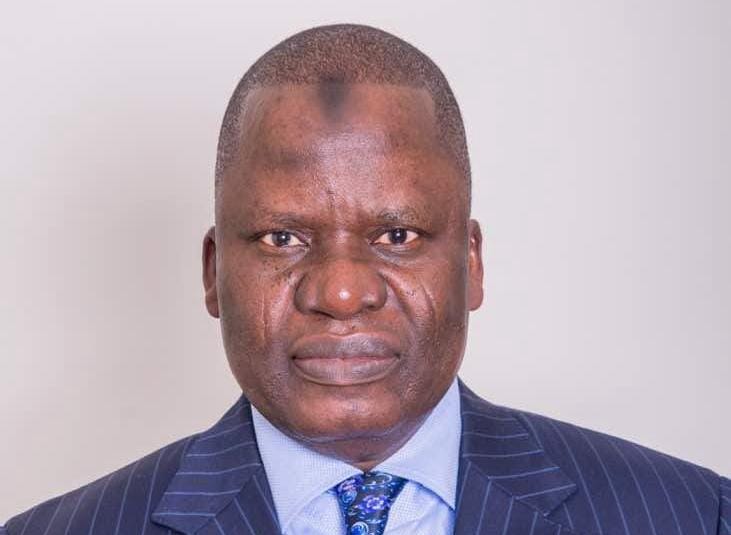
By Suleyman A. Ndanusa, PhD, OON
The Dangote Petroleum Refinery is unquestionably one of Africa’s most consequential industrial achievements. It is vast in scale, strategic in purpose and already changing Nigeria’s petroleum story from that of a habitual importer to an emerging regional refining centre. The opportunity for Nigerians to own a part of it is therefore exciting. But an investor is not buying the refinery’s national importance; he is buying a share at a particular price. The refinery may be excellent while the share is expensive. The two questions must not be confused.
At ₦525 per share, the company will enter the market with an indicative valuation of approximately ₦65.2 trillion, or about US$47.8 billion at the exchange rate used in the prospectus. That would immediately place it among the most valuable companies listed on the Nigerian Exchange. This is not the valuation of a modest industrial newcomer asking investors to accompany it on a hopeful journey. It is the valuation of a mature global scale enterprise expected to deliver substantial profits consistently.
The encouraging news is that the refinery’s recent performance provides some support for this optimism. Revenue reached ₦19.1 trillion in the first half of 2026, while profit after tax was approximately ₦2.5 trillion. If that half year profit were simply doubled, annual profit would be about ₦5 trillion. On that basis, the offer price represents roughly 13 times annualised earnings. That is not manifestly unreasonable for a strategic company with dollar linked revenues, enormous production capacity and significant growth prospects.
But the words “if simply doubled” are carrying a heavy load. The company recorded losses in both 2024 and 2025. The impressive H1 2026 result is its first strong period of profitability at scale. Investors are therefore being asked to value the company largely on the assumption that this performance will not only continue but improve. One successful half year is encouraging, but even a refinery needs more than six months to establish a reliable earnings tradition.
The sharp improvement in profitability also deserves closer attention. The gross margin rose from less than 2 per cent in 2025 to almost 18 per cent in the first half of 2026. This may reflect higher utilisation, improved operating efficiency and better absorption of fixed costs as production increased. Even so, refining is a cyclical business. Profitability depends less on the impressive size of revenue than on the difference between the cost of crude oil entering the refinery and the value of the products leaving it. That margin can expand handsomely, as it did in H1 2026, but it can also narrow without sending investors an apology.
There is another useful price comparison. Shortly before the IPO, private placement investors paid approximately US$2.5 billion for about 7.15 billion shares. This suggests a price of roughly US$0.35 per share. The public offer price is approximately US$0.385 per share about 10 per cent higher. A premium may be justified by improved performance, public listing and greater liquidity. Nevertheless, the prospectus should explain more clearly why public investors are paying more so soon after the private placement and whether the earlier investors are subject to restrictions on selling their shares after listing.
The prospectus states that the ₦525 price was determined after considering the company’s financial performance, projected growth, market conditions and the valuations of comparable companies. Unfortunately, it does not show investors the valuation working in sufficient detail. We are not told clearly which international refiners were used as comparators, the earnings and enterprise value multiples applied, or the assumptions used for refinery margins, capacity utilisation, crude supply and future cash flows. Investors are effectively being shown the answer without enough of the calculation.
That omission matters because the IPO is only one part of a much larger expansion programme. The company intends to double refining capacity from approximately 700,000 barrels per day to 1.4 million barrels per day at an estimated cost of US$14.3 billion. The net proceeds of the offer amount to about US$1.55 billion at the exchange rate stated in the prospectus only around 11 per cent of the expected expansion cost. The balance will have to come from internally generated cash, debt and other financing arrangements.
The proposed expansion could create enormous value, but it also brings construction risk, cost overruns, additional borrowing, commissioning challenges and the possibility that dividends will be postponed while cash is retained for capital expenditure. Investors are not merely buying the refinery that has started operating successfully; they are also helping to finance another major construction journey. The first child has barely graduated, and the family is already preparing for another expensive university admission.
Debt must consequently be watched carefully. Borrowings stood at approximately US$5.67 billion at the end of June 2026, and a further US$750 million note was issued after that date. The current net-debt position appears manageable, particularly following the recent private placement proceeds. But the more important question is what leverage, interest costs and covenant headroom will look like when the expansion programme reaches its most capital intensive stage.
Potential investors should also temper expectations of an immediate dividend bonanza. The prospectus makes no firm commitment regarding a payout ratio, minimum dividend or commencement date. Dividends will depend on profitability, working capital requirements, debt obligations, financing restrictions and the huge expansion programme. This should therefore be approached principally as a long term growth investment rather than a quick source of annual income.
Ownership concentration is another matter requiring vigilance. Alhaji Aliko Dangote beneficially controls approximately 87 per cent of the company before the offer and would remain overwhelmingly dominant afterward. Entrepreneurial control is understandable; without it, the refinery might never have left the drawing board. But a public company must also protect minority shareholders through genuinely independent directors, rigorous disclosure and firm control over related-party transactions.
The prospectus acknowledges numerous transactions within the Dangote Group, including procurement, logistics, treasury and shared services. These may be commercially sensible, but they must be transparently priced and independently reviewed. Where a company buys from, sells to, borrows from and shares services with related companies, the independent directors must be awake before the transactions arrive, not after the auditors have gone home.
There are also several drafting and disclosure issues that should be corrected. The document gives differing completion dates of 2029 and 2030 for the expansion programme. Some financial figures appear inconsistent between the summary and the detailed statements, while certain related party amounts require clarification of their units. These may be editorial errors rather than fundamental problems, but an offer of this size should not leave important figures playing hide and seek.
My conclusion is therefore one of cautious interest rather than either uncritical enthusiasm or needless pessimism. Dangote Refinery is a formidable national and continental asset. Its scale, location, export capability and recent operational performance offer a strong long-term investment story. But at ₦525, much of that promising future is already being recognised in the price.
Before making a substantial investment, prospective shareholders should demand a clearer valuation report, fuller financial projections, sensitivity analysis for weaker refining margins, the expansion financing schedule, expected leverage, dividend outlook, private-placement lock-up arrangements and stronger assurances on minority shareholder protection.
Investors should also distinguish between the minimum subscription and the size of a prudent commitment. The fact that one can enter with ten shares does not mean one should rush into ten thousand. Those attracted by the long-term story may consider measured participation and then watch the company’s operating performance, debt, margins and governance after listing before increasing their exposure.
The refinery deserves our national admiration. The shares deserve our financial interrogation. Patriotism may encourage Nigerians to look at the offer, but only valuation, governance and sustainable cash flow should persuade them to subscribe. In the capital market, applause is free; shares are not.
Suleyman A. Ndanusa, PhD, OON, is an economist, lawyer, strategic studies scholar, and public policy thinker and practitioner with extensive experience in financial markets, regulation, governance, national Security and development.