


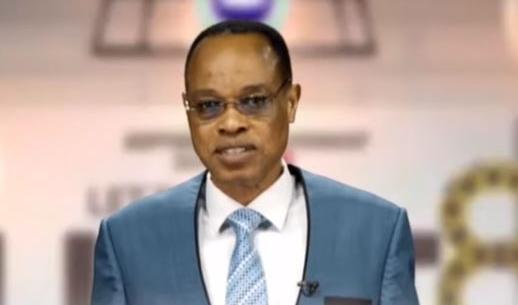
By Prof. Odesola JF
When Economic Reforms Fail to Reach the People, What Exactly Are We Celebrating?
There is something I find increasingly difficult to understand about the way we discuss Nigeria’s economy. Government officials tell us that reforms are working, political supporters insist that we should be patient, and economic commentators keep reminding us that the benefits will eventually trickle down. Yet, when you step into the markets, visit small businesses, speak with traders or listen to ordinary Nigerians, you hear a completely different story.
People are struggling. Businesses are closing. Prices keep rising, customers are buying less, and many families are finding it increasingly difficult to meet their daily needs.
So, I keep asking: What exactly are these reforms achieving, and who is actually benefiting from them?
How long should Nigerians continue to wait before they begin to feel the impact of policies that are supposedly designed to improve their lives?
I am particularly concerned about the small business owners who form the backbone of our economy. The woman selling food by the roadside, the man running a small provision shop, the young graduate operating a barbing salon, the mechanic, the tailor, the supermarket owner and the market trader who struggles every morning to restock goods.
These are people who wake up early, work hard and do everything possible to survive without depending on government handouts.
But look at what they are facing today.
The cost of electricity is high. Transportation is expensive. Rent is rising. Goods are becoming more expensive to purchase, and customers who used to patronise their businesses regularly can no longer afford to buy as much as they used to.
A trader may spend hundreds of thousands of naira restocking a shop and return home with very little profit. A woman who sells food may discover that the cost of buying ingredients has increased so much that she must either increase her prices or reduce the quantity of food she serves.
Unfortunately, when prices go up, customers complain. When prices remain the same, the business owner suffers. When the business owner can no longer cope, the shop closes.
And when that happens, it is not just one person’s problem. The employees lose their jobs, the family loses its income, suppliers lose customers, and the local economy suffers.
This is the reality that government must confront.
You cannot claim to be rebuilding an economy while the people who keep that economy running are struggling to survive.
What Happens to These Graduates After Collecting NELFUND Loans?
Let us look at another issue that deserves serious attention: the Nigerian Education Loan Fund (NELFUND).
I have no objection to helping students who genuinely cannot afford their education. In fact, I consider access to education a worthwhile investment in the future of any nation. No young person should be denied the opportunity to study simply because their parents are financially disadvantaged.
But there is a bigger question that we must not ignore.
What happens to these students after graduation?
We are giving them loans to pursue their education, which is commendable. But what kind of economy are we preparing them to enter when they leave school?
Will there be enough jobs? Will industries be expanding? Will businesses be recruiting? Will the average Nigerian have enough purchasing power to patronise newly established businesses?
Or will these graduates simply join the millions of unemployed and underemployed young people already roaming the streets in search of opportunities?
Let us bring this discussion closer to home.
Imagine a young man who graduates from a Nigerian university after benefiting from NELFUND. He has completed his studies, perhaps undertaken his NYSC, and is now ready to face the world. He submits applications everywhere but cannot secure a suitable job.
After several months, he decides to become self-employed. He may buy a Keke, establish a small akara business, open a provision shop or start a small transportation business.
There is absolutely nothing wrong with any honest occupation. We must never create the impression that a university graduate is too educated to engage in legitimate business. Indeed, some of the most successful entrepreneurs started with very little.
But let us ask ourselves an honest question: In the present economic climate, how much can such a business realistically generate after deducting operating expenses, maintenance, transportation, rent and other costs?
Will the young graduate be able to feed himself, support his family, expand the business and meet his loan repayment obligations?
That is where government must begin to think seriously.
It is not enough to help young people enter university. We must also think about the economy waiting for them after graduation.
An education loan programme is a good idea, but it must operate alongside a serious employment and economic development strategy. Otherwise, we risk producing graduates who leave school with certificates, ambitions and financial obligations but have very limited opportunities to earn a decent living.
The problem is not that these young people are unwilling to work. The problem is that the economy must provide an environment in which their hard work can produce reasonable results.
They Are Collecting Loans Every Market Day!
Sometimes, when I hear about another empowerment programme, another loan distribution or another government intervention, I wonder whether we are addressing the real problem or simply managing its consequences.
Every market day, there seems to be another announcement about people collecting loans, receiving financial assistance or benefiting from one government scheme or another.
Of course, there is nothing wrong with supporting struggling people. Government has a responsibility to help vulnerable citizens, and targeted financial assistance can make a real difference.
But how long can we continue this way?
If a woman collects a business loan today but cannot make enough sales because her customers have lost purchasing power, what exactly have we achieved?
If a young entrepreneur receives money to establish a business but spends most of it paying for electricity, transportation, rent and other expenses, how sustainable is that intervention?
If a trader collects a loan and returns to the market only to discover that the cost of replacing her stock has increased again, how do we expect that business to grow?
We must stop confusing the distribution of money with economic empowerment.
Real empowerment is not simply giving someone money. It is creating an environment in which that person can use the money productively, make a profit, repay any loan, employ others and gradually improve their standard of living.
There is a difference between helping people survive today and creating an economy that allows them to prosper tomorrow.
Government should therefore be asking harder questions. How many of these businesses are still operating after one year? How many have expanded? How many additional workers have they employed? How much additional income are the beneficiaries generating?
These are the figures that should matter, not simply the number of people who collected money at a government-organised event.
Have We Not Heard This Story Before?
What makes the present situation even more frustrating is that Nigerians have heard this argument before.
During the Buhari administration, we were repeatedly told to be patient. We were encouraged to give the government more time to consolidate its reforms. The message was that the policies needed time and that the country would eventually begin to enjoy the benefits.
But how many years must citizens continue to wait?
How many more years should a struggling trader be told to endure? How long should an unemployed graduate remain hopeful without seeing meaningful opportunities? How long should families continue to adjust their feeding habits because their incomes can no longer meet their needs?
Even today, we hear similar explanations. Reforms take time. The economy is adjusting. The government is working. Things will eventually improve.
I agree that economic reforms cannot produce miracles overnight. Some policies require difficult adjustments, and transforming an economy is not a simple assignment.
But patience must have a destination.
You cannot keep telling a hungry family to wait while offering no convincing explanation of when its circumstances will improve.
A landlord will not accept an economic policy as payment for rent. A school will not accept government promises instead of school fees. A food seller will not give you food because you are waiting for reforms to trickle down.
Ordinary Nigerians are dealing with the realities of life every day. Their problems cannot be postponed until government policies mature.
And this is why we must ask: What exactly are we consolidating? Economic development, industrial growth, employment opportunities and national prosperity, or simply political structures and the machinery of government?
The government must understand that citizens are not interested in endless explanations. They want to see results.
Economic Growth Must Mean Something to Ordinary People
We should also be careful not to confuse economic statistics with the actual condition of the people.
Government may announce improvements in revenue, foreign exchange management, investment figures or other economic indicators. Such improvements are important, and they should be acknowledged when supported by evidence.
But what does all of that mean to the woman who goes to the market with ₦20,000 and returns home with hardly enough food for her family?
What does it mean to the manufacturer who spends so much on electricity and diesel that production becomes almost impossible?
What does it mean to the young graduate who has submitted applications to dozens of companies without receiving a single employment offer?
What does it mean to the small business owner who has watched customers disappear because they can no longer afford the goods and services being offered?
An economy is not just about government revenue, impressive reports or figures presented at international conferences. It is also about the people who live and work within that economy.
If the economy is growing, people should gradually begin to experience improvements in their lives. They should have better employment opportunities, greater purchasing power, more affordable access to basic necessities and a business environment that rewards hard work.
That is what makes economic growth meaningful.
The ultimate success of economic reform is not how impressive the figures look on paper, but how much better the lives of ordinary citizens become.
And What Kind of Campaigning Is This?
There is another issue that I find particularly disturbing about our political culture.
Why have we reduced political campaigning to the distribution of rice, money and other basic necessities?
Where on earth do you see human beings being mobilised to celebrate the sharing of food as though it were the greatest achievement of governance?
There is nothing wrong with giving rice to people who are hungry. There is nothing wrong with supporting a struggling family. Such gestures can be appreciated, particularly in difficult times.
But surely, a country with Nigeria’s human and natural resources should aspire to something much bigger.
Why should people have to wait for politicians to distribute food before they can enjoy some relief?
Why should the distribution of a few bags of rice become a major campaign attraction?
Why should political leaders not be judged by the number of jobs created, the industries established, the businesses that have survived and the opportunities made available to young people?
A government should want its citizens to become financially independent, not permanently dependent on political generosity.
The real achievement is not to distribute rice to a thousand people every election season. It is to create an economy in which those thousand people can afford to buy their own rice.
That is the difference between managing poverty and genuinely fighting poverty.
Politicians should be competing to show Nigerians how they intend to create wealth, expand employment and improve living conditions, not merely how much money or food they can distribute at rallies.
What Should We Really Be Asking Government?
The questions are not complicated.
Why is it so difficult for small businesses to survive?
Why does establishing and running a modest business require so much money?
Why are manufacturers struggling with the cost of production?
Why are young graduates finding it increasingly difficult to secure meaningful employment?
Why is access to affordable credit still such a major challenge?
Why are millions of households struggling to maintain their previous standard of living?
These are the issues that deserve urgent attention.
Government must reduce the cost of doing business, improve electricity supply, strengthen local manufacturing, support agriculture, expand access to affordable finance and create an environment in which businesses can grow.
It must also ensure that educational programmes are connected to real employment and entrepreneurship opportunities.
NELFUND should be evaluated not merely by the number of students who receive loans but also by the opportunities available to them after graduation.
Business empowerment programmes should be judged by the number of businesses that survive and expand, not simply by the number of cheques distributed.
And economic reforms should be judged by their impact on household incomes, employment, poverty and the survival of small businesses.
That is how serious governments measure progress.
Nigerians Are Tired of Being Told to Wait
Let nobody misunderstand this argument. Nigerians are hardworking people. Our markets are full of men and women who wake up before sunrise to make a living. Our young people are intelligent, resourceful and ambitious. Many are willing to take risks, learn new skills and establish businesses.
What they need is an economy that gives their efforts a reasonable chance of succeeding.
They do not need endless speeches about how difficult the situation used to be. They do not need to be reminded every day that reforms take time. They certainly do not need politicians to keep showing up with bags of rice as though that is the ultimate expression of good governance.
They need jobs. They need affordable electricity. They need functioning industries. They need access to credit that can genuinely help their businesses. They need an economy in which customers can afford to buy what they produce.
And above all, they need a government that understands the difference between announcing policies and improving people’s lives.
We cannot continue to encourage students to borrow money for education without paying sufficient attention to the opportunities waiting for them after graduation.
We cannot continue to distribute business loans while ignoring the conditions that make businesses fail.
We cannot continue to celebrate economic reforms while the average citizen struggles to afford basic necessities.
And we cannot keep asking Nigerians to be patient without showing them convincing evidence that their sacrifices are producing results.
The people are not asking for miracles. They are asking for a country in which hard work can actually pay.
So, before another loan is distributed, another empowerment programme is announced or another political rally is organised, those in government should pause and ask themselves a very simple question:
If the reforms are working, why are so many Nigerians still struggling to make ends meet?
A government should not be judged by how many people collect money from it, but by how many people have become economically independent under its watch.
Let the reforms reach the markets, the factories, the farms, the shops and the homes of ordinary Nigerians.
Enough of the promises. Let the people feel the reforms!