By Nchetachi Chukwuajah
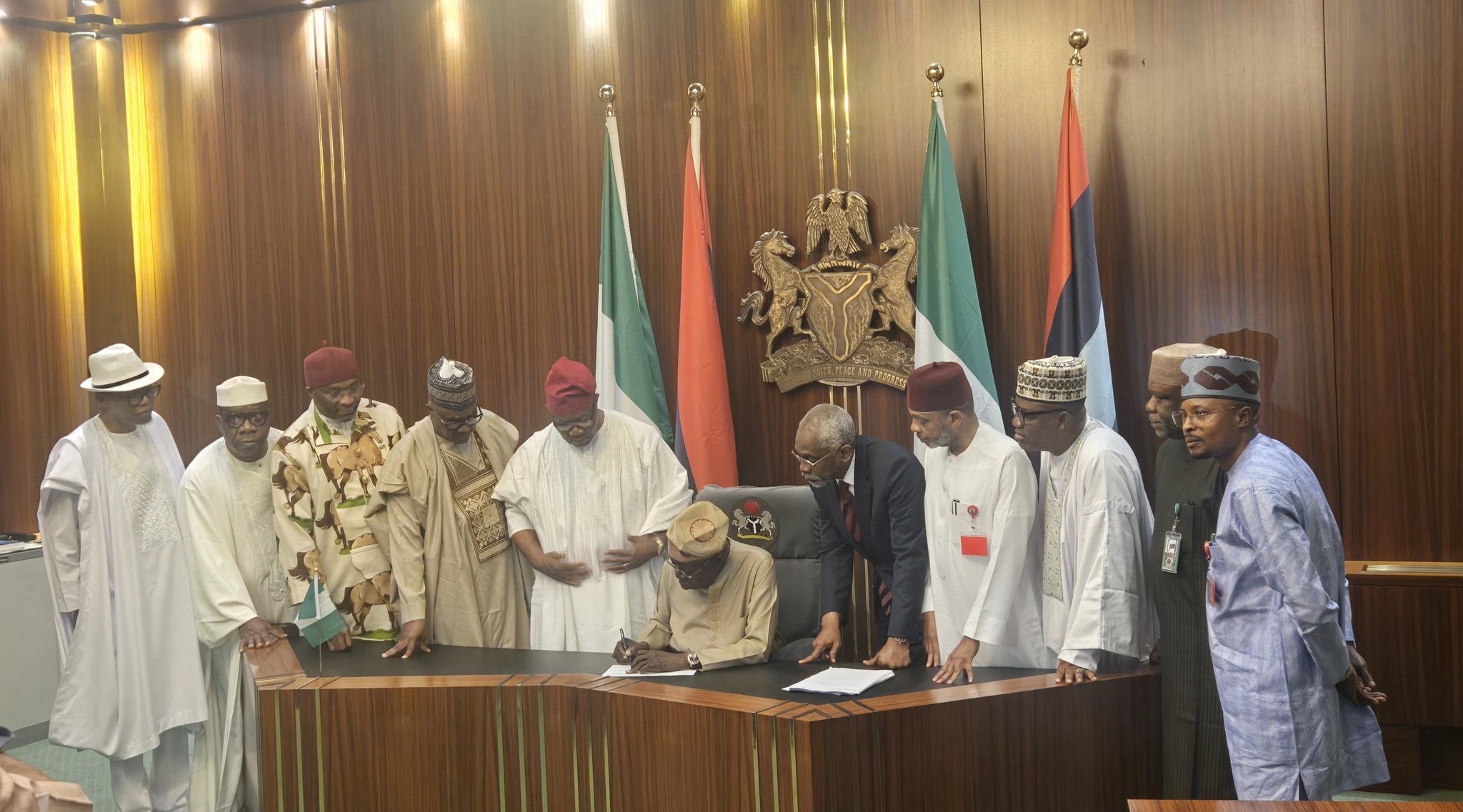
Senate President, Godswill Akpabio, has said the Electoral Act 2026 (Amendment), signed into law by President Bola Tinubu on Wednesday, February 18, will ensure that every Nigerian vote counts.
Akpabio said the new legislation eliminates the longstanding problem of result manipulation between polling units and collation centres.
He stated this while speaking to journalists shortly after the Act was signed into law at the Presidential Villa, Abuja.
The Senate President said the new law addresses the core concerns raised by Nigerians over the integrity of the electoral process and introduces provisions that will make future elections more transparent and secure.
According to him, the amendment is the first time since independence in 1960 that Nigeria’s electoral laws will recognise electronic transmission of results.
Akpabio explained that the amended Act mandates the electronic transmission of polling unit results to the INEC Result Viewing (INEC) Portal, as demanded by civil society organisations, opposition parties, and election observers following widespread allegations of result manipulation during the 2023 general elections.
He also noted that the law also took into account areas with poor telecommunications infrastructure, by proving that the primary source of results remains the EC8A forms signed by presiding officers, party agents, and security personnel at polling units.
He added that with the amendment, Nigerians will now be able to compare results uploaded to the portal with what is eventually collated at ward, local government, and state levels, making it impossible for results to be tampered with after leaving polling units.
“The implication of that is that if what is eventually collated at the next centre is different from what is in the iREV, Nigerians will be able to compare whether the election result had been tampered with.
“And for us, that has always been the problem in the country, that once election results leave a polling unit, they will be tampered with or mutilated. That has been eliminated today,” he said.
The Senate President dismissed suggestions that the National Assembly had bowed to political pressure, insisting that the final provisions of the amendment were the product of thorough consultations and deliberations in plenary sessions of both chambers.
Akpabio also highlighted other provisions in the new law, including the introduction of direct primaries for political parties, which will allow party members to vote directly for candidates of their choice rather than relying on delegate selection.
The Senate President said the amendment also addresses scenarios where election winners are disqualified by courts, noting that instead of declaring the runner-up as the winner, the law now mandates fresh elections to ensure that Nigerians truly elect their leaders.
Speaker of the House of Representatives, Abbas Tajudeen, drew attention to the reduction of the election notice period from 360 days to 300 days, adding that the change would ensure that presidential and National Assembly elections are not conducted during the month of Ramadan in 2027.
He said, “This will inadvertently translate to holding the presidential and National Assembly elections in January 2027, and that will technically avoid conducting elections during the month of Ramadan of 2027.
“I think this is another piece of ingenuity that the National Assembly has introduced to avoid voter apathy in the next general election.”