By Nchetachi Chukwuajah
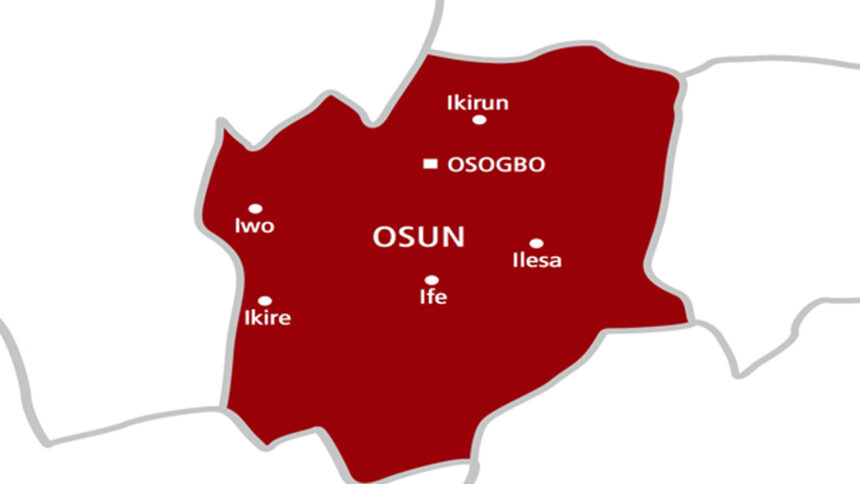
Ahead of the Saturday, August 15, governorship election in Osun State, the Independent National Electoral Commission (INEC) announced that out of 2,339,233 registered voters in 332 wards and 3,763 polling units, 1,906,390 have collected the Permanent Voters Card (PVC) and stand eligible to vote.
According to a statement issued on Thursday, August 13, by Mohammed Haruna, INEC National Commissioner and Chairman, Information and Voter Education, the figure represented 81.50 percent of the total registered voters in the state.
INEC added that 432,843 PVCs remained unclaimed and have been safely deposited with the Central Bank of Nigeria (CBN), in line with its established practice.
The figures show that the total number of registered voters in the state rose from 1,954,800 to 2,339,233 ahead of the 2026 election in the state, representing an increase of 384,433 voters.
An analysis of the data by the electoral body reveals the Local Government Areas (LGAs) that will be the ultimate deciders of the outcome of the election given the number of voters who registered in those LGAs.
The figures released by INEC show that Osogbo, the Osun State capital, has the largest number of electorates in the state with 167,704 registered voters, representing 7.17 percent of the total number of registered voters.
Ife East follows with 128,515 voters, representing 5.50 percent of registered voters, while Olorunda has 123,063, representing 5.26 percent. Ife Central has 122,454 voters, accounting for 5.24 percent of the electorates in Osun State.
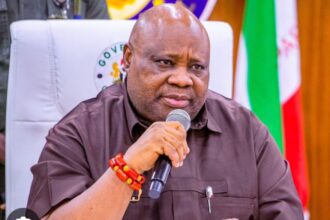
Iwo has 106,813 registered voters, representing 4.57 percent of the state’s electorate. Ede North, where the incumbent governor, Ademola Adeleke, hails from, has 96,644 registered voters. Irewole has 96,528 (4.13 percent), while Ifelodun has 94,870 (4.06 percent).
Ilesa East has 89,491 registered voters, Ejigbo has 87,676, Ilesa West accounts for 86,699 of registered voters, Oriade has 84,283, Odo-Otin has 82,574, Boripe has 81,067, and Ayedaade has 77,649.
Ede South has 67,729; Ife South has 66,255; Obokun has 64,440; Atakumosa East has 47,767; Atakumosa West has 44,076; and Orolu has 51,021 registered voters.
Egbedore has 67,440; Irepodun has 67,131; Ife North has 65,718; Isokan has 65,379; Ola-Oluwa has 44,761; Boluwaduro has 29,797, while Ifedayo has 28,361.
The figures show that 10 LGAs with the largest voter population account for 1,113,813 of registered voters, or 47.6 percent of the entire register, signifying that nearly half of Osun’s registered voters are concentrated in just 10 of the state’s 30 LGAs.
How the major contenders stand according to LGA voters’ strength
The incumbent governor, Ademola Adeleke of the Accord Party; Bola Oyebamiji of the All Progressives Congress (APC); and Najeem Salaam from the African Democratic Congress (ADC) are currently the major contenders in Saturday’s election in Osun State.
Interestingly, the three of them hail from the Osun West Senatorial Zone. However, Osun Central, which consists of 10 LGAs, including the capital, Osogbo, has the largest voting bloc.
The zone accounts for about 42.1 percent of all registered voters, according to data from INEC.
ALSO READ: Adeleke, Oyebamiji, Salaam, Opawoye, 11 other candidates contesting 2026 Osun governorship seat
Another dynamic in the election lies in the fact that Adeleke’s LGA, Ede North, and Oyebamiji’s Irewole follow each other closely with regard to the number of registered voters. The LGAs come sixth and seventh in the ranking of LGAs with the highest number of voters, with 96,644 and 96,538 registered voters, respectively.
This therefore means that both candidates are expected to be banking on other LGAs for the votes that would be the ultimate decider of their individual victory.
Given that the three major candidates in the 2026 gubernatorial election are from Osun West, the votes in the district are expected to be fiercely contested internally.
This leaves the votes from the two other zones, especially Osun Central, to play a huge role in which of the major contenders emerges victorious in the election.
A look at the 2022 election outcomes further affirms Osun Central’s impact in deciding election outcomes.
During the 2022 election, Adeleke performed a masterstroke by garnering the majority of the votes in his home senatorial zone, Osun West, as well as in Osun Central and Osun East to secure victory over the then incumbent governor, Gboyega Oyetola.
He polled a total of 138,733 votes in Osun Central and 120,080 in Osun East, while Oyetola garnered 136,294 votes in Osun Central and 121,873 in Osun East.
With only a few hours to go before what may appear as Nigeria’s most anticipated election before the 2027 general election, it remains to be seen which LGAs will swing the votes in favour of the winner of the election, keenly contested by candidates from 15 political parties.