By Desire Emmanuel
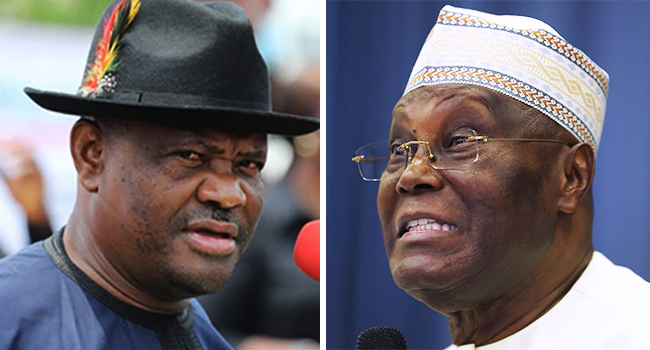
Former Vice President Atiku Abubakar, on Saturday, April 4, took the Minister of the Federal Capital Territory (FCT), Nyesom Wike, to the cleaners over his threat to shoot a Channels Television presenter, Seun Okinbaloye.
The minister had, at a media chat on Friday, said if he had the opportunity, he would shoot the presenter over the comments he made on the political situation in the country.
The former vice president, through the Atiku Media Office, in a statement on Saturday condemned what it called the “disgraceful and dangerous threat” by the minister.
The media office said for a serving minister to publicly declare, on live television, that he wished to shoot a journalist over a professional opinion was reckless.
It described the development as a chilling signal of how far this government had descended into intolerance, lawlessness, and naked abuse of power.
The Atiku Media Office stated that “reckless conduct” was unacceptable and must not be allowed to stand.
It, therefore, demanded an immediate and unconditional public apology from Wike to Seun Okinbaloye and the entire Nigerian media community.
It said: “Anything short of this will confirm what many Nigerians already fear—that this government is not merely intolerant of dissent, but increasingly comfortable with the language and instruments of repression.”
“Let Nigerians be under no illusion: when those entrusted with authority begin to speak the language of violence against the press, democracy itself is under attack.
“Minister Wike’s outburst is not an isolated slip. It is a symptom of a broader, more dangerous pattern under the administration of Bola Tinubu—a pattern where dissent is criminalised, criticism is met with hostility, and intimidation has become the default language of governance.
“In sane democracies, such a statement would trigger immediate resignation or dismissal. In today’s Nigeria, it is becoming frighteningly routine.
“What crime did Mr. Okinbaloye commit? He dared to warn against the creeping danger of a one-party state. For this, a minister of the republic responded not with reason, but with a threat of violence. Nothing captures the current state of governance more starkly.
“This is how democracies die—not only through stolen mandates or weakened institutions, but through the gradual normalisation of threats, fear, and the silencing of independent voices.
“We must ask: if a prominent journalist can be threatened so brazenly on national television, what protection exists for the ordinary Nigerian?
“Nigeria will not be bullied into silence. The press will not be cowed, and truth will not be silenced by threats, no matter how powerful or highly placed those behind them.”