


By Olatunbosun Obafemi
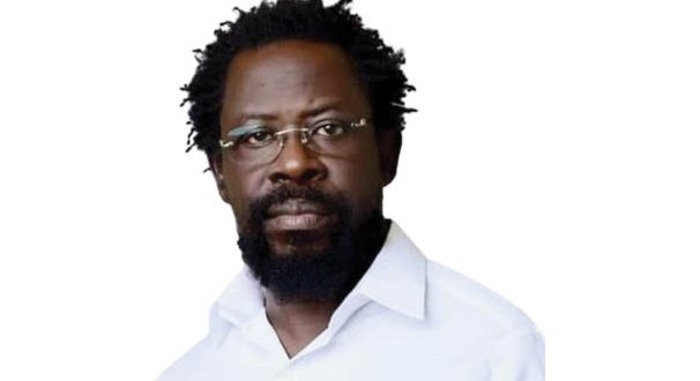
As Nigeria marked the 26th anniversary of its return to civilian rule on May 29, 2025, popular lawyer and political activist, Mr. Dele Farotimi, offered a blistering indictment of the nation’s democratic experience.
In a candid interview with Nigeria Tribune, he argued that there is little, if anything, to celebrate. For Farotimi, Nigeria is not experiencing democracy but enduring a prolonged and painful descent into dysfunction, impunity, and collective victimhood.
“There is no democracy to speak of,” he declared. “We should not be celebrating; we should be mourning.” According to him, Nigeria’s civil rule since 1999 has only further entrenched elite impunity while reducing the people to spectators in their own national tragedy.
Farotimi traces Nigeria’s current instability to what he sees as a deliberate and systemic misrule. He cited rising insecurity, worsening poverty, and increasing ethno-religious division as symptoms of a nation that has lost its way. More damning is his assertion that the country has deteriorated to such an extent that many now look back on the military dictatorship of Sani Abacha with nostalgia.
“Things are so bad today that Nigerians are yearning for Abacha,” he said. “That is how far we have fallen.”
He did not spare the National Assembly either, which he described as unaccountable and unmoored from the will of the people. “If the legislature derived its power from the people, they wouldn’t be singing ‘on your mandate we shall stand.’ They are accountable only to the ruling cabal, not the electorate,” Farotimi said, likening their behavior to a fraternity of elites bound by shared interests rather than any ideological conviction.
Asked about the recent attempts at political coalition-building, Farotimi dismissed them with characteristic bluntness. “I have no interest in the congregation of politicians. It is the victims of Nigeria—those who have suffered from this system—who must unite,” he said. For him, the political class, regardless of party affiliation, is united in preserving a corrupt status quo. “Most of them should be in jail,” he added without hesitation.
Yet Farotimi also refuses to absolve even those perceived to be outside the halls of power. He insists that Nigeria’s dysfunction is so pervasive that even the wealthy and influential cannot escape its consequences. “We are all victims,” he said. “Even if you drive a Rolls Royce, you still drive on roads filled with potholes. You are still vulnerable to insecurity, to the recklessness of the police, to the same systemic decay.”
His critique of the nation’s leaders is uncompromising. According to Farotimi, they are not simply inept—they are deliberately wicked. “It is impossible to advise such people. They know what they’re doing. They are willfully ignorant and deliberately evil,” he said. For him, the expectation that leaders might reform themselves is a dangerous illusion. “We need to understand that these things are not accidents. There is a design behind our dysfunction.”
Reflecting on President Tinubu’s tenure, Farotimi was even more fatalistic. “Buhari destroyed Nigeria. Tinubu is now the undertaker. Unless a miracle happens, Nigeria is already dead. It is only waiting for burial,” he said.
Despite this bleak outlook, Farotimi maintains a personal humility that contrasts with the force of his rhetoric. “I’m just another Nigerian who wants to live his life,” he said. “I wish I could be left by the state and the system to live a more qualitative life in the country of my birth.”
Farotimi describes himself as “a victim of Nigeria” and “a patriot of an unborn nation”—a phrasing that underscores his belief that the Nigeria he dreams of has yet to be born. His call to action is not for political realignment among the elite but for unity among ordinary Nigerians, regardless of ethnicity, religion, or social class. In his view, only a bottom-up revolution of values and consciousness can rescue Nigeria from its entrenched cycle of failure.
“It is the victims who need to wake up. The ruiners will not change,” he said. “They are doing exactly what they believe is in their own interest.”