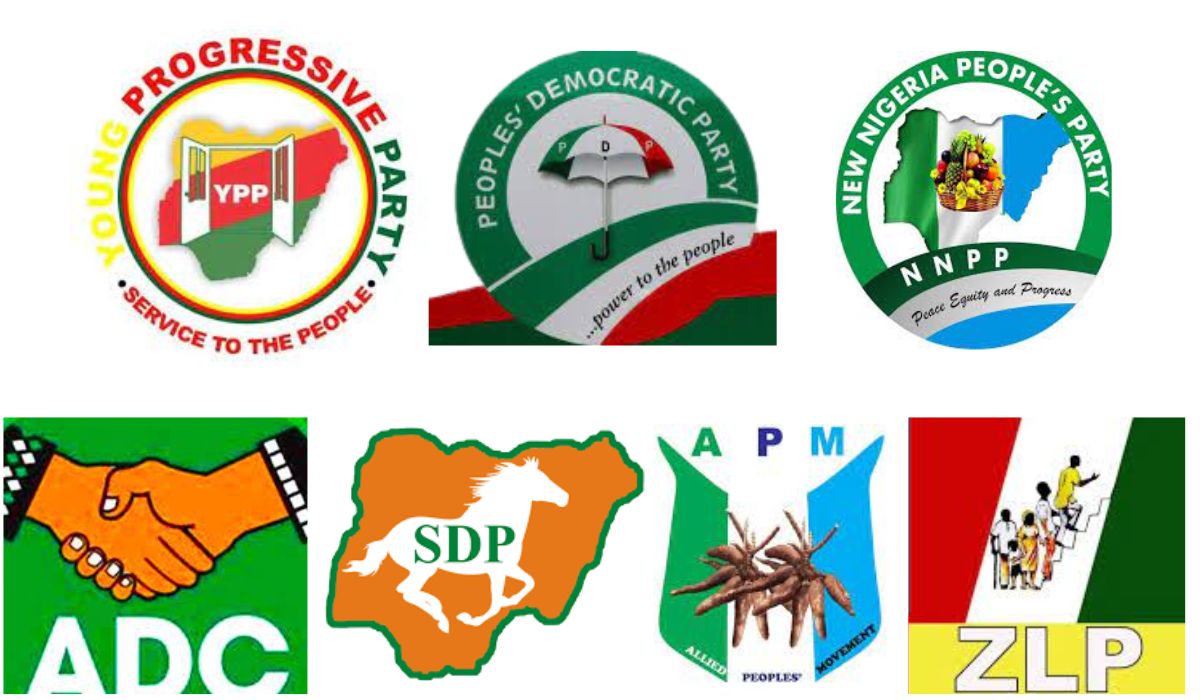
Nigeria’s political landscape is plagued not only by corruption and lack of ideology but also by the reckless registration of weak and inconsequential political parties.
Far from enriching the democratic process, the multiplication of parties with no clear agenda or mass appeal has become a strategy for political bargaining, often manipulated by opportunistic individuals seeking personal gain rather than national development.
At the heart of this growing problem is a broken political culture where party registration is no longer driven by the desire to present alternative visions for governance. Instead, it is driven by short-term interests – usually financial or political.
Many of these so-called parties lack grassroots structures, do not field credible candidates, and vanish after elections. Yet, they emerge every electoral cycle, conveniently positioned to serve as negotiating tools in last-minute alliances or to offer token endorsements in return for monetary rewards, appointments, or political favors.
A look at the political history of Nigeria shows that between the return to democratic rule in 1999 and the 2023 general elections, the number of registered political parties surged and plummeted in cycles.
The Independent National Electoral Commission (INEC), tasked with registering and regulating political parties, has often been overwhelmed by applications, many of which clearly fail to meet the basic requirements of political viability. While the deregistration of parties after poor performances in elections has helped somewhat to streamline the number, the fundamental motive behind the formation of many new parties remains questionable.
These weak parties typically lack ideology. They are often built around individuals rather than ideas, making them personality-driven rather than issue-focused. In many cases, party founders seek registration not because they believe in long-term political engagement but because they intend to use the platform as a bargaining chip.
By threatening to split votes or act as spoilers, they attract the attention of major political parties desperate to consolidate their base. The result is a form of political blackmail where weak parties are rewarded – not for their value to democracy – but for the nuisance they can cause.
This phenomenon dilutes the integrity of the democratic process. It undermines genuine opposition movements, confuses voters, and reduces elections to transactional events rather than contests of vision, competence, and character. In many rural areas, voters cannot even distinguish between the many acronyms on the ballot, let alone understand the platforms of these micro-parties. This chaos weakens accountability and makes a mockery of democracy.
The selfish registration of weak parties also affects policy development and national cohesion. Since these parties do not emerge from broad-based consultation or ideological consensus, they have no interest in mobilizing citizens around pressing national issues such as security, unemployment, healthcare, or education. Their leaders rarely speak on matters of national concern unless they are involved in an alliance or negotiation. Their silence is deafening and telling – it is the silence of political actors with no real stake in the nation’s future.
INEC must, therefore, review and tighten the criteria for party registration. Beyond constitutional requirements, there should be rigorous tests of viability, including demonstrable grassroots presence, internal democratic processes, and policy articulation.
Party audits should be regular and transparent, ensuring that only parties with clear national or regional relevance are allowed to participate in elections. This will not only reduce ballot clutter but also strengthen the legitimacy of the democratic process.
Equally important is civic education. Citizens must be sensitized to understand that democracy is not a circus of logos and slogans. They must learn to interrogate the motives behind party creation and hold political actors accountable. Media organizations and civil society must also step up in scrutinizing new parties and exposing those formed solely for selfish gain.
Nigeria’s democracy is young, fragile, and still evolving. To safeguard it, political participation must be rooted in sincerity, service, and sacrifice. The registration of political parties should not be an avenue for manipulation or rent-seeking. It must be seen as a sacred commitment to national development. Until that is the standard, Nigeria will continue to be burdened by political noise that adds no value to its democratic aspirations.