


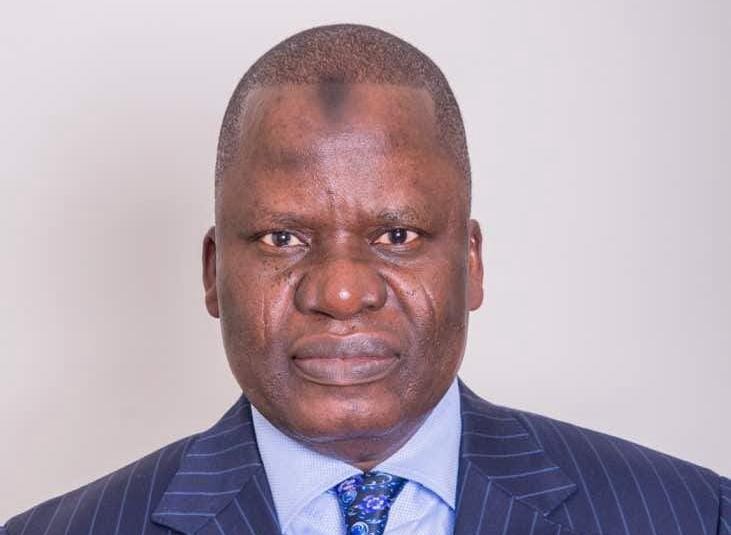
By Suleyman A. Ndanusa PhD OON
When a state receives its monthly FAAC allocation, citizens are entitled to ask a simple question, where did the money go, and what did it do for the people? The President’s reported approval for the EFCC to monitor allocations to states and local governments speaks to that important demand for accountability.
But a good purpose does not settle the constitutional question. The key is what “monitoring” means. Following an allocation to confirm it reached the right account is one thing. Investigating evidence that it was diverted is another. Taking charge of a state’s spending choices would be something quite different.
The Constitution gives the Federal Government a clear role in the Federation Account. Section 162 provides for the distribution of revenue among the Federation, states and local governments, under terms prescribed by the National Assembly. It also gives the Revenue Mobilisation, Allocation and Fiscal Commission (RMAFC) a central place in advising on the allocation formula. RMAFC’s constitutional functions include monitoring accruals to and disbursements from the Federation Account.
That is an important oversight role. It helps ensure that revenue is properly accounted for and distributed according to the law. But monitoring how money leaves the Federation Account is not automatically the same as directing how a state spends its share after receiving it.
The Constitution sets out a separate process for state finances. Sections 120 and 121 require state spending to be authorised through the state’s own constitutional budget arrangements, while section 125 provides for the State Auditor-General to audit public accounts and report to the House of Assembly. Put simply, the Federation helps determine and distribute the shares; a state’s elected institutions remain responsible for authorising and auditing its expenditure.
This does not put state officials beyond the reach of the law. The EFCC Establishment Act empowers the Commission to investigate financial crimes and reported cases of suspected wrongdoing. Where there is evidence of diversion, fraudulent contracts, money laundering or other offences, the EFCC can investigate in accordance with its statutory powers. The Supreme Court’s decision in Attorney-General of Ondo State v Attorney-General of the Federation also recognises the Federal Government’s authority to legislate against corruption.
The distinction is worth keeping clear. The EFCC may investigate a suspected crime; that does not make it the auditor-general, budget office or spending manager of every state. A badly chosen project, an unpopular policy or poor service delivery deserves scrutiny. But those matters do not, by themselves, establish a crime.
RMAFC’s role also deserves careful definition. Its mandate to monitor Federation Account accruals and disbursements is explicit, and the 2025 Act strengthens the Commission’s statutory framework. The public should therefore be told how the proposed EFCC monitoring will work alongside RMAFC’s responsibilities, state auditors and legislative oversight. Monitoring the allocation process is plainly part of the constitutional design. A broader power to supervise every state’s downstream spending should not be assumed without a clear legal basis.
Local governments add another important dimension. In its 2024 judgment on local government financial autonomy, the Supreme Court affirmed that allocations due to councils should be paid directly to democratically elected councils. That makes it especially important to establish whether councils receive the funds allocated to them and whether suspected diversion is investigated. It does not, on its own, transfer routine control of council budgets to the President or the EFCC.
The report describes a proposed framework for tracking allocations, checking projects and publishing reports, while noting that important details have yet to be disclosed. Before the arrangement becomes a general system of federal supervision, the public deserves clarity. What exactly will EFCC monitor? What triggers an investigation? How will its work relate to RMAFC and the state auditors? What safeguards will prevent the process from being used selectively against political opponents?
“FAAC money is not free money” is a welcome reminder that public funds must serve the public. Yet accountability is strongest when it respects the Constitution as carefully as it enforces the law. The Federal Government should ensure that revenue is collected and distributed properly. The EFCC should pursue evidence of financial crime. States and local governments should account for their spending through the institutions the Constitution assigns to that task.
Citizens are right to ask what their money has achieved. The answer should come through transparent records, capable auditors, active legislatures and impartial investigations not through uncertainty over who is entitled to control the purse.
Suleyman A. Ndanusa, PhD, OON, is an economist, lawyer, strategic studies scholar, and public policy thinker and practitioner with extensive experience in financial markets, regulation, governance, national Security and development.