

Former Nigerian President Muhammadu Buhari has died at the age of 82. He passed away on Sunday, July 13, 2025, at a private clinic in London, United Kingdom, after a period of illness.
The news of his death was confirmed by his longtime spokesperson, Garba Shehu, who posted a brief statement on his personal X (formerly Twitter) account. “INNA LILLAHI WA INNA ILAIHIRRAJIUUN,” Shehu wrote, invoking a traditional Islamic prayer for the dead. “The family of the former president has announced the passing on of the former president, Muhammadu Buhari, GCFR, this afternoon in a clinic in London. May Allah accept him in Aljannatul Firdaus, Amin.”
The former leader had reportedly been battling an undisclosed illness in recent weeks. Although concerns about his health had been circulating online, one of his former aides, Bashir Ahmad, had earlier assured the public that Buhari was receiving medical attention and was not in critical condition. However, details about his condition remained largely private until his death.
Born on December 17, 1942, in Daura, Katsina State, Muhammadu Buhari rose through the ranks of the Nigerian Army, eventually attaining the rank of Major General. He first came to national prominence when he led a military coup that overthrew the civilian government of President Shehu Shagari on December 31, 1983. At just 41 years old, Buhari became Nigeria’s military Head of State, a position he held until August 1985, when he was ousted in another coup led by General Ibrahim Babangida.
As a military ruler, Buhari was known for his stern anti-corruption stance and his “War Against Indiscipline” campaign, which sought to instill order and patriotism in public life. His regime was also criticized for human rights abuses and curtailing press freedom, but his image as a no-nonsense disciplinarian would continue to define him well into his political career.
Following years away from the public eye, Buhari returned in 1994 when he was appointed Executive Chairman of the Petroleum Trust Fund (PTF) by General Sani Abacha’s military government. Under Buhari, the PTF managed revenues from increased petroleum prices to fund development projects across Nigeria. His leadership of the fund was widely regarded as transparent and efficient.
With the return to civilian rule in 1999, Buhari entered partisan politics. He ran for president three times— in 2003, 2007, and 2011—without success. However, in 2015, he achieved a historic victory by defeating incumbent President Goodluck Jonathan in an election that marked the first time an opposition candidate unseated a sitting Nigerian president through the ballot box.
Buhari’s 2015 win was largely driven by public frustration over corruption and insecurity, particularly the Boko Haram insurgency in the northeast. His administration promised change and focused on tackling graft, rebuilding infrastructure, and restoring security. Key infrastructure projects during his eight-year tenure included the Abuja-Kaduna and Lagos-Ibadan standard gauge railway lines, and the long-awaited Second Niger Bridge.
Despite these achievements, his presidency was also marked by significant economic challenges. Nigeria experienced two recessions during his tenure, with high inflation, a weakening naira, and rising unemployment fueling discontent. Critics accused his government of economic mismanagement and suppressing dissent, but his supporters maintained he laid the foundation for a more accountable and resilient state.
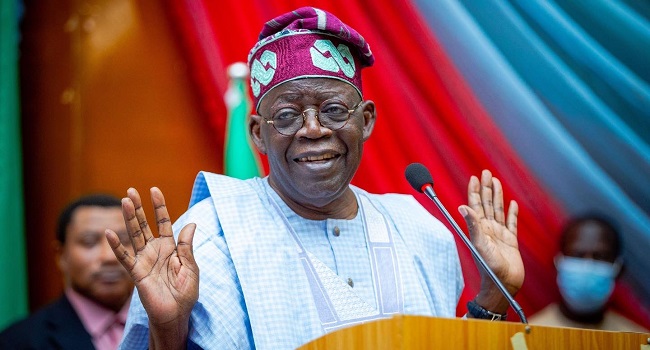
Buhari left office in May 2023, handing over to his party’s successor, President Bola Ahmed Tinubu. In retirement, he returned to his hometown of Daura before later relocating to the UK for medical treatment.
He is survived by his wife, Aisha Buhari, and their children.
Muhammadu Buhari’s legacy remains complex—admired by many for his anti-corruption stance and disciplined leadership, yet criticized by others for economic hardship, human rights concerns, and a perceived lack of flexibility. His death marks the end of an era in Nigerian political history.