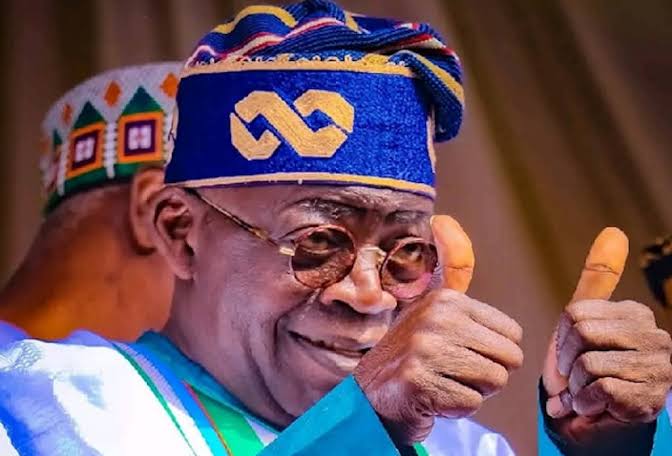
President Bola Tinubu on Sunday, October 11, took to his X handle to reel out information he received from some Nigerians on how he claimed they are now paying less for transportation and how some commercial drivers now spend less money to power their vehicles.
Tinubu said this against the backdrop of his promise that Nigerians would, from October 1, begin to pay less for transportation across the country.
On Sunday, he said in his post that some citizens have begun paying less for transportation.
He wrote: “Dear Blessing, I watched your video and listened as you explained how your journey from Masaka to Berger in the FCT now costs ₦500 instead of ₦1,500. That is ₦1,000 saved every trip. I know what that means when you have a family to feed, bills to pay and other responsibilities waiting at home.
“I was equally pleased to hear from Ada and Abigail, who now pay ₦1,600 instead of ₦4,000 to travel from Enugu to Nsukka, saving ₦2,400 on each journey.
“I also listened to Kabir, a taxi driver who explained that ₦10,000 worth of CNG allows him to make three more return trips than his colleagues using petrol. He says he has no intention of going back to petrol.
“I have also received encouraging feedback from Borno, where some commuters are now paying as little as ₦50 per trip on CNG and electric vehicles.
“Your various experiences show what our investment in CNG transportation is intended to achieve. Lower operating costs for drivers should translate into more affordable fares for passengers, leaving families with more money for their everyday needs.
“When we removed the petrol subsidy, I knew the decision would bring difficulties for many households. With that decision came a responsibility to provide practical alternatives that would ease transportation costs.
“Your stories show this is already happening, and I want more Nigerians to experience these benefits.
“To Emmanuel, who asked for more buses: I heard you.
“I know many Nigerians are still waiting for affordable transportation to reach their communities. We are working with state governments through the Nigeria Governors’ Forum and private investors to expand these services under the National Affordable CNG Transportation Programme.
“In the past few weeks, Ekiti has received 15 buses, Lagos 20, and Akwa Ibom has 50 ready for service. Katsina has introduced 30 CNG hybrid buses and 200 electric tricycles. Kano has also received 30 CNG buses and five electric buses, with another rollout scheduled for Edo.
“Kaduna’s 100 CNG buses have carried over three million passengers to date.
“Beyond the buses, more than 400 certified centres have converted over 120,000 vehicles to CNG. We are also expanding refuelling infrastructure so drivers can access CNG conveniently and more Nigerians can benefit from lower transport costs.
“I also recognise the pressure rising petrol prices place on families and businesses.
“To cushion the impact, we have waived over ₦3.3 trillion in fuel taxes and duties. NNPC Retail is foregoing its profit margin for 30 days, prioritising public transport operators, while we work towards a ₦1,350-per-litre ceiling on wholesale petrol supply costs to reduce price volatility.
“These measures are intended to ease the immediate burden while we continue expanding affordable transportation alternatives.
“As president, I have a duty to provide relief today without compromising our children’s future.
“Every commitment must be sustainable and backed by a credible plan. That responsibility guides our decisions, including the difficult ones.
“Anyone seeking to lead Nigeria should be prepared to explain what their promises will cost, how they will deliver them, and whether they can sustain them.
“Promises are easy to make when the costs can be postponed, leaving Nigerians and future generations to pay the bill.
“Blessing, Ada, Abigail and Kabir, your stories encourage me because they show what these investments mean in the daily lives of Nigerians.
“Emmanuel, your request reminds me of the work still ahead. I know many more Nigerians like you are waiting for these services.
“Our responsibility is to keep expanding access until affordable transportation becomes a reality for more communities across our country.
“That is the work we will continue in collaboration with the states.”