By News Agency of Nigeria (NAN)
Seven-year-old Oluchi Okechukwu had always believed that blood on her body could only mean she had fallen or scraped her knee.
However, on a quiet day, she noticed a dark red stain spreading across her skirt.
It frightened her because she felt no pain nor had any memory of being hurt, and she could not understand why the blood seemed to be coming from a part of her body she associated only with using the toilet.
Her mother, Mrs Amaka Okechukwu, froze when she realised what the blood meant, her voice trembling as she asked, “How can my seven-year-old girl be seeing her period at this age?”
At first, confusion gave way to tears and fear of the unknown, as she imagined the implications that might follow.
Nevertheless, she eventually gathered herself, sat beside Oluchi and explained what menstruation was.
She demonstrated how to use a pad, reassured her that she was not hurt or sick and promised to walk the journey with her.
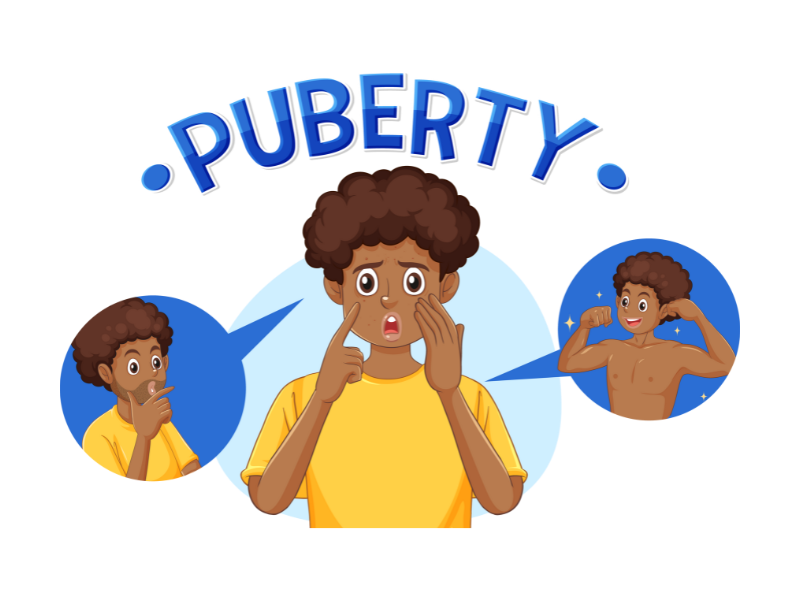
Medically, such an experience is known as precocious puberty, which refers to the unusually early onset of puberty; that is, the development of secondary sexual characteristics before the age of eight in girls and nine in boys.
In simple terms, the body begins to mature far earlier than is biologically expected.
Ordinarily, this is not how puberty begins in Nigeria, where data consistently places the average age of first menstruation between 13 and 14 years, with only a small number beginning before age 10.
Therefore, a seven-year-old experiencing menstruation falls far outside the expected range and is considered a condition specialists caution should never be dismissed as merely “early but normal.”
A public health physician, Dr Busayo Awolola, explains that precocious puberty is triggered by early hormonal signals from the brain.
“For true precocious puberty, we see a combination of changes such as breast development, growth acceleration, pubic hair, and eventually menstruation; all linked to hormonal activation from the brain,” Awolola explains.
Furthermore, she notes that parents are often the first to notice unusual changes but may lack the language or knowledge to interpret them properly.
According to her, menstruation at age seven is definitely considered precocious and requires careful evaluation.
In particular, early medical assessment helps rule out underlying causes.
She said this is necessary to ensure the bleeding is not caused by a tumour, ovarian cyst, or thyroid disorder.
“Check Bone Age: A simple X-ray of the wrist will show if her bones are ageing too fast and to consider treatment.
“GnRH analogues (puberty blockers) can be used to pause puberty. This stops the periods and keeps the growth plates open, allowing the child to grow to a normal height and mature emotionally before puberty resumes at a regular age,” she said..
Globally, research entitled “Precocious Puberty: An Overview of Global Trends and Patterns” estimates that the condition occurs in roughly one in every 5,000 to 10,000 children worldwide and is far more common in girls than boys.
In addition, the study confirms that in the majority of cases, the cause is idiopathic; meaning the brain’s hormonal switch turns on too early for reasons that remain unknown.
Similarly, local evidence reflects global findings.
A seven-year retrospective review conducted at the University of Calabar Teaching Hospital examined children who presented with early-onset puberty between 2015 and 2021.
The study confirmed that precocious puberty, though uncommon, does occur among Nigerian children.
Moreover, it highlighted the need for clinicians and parents to distinguish true precocious puberty from benign conditions such as premature adrenarche.
Premature adrenarche refers to early breast development without other signs of puberty and often resolves naturally.
On the other hand, it may involve the early appearance of pubic hair, mild acne, or adult-like body odour while the ovaries remain inactive.
Although both conditions may cause anxiety, specialists emphasise that they do not represent true puberty and generally do not require the same level of medical intervention.
Meanwhile, sexual and reproductive health expert, Ms Oyinkan Gbolagunte, observes that many families are unprepared when confronted with early puberty.
She stresses that some parents assume it is harmless or hereditary.
However, they may not realise that early hormonal activation can affect a child’s final adult height, emotional development, and social experiences.
According to her, early puberty can be influenced by multiple biological, environmental and lifestyle factors, including genetics, body weight and nutrition, and environmental exposure to hormone-disrupting chemicals found in some plastics and pesticides.
Additionally, chronic medical conditions or brain abnormalities may also be responsible.
Beyond the physical implications, psychologists warn of the emotional toll.
For psychologist, Dr Kareemah Madawaki, a seven-year-old experiencing menstruation is likely to feel frightened and overwhelmed, especially without prior knowledge of bodily changes.
“Children at that age often interpret bleeding as injury. They rely on adults to tell them they are safe,” she says.
Madawaki urged parents to use simple explanations such as, ‘Your body is growing a little faster than others’, and to teach menstrual care gently.
Equally important, she notes that children closely observe parental reactions.
“When a parent panics, the child learns to panic too. Calm reassurance is crucial,” she said.
She stated that understanding, patience and openness help children cope with changes that arrive earlier than expected.
Furthermore, Madawaki encourages schools to establish support systems for young girls who may experience menstruation during school hours.
These, she said, should include private and clean washrooms, access to water and sanitary products and teachers trained to offer quiet, respectful assistance.
“A school environment free of shame gives a child confidence and tells her she is normal and supported”.
On stigma, she warned that silence can deepen vulnerability and isolation.
“When adults treat menstruation as taboo, children absorb the message that normal biological processes are shameful,” adding that breaking the silence is protective because it normalises, educates, and empowers children as they grow.
Ultimately, medical professionals agree that early menstruation should never be ignored, as evaluation by a paediatric endocrinologist can determine whether treatment is necessary.
With timely care; including puberty-suppressing medication when appropriate, children can continue to develop emotionally and physically at a pace more aligned with their chronological age.
Nevertheless, with awareness, prompt medical attention and compassionate support, experts say no child has to face the confusion of early puberty alone.