

By Ebenezer Mabinuola
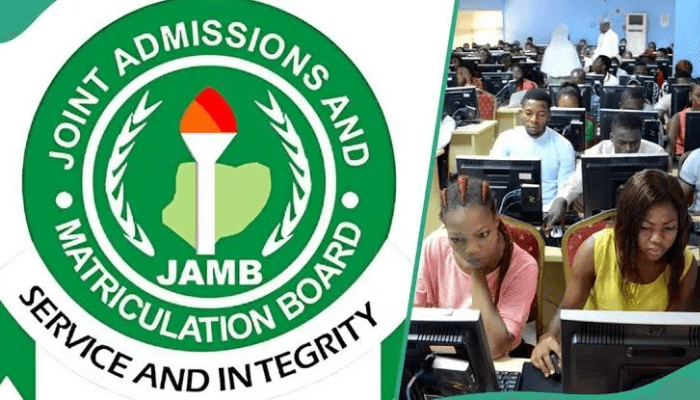
In what has become one of the most turbulent years in Nigeria’s tertiary admissions history, the Joint Admissions and Matriculation Board (JAMB) has released the results of its rescheduled 2025 Unified Tertiary Matriculation Examination (UTME), while simultaneously pulling back the curtain on a web of shocking examination fraud.
The resit was prompted by a catastrophic technical glitch during the original UTME, which disrupted testing for nearly 380,000 candidates across several states, predominantly in Lagos and the South-East.
In the aftermath, JAMB rescheduled exams for 336,845 of the affected candidates. However, 21,082 did not show up — a figure JAMB described as “concerning” but not entirely unexpected.
The board has since announced a mop-up exam to accommodate both these absentees and others who missed the main UTME for “genuine or unverified reasons.”
But the bigger story lies beneath the surface: the sheer scale and sophistication of exam malpractice uncovered during the resit process.
According to JAMB’s statement, more than 3,000 candidates were found to be entangled in organized cheating schemes involving biometric forgeries, impersonation, and even artificial intelligence-powered identity manipulation.
The board revealed that several CBT centres operated like digital crime rings — some reportedly hacking their own networks to upload answers remotely.
In one striking instance, impersonators who were already enrolled in universities allegedly posed as candidates and took the exams on their behalf, slipping through weakly enforced ID protocols.
Dr. Fabian Benjamin, JAMB’s Public Communication Advisor, described the operations as “complex, premeditated, and involving multiple actors,” including school owners and rogue invigilators.
In response, JAMB is moving swiftly. Several CBT centres have already been blacklisted, with their operators facing prosecution.
Those found guilty of tampering with biometric data or using AI tools to forge identities will be handed over to law enforcement agencies.
Nonetheless, in an unusual gesture of leniency, JAMB granted a one-time waiver to certain categories of candidates — particularly those implicated in “WhatsApp Runs,” a slang term for online cheating forums. Their results have been released, but with stern warnings. “This is not forgiveness,” the board noted, “it is a final warning.”
Also controversially, the board released results for underage candidates who failed to meet the eligibility criteria. These candidates had signed waivers acknowledging that even with released results, they would not be granted admission without a court ruling.
To ensure integrity, JAMB’s panel of Chief External Examiners, led by Prof. Olufemi Peters of the National Open University of Nigeria, reviewed the resit outcomes.
Psychometric validation of results was conducted by education statistician Prof. Boniface Nworgu, who confirmed that the overall performance trends remained within the historical range of 11% to 34%.
Contrary to viral claims of exceptional performances among affected candidates, JAMB clarified that 99% scored below 200, and very few surpassed 217.
In light of rising ethnic tensions and accusations that certain regions were unfairly targeted by the technical failures, JAMB firmly denied any regional bias, urging Nigerians to reject tribalist narratives. “The failure was systemic, not sectional,” the board asserted.
JAMB also issued a scathing criticism of unregulated tutorial centres, calling them “incubators of dishonesty” and urging state and federal authorities to implement stricter oversight and licensing protocols.
While the dust has begun to settle, JAMB isn’t backing down. Plans are underway to re-evaluate CBT centre accreditation, potentially with the assistance of independent consultants.
The board expressed gratitude to its partners — including WAEC, NECO, ABU Zaria, and the TRCN — for adjusting their schedules to accommodate the emergency resit, and thanked Nigeria’s security agencies for cracking down on fraud networks.
In closing, JAMB reaffirmed its commitment to restoring trust in the national examination system. “We are not perfect,” Dr. Benjamin admitted, “but we are determined to be better. Our resolve to uphold merit, fairness, and transparency in Nigeria’s admissions process is unshaken.”