

By Nchetachi Chukwuajah
The N58.47 trillion appropriation bill has passed the second reading at the House of Representatives.
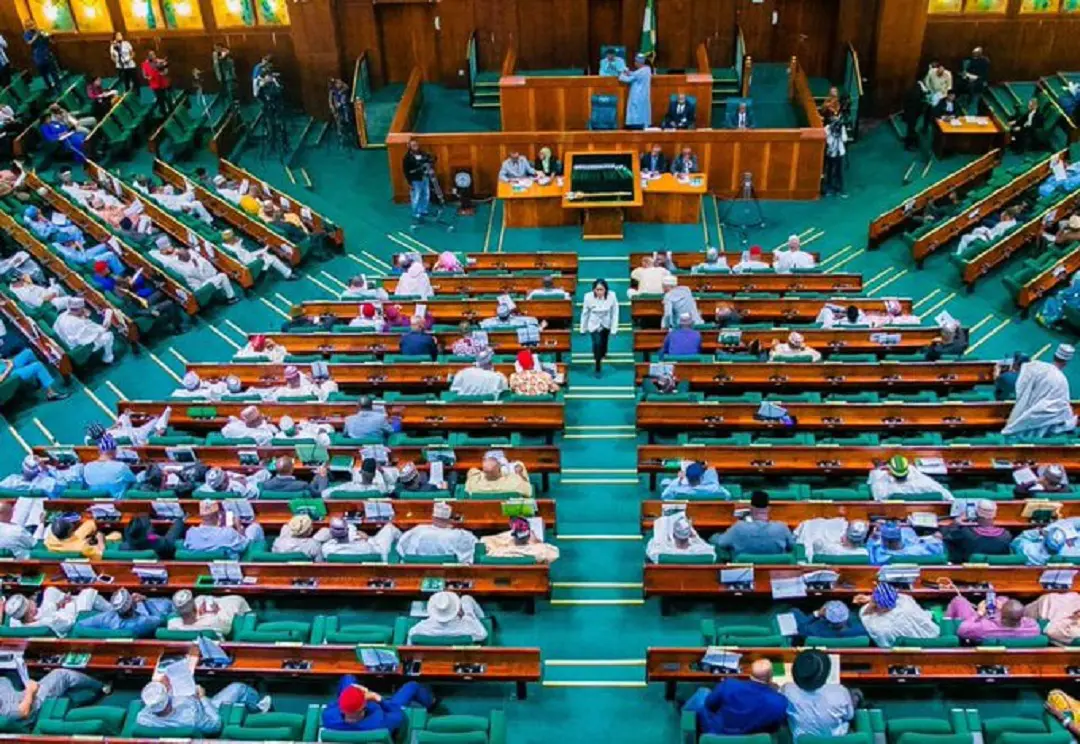
The bill scaled second reading during plenary on Thursday, January 29, after the House reconvened from over 30 minutes of executive session.
A motion for the consideration of the budget was moved by the lawmaker representing Owan Federal Constituency and the Majority Leader, Julius Ihonvbere.
Presenting the bill’s general principles, Ihonvbere described the budget as part of a long and difficult journey towards peace, growth, stability, and sustainable development.
According to him, true development must be sustainable, noting that temporary progress does not amount to real development.
Ihonvbere urged fellow lawmakers to put themselves in the position of those managing the economy, stressing that the National Assembly had a responsibility to guide the executive and ensure accountability.
He highlighted the areas of progress of the President Bola Tinubu administration, including exchange stability, increased external reserves, improved budget discipline, stronger revenue performance, better tax administration, blockage of financial leakages, consolidation of macroeconomic stability, improvement of the business environment, human capital development, and effective debt management.
He said both the executive and the legislature were committed to implementing these goals in the interest of Nigerians.
Ihonvbere described the budget as a statement of promises, expectations, and the government’s vision, reflecting a commitment to building a social, political, economic, and cultural environment that enables Nigerians to reach their full potential.
Following Ihonvbere’s presentation, Speaker of the House, Tajudeen Abbas, called for a voice vote, with the “ayes” outweighing the “nays.”
The House subsequently passed the bill for second reading without any debate or opposition.
Recall that President Bola Tinubu presented the 2026 budget to the joint session of the National Assembly on December 19, and the Senate passed it for second reading on December 23.
A breakdown of the budget shows that out of the total N58,472,628,944,759 budget, N4,097,381,103,856 is earmarked for statutory transfers and N15,909,361,631,657 for debt servicing.
The budget proposes N15,251,538,827,423 for recurrent (non-debt) expenditure, which includes the routine running costs of government.
In addition, the appropriation bill allocates N23,214,347,381,824 to the development fund for capital expenditure, meant to finance infrastructure and other long-term projects.