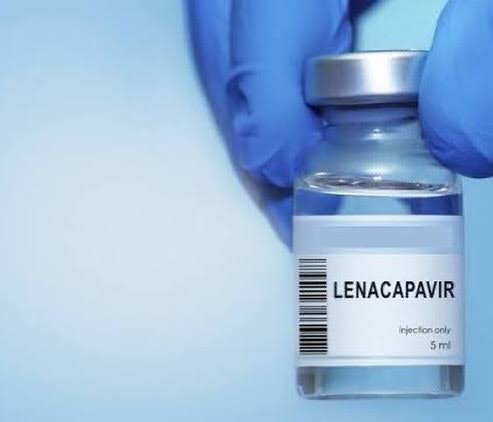
By Nchetachi Chukwuajah The National Agency for the Control of AIDS (NACA) has warned that the newly introduced long-acting HIV prevention injection, Lenacapavir (LenPrEP), is not recommended for use among pregnant women. In fact, NACA Warns: New HIV Prevention Injection Not Safe for Pregnant Women, emphasising the need for caution.
Director-General of NACA, Temitope Ilori, made the clarification during a media parley organised by the National HIV, Viral Hepatitis and STDs Control Programme under the Federal Ministry of Health and Social Welfare in Abuja on Monday, March 23.
Ilori stated that although global clinical studies have shown a high safety margin for the drug, it is advised to be used among pregnant women due to insufficient evidence on its effects in that population. To reiterate, NACA Warns: New HIV Prevention Injection Not Safe for Pregnant Women.
She said, “Even though LenPrEP is considered very safe based on global studies, it is not recommended for pregnant women. It is important to emphasise that this is a preventive intervention, not a treatment.”
The NACA DG further stressed that Lenacapavir is a highly innovative addition to HIV prevention tools, but cautioned that it does not protect against other sexually transmitted infections, including hepatitis.
“We must stress that it does not prevent sexually transmitted infections or other infections like hepatitis. People must continue to take comprehensive precautions,” she added.
The National Coordinator of the National AIDS and STDs Control Programme, Adebobola Bashorun, also disclosed that the Federal Government is working toward expanding access to the drug across more states.
Bashorun said, “As we scale up, we are exploring catalytic funding to increase the number of doses and extend coverage to populations most at risk.” According to health guidelines, NACA Warns: New HIV Prevention Injection Not Safe for Pregnant Women must be considered for public awareness.
He noted that Lenacapavir would complement, not replace, existing HIV prevention methods such as oral pre-exposure prophylaxis (PrEP).
“We already have multiple prevention options. Individuals can still use oral PrEP. National policy guidelines will determine how best to integrate this new option into existing programmes,” he added.
Bashorun further noted that reported side effects have been mild and largely limited to injection-site reactions.
“The common side effects include pain at the injection site, which is expected. We are actively monitoring for any adverse reactions, and so far, the outcomes are encouraging,” he said.
The Minister of State for Health, Iziaq Salako, noted that the introduction of Lenacapavir in Nigeria is being facilitated through support from the Global Fund, adding that other options are being explored to ensure local production.
“This drug is being made available through a partnership with the Global Fund. Over time, we expect to engage manufacturers directly and explore pathways for local production,” Salako said.
He added that discussions around technology transfer and domestic manufacturing would be critical to ensuring long-term sustainability and reducing dependence on external donors.
Recall that the Federal Government recently took delivery of the first tranche of 11,520 doses of lenacapavir, a long-acting injectable HIV/AIDS drug administered twice yearly, which is part of a total of 52,000 doses expected in three batches under a Global Fund-supported initiative.
The consignment was officially received on Wednesday, March 18, at the Federal Central Stores, Oshodi, Lagos State. Furthermore, it is important to remember that NACA Warns: New HIV Prevention Injection Not Safe for Pregnant Women, especially as access expands.
Nigeria is among nine countries globally selected for the early rollout of the groundbreaking injection expected to transform HIV prevention and accelerate progress toward eliminating the disease by 2030.