By Mbachu Paul
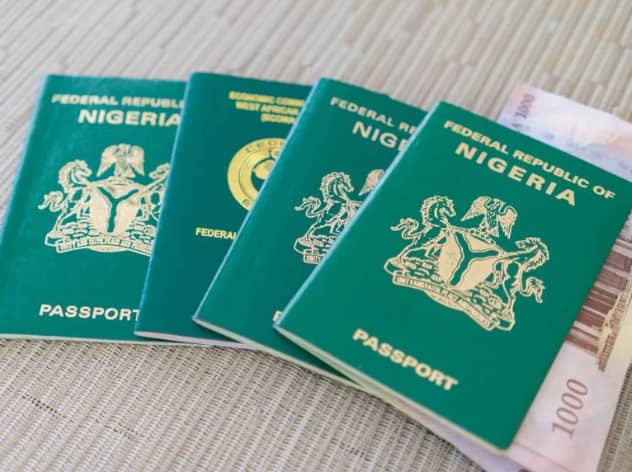
The Nigerian passport has become less powerful on the global stage, with the country slipping to 90th position in the latest Henley Passport Index, reflecting a further decline in the travel freedom enjoyed by its citizens.
According to the July 2026 edition of the global ranking released by Henley & Partners, Nigerian passport holders can now travel to 44 countries either visa-free or by obtaining a visa on arrival, down from 46 destinations in the previous ranking.
The latest ranking places Nigeria behind several West African neighbours, including Benin, Burkina Faso, and The Gambia, in terms of international travel access.
Although the Nigerian passport gained visa-free or visa-on-arrival access to nine new destinations between 2025 and 2026—including Fiji, Micronesia, Mozambique, Rwanda, Togo, Samoa, Palau, Niue, and Montserrat—it simultaneously lost access to seven countries, resulting in an overall decline in travel privileges.
Among the notable changes, Ethiopia discontinued its visa-on-arrival policy for Nigerian citizens in 2022, while countries such as Zambia, Zimbabwe, and Lesotho have also tightened their entry requirements for Nigerian travellers.
With the latest ranking, Nigeria now holds the fifth weakest passport in Africa, outperforming only the Democratic Republic of Congo, Eritrea, Sudan, and Libya.
Across the continent, Seychelles continues to hold the strongest passport, ranking 24th globally with visa-free or visa-on-arrival access to 155 destinations. Mauritius follows in 29th place with access to 148 countries, while South Africa ranks 51st globally, offering access to 106 destinations.
Globally, Singapore retained the world’s most powerful passport, providing access to 192 destinations without the need for a prior visa.
The United Kingdom and the United States, which dominated the rankings a decade ago, have slipped to 4th and 8th positions, respectively. Afghanistan remains at the bottom of the index, with its citizens able to access only 23 destinations without obtaining a visa in advance.
The latest figures also underscore Nigeria’s long-term decline in global passport strength. Data from Henley & Partners shows that the country has fallen 27 places since 2006, when the Nigerian passport ranked 62nd in the world.
Analysts note that Nigeria’s slight movement in the rankings over the years has not been driven by significant improvements in visa agreements but rather by changes in the performance of other countries. More importantly, the actual number of destinations Nigerians can access without a pre-approved visa has continued to decline.
For millions of Nigerians—including students seeking education abroad, business professionals pursuing international opportunities, and tourists—the weaker passport translates into more stringent visa requirements, increased travel costs, longer processing times, and greater administrative hurdles before international travel can take place.