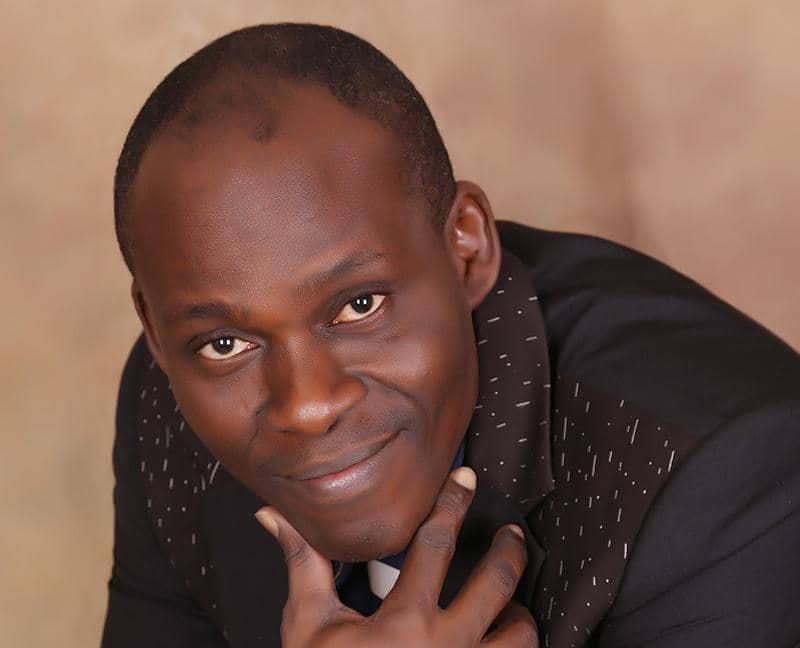
By Olatunbosun Obafemi
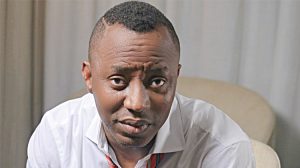
In contemporary Nigerian politics, few figures generate as much debate as Omoyele Sowore, the activist, journalist and perennial presidential candidate. From his days as the fiery founder of Sahara Reporters, to his “Revolution Now” protests, Sowore has carved out a reputation as one of the most uncompromising critics of successive governments. His anti-government posture – consistently sharp, often confrontational, and unapologetically radical – raises a fundamental question: is Sowore’s defiance a necessary voice of accountability in a democracy, or does it risk damaging Nigeria’s reputation at home and abroad?
On the one hand, Sowore’s critics argue that his rhetoric paints Nigeria in an unflattering light to the global community. They contend that his uncompromising attacks on government institutions create a narrative of instability, corruption, and dysfunction that foreign investors and international partners seize upon. For instance, when Sowore takes to international platforms to accuse Nigerian leaders of looting the treasury or running a “criminal enterprise,” the headlines resonate beyond our borders. Diplomats, investors, and even tourists may interpret such statements as confirmation of their worst fears about Nigeria. In this sense, his unfiltered activism could be seen as amplifying Nigeria’s flaws rather than helping to quietly address them.
Moreover, his detractors accuse him of lacking balance. To them, Sowore never acknowledges progress in governance, no matter how minimal. For example, initiatives in digital banking, improvements in electoral processes, or even strides in infrastructure rarely earn his recognition. Instead, he zeroes in on failures with a combative tone, sometimes calling for outright regime change. This, his opponents claim, undermines constructive opposition and veers into anarchism, which could destabilize the very democratic system he purports to defend.
Recent events illustrate this tension. Only days ago, Sowore was reportedly invited by the Department of State Services (DSS) for questioning after he repeatedly described President Bola Ahmed Tinubu as a “criminal” during public appearances and on social media. In addition, the Federal Government has filed a court suit against him, accusing him of defamation and incitement. For government supporters, this is evidence that Sowore has crossed the line between activism and reckless speech, endangering public order and disrespecting the office of the presidency. To his allies, however, it is another attempt by the state to silence a dissenting voice and weaponize security institutions against critics.
Yet, to dismiss Sowore’s activism as merely damaging to Nigeria’s image would be to ignore the vital role dissent plays in a democracy. Nigeria’s leaders are not new to public relations campaigns; billions are often spent on image laundering, yet the realities of poverty, unemployment, and insecurity remain stubbornly visible. In such an environment, it takes voices like Sowore’s – loud, persistent, and at times abrasive – to remind those in power that not everyone can be pacified with political platitudes.
History supports this argument. Nigeria’s democratic journey owes much to citizens who refused to be silent in the face of authoritarianism and corruption. From the pro-democracy activists of the 1990s who opposed military rule, to whistleblowers who exposed scandals in civilian governments, the country has always required bold critics to push its leaders toward accountability. Sowore, whether one agrees with his style or not, is an heir to that tradition. His willingness to confront power directly – even at the cost of repeated arrests, detention, and alleged intimidation – signals a determination that cannot easily be dismissed as attention-seeking.
Furthermore, the claim that Sowore damages Nigeria’s reputation abroad may be overstated. The international community is not blind to Nigeria’s challenges; reports from organisations like Transparency International, Amnesty International, and the World Bank already document issues ranging from corruption to human rights abuses. What Sowore does is amplify these concerns from a citizen’s perspective, challenging both local authorities and global partners not to look away. In a world where governments often prefer silence or controlled narratives, such candour can serve as a wake-up call rather than a source of embarrassment.
It is also worth noting that Sowore’s activism speaks to a frustrated generation of Nigerians who feel excluded from governance. Youth unemployment, poor education, and insecurity have left many disillusioned with the political class. In this context, his uncompromising criticism resonates with young people who believe that traditional politicians and even mainstream opposition parties have failed them. By embodying their anger and aspirations, Sowore provides an outlet that, while unsettling to the establishment, keeps democratic engagement alive.
That said, the effectiveness of his approach remains a matter of debate. Effective opposition requires not only criticism but also clear alternatives and practical solutions. While Sowore has presented broad ideas in his presidential campaigns – such as diversifying the economy and tackling corruption – these often lack detailed policy frameworks that could persuade undecided voters or skeptics. Without a constructive balance between critique and solution, there is a risk that his message will be dismissed as perpetual protest, incapable of translating into real governance.
In the end, Sowore’s anti-government stand is both a blessing and a challenge for Nigeria. It is a blessing because it prevents complacency in leadership and keeps citizens alert to their rights. It is a challenge because, without a constructive framework, it risks being caricatured as reckless and damaging. Nigeria’s reputation abroad is not defined by activists but by the conduct of its leaders. If those in power govern responsibly, voices like Sowore’s would serve as necessary checks rather than perceived threats.
For now, Sowore remains an indispensable reminder that democracy is noisy, uncomfortable, and often inconvenient – but also that silence in the face of injustice is far more damaging than criticism ever could be.