

By Olatunbosun Obafemi
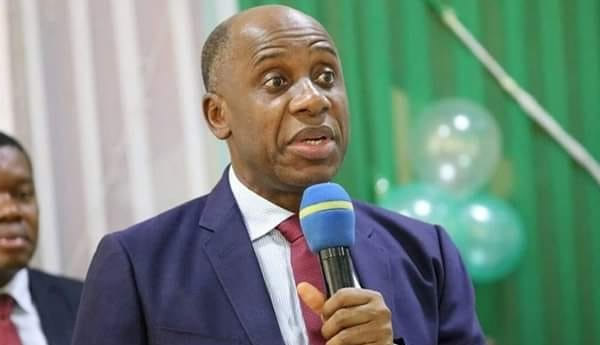
Nyesom Wike is a man who knows how to get things done – and he makes sure everyone knows it. As Minister of the Federal Capital Territory, he has turned Abuja into a construction site of renewed activity. Roads are being fixed, long-abandoned projects are coming back to life, and his hands-on style has earned him praise from admirers who see him as a results-driven bulldozer.
But there is a thin line between firmness and bullying, and Wike seems to cross it too often. His leadership style – loud, combative, and unapologetically domineering – has started to cast a shadow over the Tinubu administration’s image. What was supposed to be a government of “Renewed Hope” increasingly risks looking like a theatre of political strongmen.
President Bola Ahmed Tinubu’s administration is already walking a tightrope. With inflation biting hard, insecurity persisting, and Nigerians growing weary of economic hardship, what the country needs most is calm, confidence, and unity of purpose. Yet Wike’s constant feuds, public threats, and chest-thumping pronouncements do the exact opposite. They project arrogance instead of assurance, chaos instead of cohesion.
Wike’s style has never been subtle. From his days as Rivers State governor, he cultivated a reputation as a political fighter – someone who would rather bulldoze through opposition than build consensus. As minister, that same energy has followed him into Abuja’s corridors of power. He demands absolute control, expects obedience, and brooks no dissent. This might work in a campaign rally or local politics, but at the federal level, it becomes dangerous.
For one, his behaviour undermines the culture of collaboration that good governance requires. Ministers are supposed to be members of a team, bound by collective responsibility and mutual respect. Yet when one member of that team dominates headlines for quarrels and controversies, the administration’s message gets lost. Tinubu’s “Renewed Hope” slogan depends on collective effort; Wike’s style suggests a government of one-man shows.
Secondly, his confrontational approach has begun to alienate not just political colleagues but also institutions. The most recent episode – his public altercation with naval officers over land ownership in Abuja – is a case in point. In November 11, 2025, Wike stormed a disputed site in the Gaduwa District, identified as Plot 1946, allegedly linked to a retired Chief of Naval Staff, Awwal Zubairu Gambo. The minister, accompanied by FCTA officials, was confronted by armed naval personnel who blocked his access.
What followed was a fiery exchange caught on camera and circulated widely on social media. Wike lashed out, berating and calling Lt. AM Yerima, the Navy officer who prevented him access to the disputed land a despicable name: “You are a very big fool. As at the time I graduated, you were still in primary school.” He accused the military of intimidating government officials and insisted that no former naval chief could use soldiers to occupy public land illegally. The altercation ended with an embarrassed Defence Headquarters issuing a measured statement, while public opinion split between those who saw Wike as enforcing the law and others who saw a powerful man intoxicated by authority.
This was not an isolated display of aggression. Earlier in 2025, Wike revoked nearly 5,000 land titles across Abuja – a sweeping measure that, while legally defensible, was executed with an alarming lack of empathy or communication. Many residents complained they were treated like trespassers in their own city. His rhetoric was harsh: “What is wrong is wrong. No amount of blackmail can stop us.” That tone might appeal to those craving order, but it comes across as bullying to ordinary people whose livelihoods hang in the balance.
Wike’s heavy-handed enforcement of land laws, demolitions, and revocations has left a trail of resentment. Businesses and homeowners allege selective application of the law, while civil society groups have accused him of targeting perceived opponents and ignoring due process. These actions deepen public distrust and feed into the broader narrative of impunity – the very thing Tinubu promised to end.
And then there is the political cost. Wike’s polarizing personality creates tension not only within the cabinet but also between Tinubu’s allies and the opposition. His influence in Rivers State politics has already sparked internal feuds that spill into national headlines. Instead of focusing on economic recovery or security reform, much of the political discourse now revolves around Wike’s latest clash. This is a distraction the Tinubu government can ill afford.
In a country struggling with trust in leadership, optics matter. Nigerians are increasingly skeptical of powerful politicians who act with impunity, and Wike’s overbearing style feeds that skepticism. When citizens see a minister behaving like a warlord rather than a servant of the people, it deepens the perception that government is detached from ordinary suffering. Tinubu’s team should be projecting empathy, restraint, and accountability – not hubris and intimidation.
What makes this even more troubling is that Wike’s achievements are real. He has done more for Abuja’s infrastructure in a short time than some of his predecessors managed in years. But results alone are not enough. Governance is not just about what gets done, but how it gets done. If those results come wrapped in arrogance and disregard for process, they lose their moral weight.
For President Tinubu, Wike’s conduct presents a test of leadership. The President cannot afford to let one man’s temperament redefine the tone of his administration. Wike’s passion and competence are valuable assets – but only if tempered with humility and discipline. If left unchecked, his bulldozer politics could flatten more than just opposition; it could crush the credibility of the very government he serves.
In the end, Wike’s power play may yield short-term gains but long-term headaches. Tinubu’s vision of “Renewed Hope” depends on restoring faith in governance. That faith cannot coexist with the image of a minister who bullies colleagues, berates officers, and bulldozes citizens.
Nyesom Wike can be a force for progress or a symbol of everything wrong with Nigeria’s political culture. The choice – and the consequences – are his. But if Tinubu wants his government to endure, he must remind his ministers that power is not a performance, and governance is not a boxing ring.