

By Ebenezer Mabinuola
Red Square was awash with spectacle and tension on Friday as Russian President Vladimir Putin commemorated the 80th anniversary of Victory Day, transforming the occasion into a carefully choreographed display of defiance against the West, while honoring the memory of World War II’s fallen soldiers.
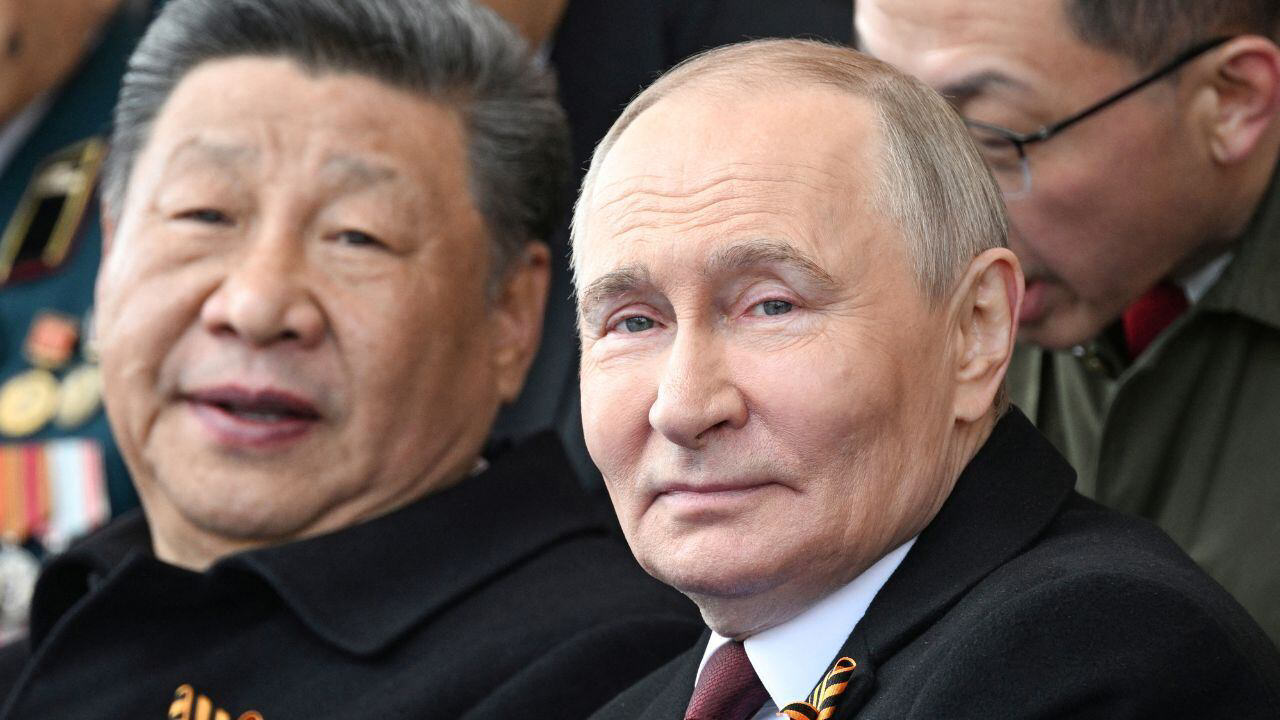
Standing side by side with Chinese President Xi Jinping—his most prominent ally—Putin presided over a military parade that was as much about geopolitics as remembrance. The message was clear: Russia may be embroiled in conflict, but it is not isolated.
A March Through Memory and Might
In the heart of Moscow, beneath the imposing silhouette of Lenin’s mausoleum, more than 11,000 troops marched in flawless synchronization. Among them were 1,500 veterans of Russia’s ongoing war in Ukraine, subtly linking past and present struggles. For the first time in the history of the parade, unmanned combat drones rolled alongside tanks, a testament to the changing nature of warfare in the 21st century.
Putin’s address echoed classic Kremlin rhetoric, invoking the legacy of the Great Patriotic War as he defended what he continues to describe as a “special military operation” in Ukraine. “Truth and justice are on our side,” he declared, drawing a direct parallel between the Soviet fight against Nazism and Russia’s current geopolitical battles.
Xi’s Star Turn on the Russian Stage
Xi Jinping, donning the black-and-orange St. George ribbon—a symbol now banned in many former Soviet states—stood as guest of honor and as a symbolic counterweight to the West. His presence, reinforced by the march of over 100 Chinese soldiers, underscored the deepening ties between Moscow and Beijing, positioning the two nations as ideological allies in opposition to the so-called “collective West.”
Putin praised the “courageous people of China,” linking them to the Allied victory of 1945, and framing current global divides in starkly binary terms. In a gesture that harkened back to Cold War-era optics, the two leaders held private talks before and after the ceremony, with reports indicating that Ukraine and broader global security issues were high on the agenda.
A Diplomatic Mosaic: From Pyongyang to Brasília
This year’s Victory Day parade was uniquely crowded, with leaders from 30 countries attending, defying Western calls for a boycott. Among the notable attendees were Brazil’s President Luiz Inácio Lula da Silva, Venezuela’s Nicolás Maduro, and Serbia’s Aleksandar Vučić, the latter of whom ignored European Union guidance to stay away. Slovakia’s Prime Minister Robert Fico was the only EU head of government to attend, prompting protests from Baltic states, which closed their airspace in response.
Adding intrigue to the event, Putin extended a personal greeting to North Korean generals, whose forces are reported to have fought alongside Russian troops on Russia’s border. Although the North Koreans did not participate in the parade, their presence was symbolically significant, raising alarms in Western capitals.
Ceasefire or Showstopper?
In conjunction with the parade, Russia declared a unilateral 72-hour ceasefire, a gesture swiftly dismissed by Ukrainian officials as “pure theatre.” Ukrainian President Volodymyr Zelensky called the ceasefire a hollow attempt to ensure the safe arrival and departure of foreign dignitaries, citing hundreds of alleged Russian violations since the ceasefire’s announcement.
Zelensky, in turn, reiterated Ukraine’s offer of a genuine 30-day truce, which received backing from U.S. President Donald Trump. Trump, leveraging his influence ahead of the U.S. election cycle, warned that fresh sanctions would be imposed on Moscow if the ceasefire was not honored. He called for immediate peace talks, labeling continued violence as “a humanitarian disaster and a strategic error.”
Despite the ceasefire, Ukrainian analysts observed a significant decrease in Russian aggression on the day of the parade, though many view the halt in hostilities as a temporary tactical pause rather than a meaningful shift.
Europe Watches From Afar
While Moscow celebrated its military might, a contrasting event unfolded in western Ukraine, where top European diplomats gathered in Lviv to support the establishment of a special tribunal for Russian war crimes. The symbolic division between Moscow’s martial display and Lviv’s legal diplomacy highlighted the deepening rift across Europe, marked by conflicting principles and ongoing conflict.
A Parade Wrapped in Paradox
Victory Day, once a celebration of unity against tyranny, has evolved into a complex paradox: a pageantry of peace set against the shadow of ongoing war. Putin’s message was unmistakable. Surrounded by flags, missiles, and the military grandeur of a former empire, he presented Russia not as an isolated pariah, but as the vanguard of an alternate global order — one that resists Western dominance and reinterprets history to its advantage.

In 1945, Soviet soldiers raised a red banner over Berlin. In 2025, Putin and Xi stood together beneath a sky streaked with fighter jets, a powerful reminder that while wars may end, the narratives that shape them endure.