


There are rare moments in history when humanity fundamentally redefines what it considers to be wealth.
The Industrial Revolution transformed coal from an ordinary black mineral into the fuel that powered modern civilisation. The discovery of oil redrew the economic and geopolitical map of the twentieth century. The digital revolution later revealed that ideas, algorithms and data could become assets worth more than factories, machines and even entire industries. Each of these moments expanded our understanding of capital and, in doing so, reshaped the architecture of the global economy.
Another such transformation is now quietly unfolding.
This time, however, the world’s attention is turning neither to what lies beneath the earth nor to what exists in cyberspace. It is returning to something that has always surrounded us but which economics has never fully understood. Forests, rivers, wetlands, biodiversity, coastlines and even the atmosphere are gradually acquiring a significance that extends far beyond their ecological importance. They are increasingly becoming objects of financial value, investment and strategic national interest.
The implications are profound. The twenty first century may well be remembered as the period in which nature ceased to be viewed merely as a backdrop to economic activity and began to emerge as a financial asset class in its own right.
This does not mean that nature has suddenly become more valuable than it was before. Nature has always sustained life, supported production and underpinned civilisation. What has changed is the way finance perceives it. Increasingly, the world’s financial institutions are learning to recognise what ecological systems have always provided but traditional accounting rarely acknowledged. Forests regulate rainfall and absorb carbon. Wetlands reduce the economic costs of flooding. Mangroves protect coastlines from erosion more efficiently than many engineered structures. Healthy soils preserve agricultural productivity while biodiversity strengthens the resilience upon which entire economies ultimately depend.
For centuries, these services remained largely invisible within conventional measures of wealth. They were indispensable but unpriced; essential but seldom accounted for. Nature was recognised as a factor of production, yet its contribution rarely appeared on balance sheets or within the architecture of financial markets.
That quiet omission is beginning to disappear.
Across the global financial system, an extraordinary transition is taking place. Investors increasingly examine climate risks before allocating capital. Insurers now treat environmental resilience as a determinant of financial exposure. Sovereign wealth funds, pension funds and development finance institutions are directing unprecedented resources towards renewable energy, ecosystem restoration, sustainable agriculture and resilient infrastructure. Carbon markets, biodiversity finance, conservation investment and resilience bonds are expanding the boundaries of what financial markets regard as investable assets.
At first glance, these developments appear to be disconnected innovations responding to climate change. In reality, they are manifestations of something much larger. They represent the gradual financialization of nature itself.
That distinction is important.
Economists have long recognised the concept of natural capital. Forests, rivers, fertile land and biodiversity have always contributed to economic production. The novelty of the present moment lies elsewhere. Nature is no longer regarded merely as productive capital supporting economic activity. It is increasingly becoming financial capital capable of attracting investment, generating returns, influencing sovereign risk and shaping long term capital allocation.
This subtle transformation may prove to be one of the defining economic developments of our time.
For generations, finance concentrated primarily on assets created through human enterprise. Companies issued shares. Governments issued bonds. Banks intermediated capital. Real estate accumulated value through development. Markets excelled at financing what humanity constructed.
Today, finance is extending its reach beyond what humanity builds towards what nature itself provides.
That expansion challenges one of the oldest assumptions in economics—that wealth is created principally by transforming nature into something else. Increasingly, value is also being created by preserving nature itself.
The irony is particularly striking from an African perspective.
For decades, development across much of the continent was measured by the volume of resources extracted from the ground. Oil production symbolised prosperity. Timber exports generated foreign exchange. Minerals financed public revenues. Even agricultural success was frequently assessed by the quantity harvested rather than the resilience of the ecosystems that sustained production.
Imagine explaining to a rural farmer, or indeed to many policymakers only a generation ago, that one day a standing forest might command greater long-term economic value than the timber obtained from cutting it down. The proposition would probably have been dismissed as wishful environmentalism. Yet this is precisely the economic logic now shaping significant segments of global finance.
There is gentle humour in this reversal. Africans have long joked that money does not grow on trees. The sustainability transition does not quite prove the proverb wrong, but it certainly invites us to reconsider it. While currency may never literally grow on trees, the economic value of leaving some of those trees standing is increasingly exceeding the value derived from felling them.
The joke, however, carries a serious warning.
History reminds us that Africa has often exported raw value while others captured financial value. We exported cocoa while others built global chocolate industries. We exported crude oil while refined products, technology and financial returns accumulated elsewhere. We exported minerals while manufacturing migrated abroad. The financialization of nature presents a similar crossroads. If African countries merely supply carbon assets while others design the financial products, manage the exchanges, own the investment vehicles and capture most of the returns, then the continent risks repeating an old development story under a new environmental vocabulary.
That outcome is neither inevitable nor acceptable.
The sustainability transition offers Africa an opportunity unlike any it has previously encountered. The continent’s extraordinary forests, biodiversity, renewable energy resources, coastlines, wetlands and agricultural landscapes constitute one of the largest reservoirs of natural capital in the world. The challenge is no longer simply to conserve these assets. It is to develop the institutions, financial markets and governance systems capable of transforming natural capital into enduring national wealth while ensuring that the benefits remain anchored within African economies.
In this sense, the financialization of nature is not simply the creation of new financial products. It is the emergence of an entirely new economic ecosystem. Governments, regulators, sovereign wealth funds, development finance institutions, pension funds, insurers, capital markets, scientists, technology firms and local communities are becoming interconnected participants in the production, preservation and financing of natural capital. Success will depend not merely upon the abundance of environmental resources but upon the quality of the institutions that organise this emerging ecosystem.
Perhaps this evolution also invites us to rethink the way nations measure prosperity.
For generations, governments have reported gross domestic product, fiscal deficits, foreign reserves and public debt as the principal indicators of national wealth. These remain indispensable. Yet they tell us remarkably little about the condition of the natural assets upon which future prosperity ultimately depends.
The time may therefore be approaching when countries complement their financial accounts with a Natural Capital Balance Sheet—a framework through which forests, freshwater systems, wetlands, biodiversity, productive soils, coastal ecosystems and other strategic environmental assets are systematically measured, monitored and incorporated into national economic planning. Such a framework would not attempt to reduce nature to a mere price tag. Rather, it would recognise that sustainable prosperity depends as much upon the stewardship of natural capital as upon the management of financial capital.
If that day arrives, finance ministers may one day present two balance sheets before Parliament. The first will report the condition of the nation’s finances. The second will report the condition of the nation’s natural wealth. One will describe today’s economy. The other will reveal whether tomorrow’s prosperity is becoming stronger or weaker.
That may ultimately become one of the defining institutional innovations of the sustainability age.
ALSO READ: BEYOND CRYPTO REGULATION: Governing Nigeria’s Emerging Digital Asset Economy
Every generation leaves behind a different understanding of wealth. Ours may be remembered for recognising that the most valuable assets were never absent from the balance sheet. We had simply not learned how to value them, how to govern them or how to invest in them wisely. The future will belong to those nations that understand that prosperity is no longer measured solely by what they extract from nature, but increasingly by what they preserve, finance and pass on to future generations.
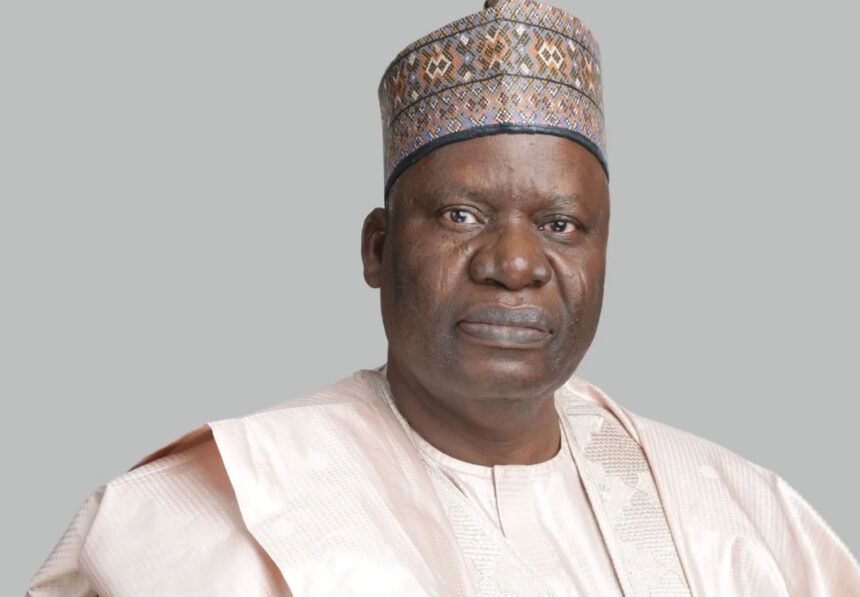
Suleyman A. Ndanusa, PhD, OON, is an economist, lawyer, strategic studies scholar, and public policy thinker and practitioner with extensive experience in financial markets, regulation, governance, national Security and development.