

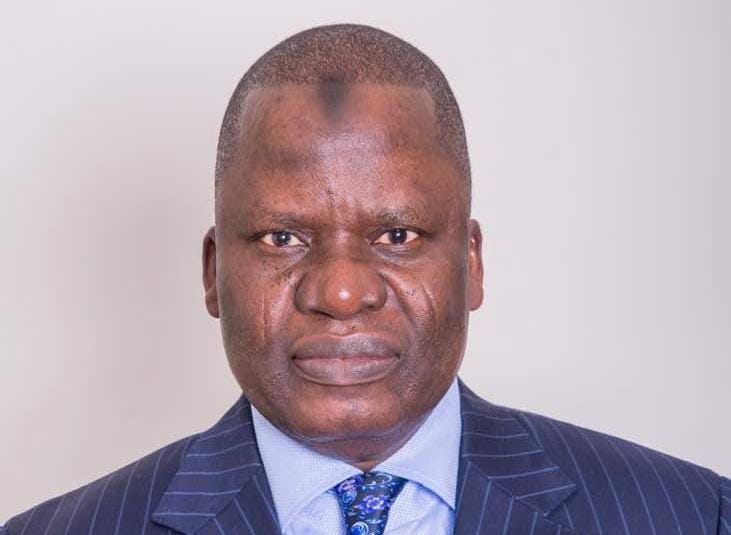
By Suleyman A Ndanusa PhD OON
Institutions, like nations, cannot remain prisoners of the era that produced them. They are established to solve the problems of their time, but their enduring relevance depends on their capacity to respond to the challenges of successive generations. Those that evolve remain national assets. Those that do not gradually become monuments to history.
Few institutions illustrate this reality better than the National Youth Service Corps (NYSC).
For more than half a century, the Scheme has occupied a unique place in Nigeria’s national life. Millions of graduates have worn the khaki uniform, lived in communities far from their homes, served in schools, hospitals, farms, courts, ministries and private organisations, and experienced a Nigeria they might otherwise never have known. For many, the NYSC was their first encounter with the country’s extraordinary diversity. For others, it became the beginning of careers, businesses, friendships and marriages that transcended ethnic, religious and regional identities. Few public institutions have touched the lives of Nigerians as directly or as extensively.
The historical context of its establishment explains why.
The NYSC was created in 1973, barely three years after the end of the Nigerian Civil War. The nation faced the formidable task of healing deep political, ethnic and psychological divisions. National reconstruction required more than rebuilding roads, schools and public institutions; it required rebuilding confidence among Nigerians themselves. The architects of the Scheme recognised that sustainable peace could not be legislated into existence. It had to be cultivated through shared experience. Young graduates were therefore encouraged to leave the familiarity of their home states and immerse themselves in different communities, cultures and traditions, learning firsthand that the Nigerian identity could be stronger than the identities that had divided the country.
Yet national integration was never the Scheme’s only objective. The enabling legislation also envisaged the NYSC as a vehicle for disciplined citizenship, selfless service, manpower development and national development. Graduates were expected not only to understand Nigeria better but also to contribute meaningfully to its development wherever they were posted. From the outset, therefore, the NYSC embodied both a social mission and a developmental mission.
Measured against these aspirations, the Scheme has achieved considerable success. It has contributed to national cohesion in ways that cannot easily be quantified. It has supplied skilled manpower to underserved communities, particularly in education and healthcare. It has exposed generations of graduates to different cultures and economic realities, while helping to foster values of service, resilience and adaptability. In many respects, it remains one of the few truly national institutions that Nigerians across generations continue to share.
At the same time, fifty-three years is a long time in the life of any institution.
The Nigeria of today is vastly different from the Nigeria that gave birth to the NYSC. The country has moved beyond post war reconstruction into an era defined by technological disruption, demographic expansion, youth unemployment, insecurity, global competition and an economy increasingly driven by knowledge and innovation. Employers seek practical competencies alongside academic qualifications. Communities require specialised expertise. Security concerns influence deployment decisions in ways that were scarcely imaginable in 1973. These changes inevitably raise an important question.
Can an institution designed for the priorities of post-war Nigeria continue to deliver maximum value without adapting to the realities of contemporary Nigeria?
This is the context within which the recent approval of comprehensive NYSC reforms by the Federal Executive Council should be understood. The reforms themselves are significant. Their emphasis on technology driven mobilisation, risk sensitive deployment, leadership development, entrepreneurship, digital skills, career oriented primary assignments and improved governance demonstrates a genuine effort to modernise the Scheme. They acknowledge that the needs of today’s graduates differ substantially from those of earlier generations.
The more important issue, however, is not whether these reforms are desirable. Most are. The more important question is whether they adequately address the future role of the NYSC in Nigeria.
Comparative experience suggests that successful national service programmes survive because they evolve without losing sight of their founding ideals. Singapore continually aligns national service with changing security and leadership needs. Ghana has sought to strengthen the contribution of graduate service to national manpower development. Rwanda has adapted youth service to reinforce civic renewal and social cohesion following national trauma. Each country’s approach reflects its unique circumstances, yet they all point to a common lesson: national service remains relevant only when it continues to respond to the country’s most pressing strategic priorities.
Nigeria’s challenge is more complex because those priorities have multiplied rather than disappeared. National unity remains an unfinished project. At the same time, the country faces pressing demands for higher productivity, stronger human capital, greater innovation, enhanced employability and inclusive economic growth. The future of the NYSC should therefore not be framed as a choice between national integration and national development. The institution is capable of serving both purposes.
The real opportunity presented by the current reforms is to strengthen the original ideals of national service while expanding the Scheme’s capacity to prepare young Nigerians for the demands of a rapidly changing world. That means preserving its role as a bridge between cultures while also making it a bridge between education and employment, between academic knowledge and practical experience, between citizenship and productivity.
Ultimately, the question is not whether the NYSC should change. Every enduring institution must. The real question is whether its evolution will be guided by a clear understanding of Nigeria’s changing national priorities while remaining faithful to the ideals upon which it was founded.
The future of the NYSC in Nigeria will depend not on how dramatically it departs from its past, but on how intelligently it builds upon it.
Suleyman A. Ndanusa, PhD, OON, is an economist, lawyer, strategic studies scholar, and public policy thinker and practitioner with extensive experience in financial markets, regulation, governance, national Security and development.