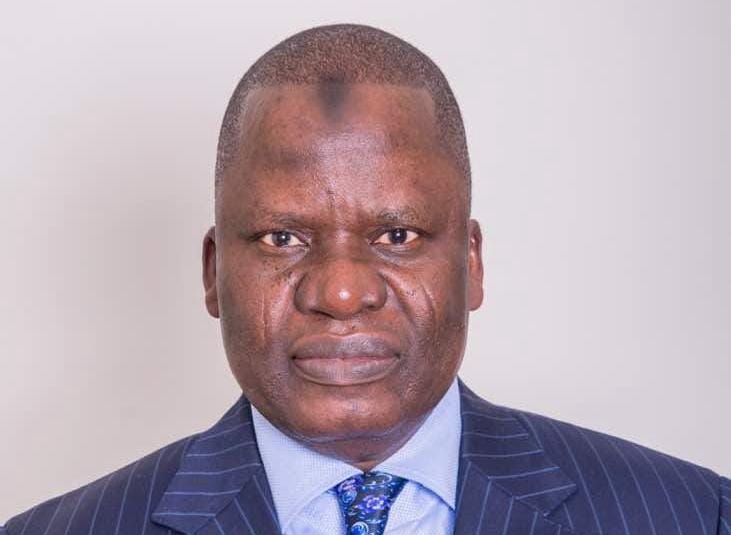
By Suleyman A. Ndanusa, PhD, OON
In Jamnagar, on India’s western coast, stands a refining and petrochemical complex that changed India’s position in the global energy market. Its story is remarkable not because India discovered an ocean of crude oil beneath Gujarat, but because an Indian company discovered that industrial capability could be more valuable than natural endowment.
Reliance Industries built the first Jamnagar refinery in the 1990s at a scale many considered unnecessarily ambitious. It was India’s first major private sector refinery and one of the largest industrial projects undertaken in the country. Reliance says the complex was commissioned in approximately 30 months, an extraordinary achievement for a project of such magnitude. A second export oriented refinery was subsequently constructed beside it, taking the combined complex to roughly 1.4 million barrels per day.
The Jamnagar journey was not financed by one heroic cheque from the Ambani family. Promoter capital was important, but it was combined with public equity, domestic and international borrowing, project finance and export credit support. Reliance Petroleum approached the Indian capital market to help finance the original development. For the later US$6 billion export refinery, contemporary transaction reports indicate a financing structure of approximately 42 per cent equity and 58 per cent debt. The US Export-Import Bank provided a US$500 million loan guarantee to support the purchase of American equipment and services.
That financing structure tells us something important. The risk was deliberately shared. The promoters contributed equity and retained control. Public investors supplied risk capital. Banks provided long term debt. Export-credit institutions supported equipment purchases. Contractors and lenders imposed milestones, completion tests and financial discipline. The refinery was not simply large; it had to be bankable.
Public investors were admitted before all the risks had disappeared. They participated in the uncertainty of construction, commissioning and market development. In return, they had the possibility of capturing the value created as the project moved from engineering drawings to operating cash flow. The public market was not invited merely to admire a finished monument; it helped finance the journey.
Jamnagar’s eventual profitability did not come from size alone. Its real advantage emerged from complexity, crude flexibility, export logistics and integration with petrochemicals. The complex can process numerous crude grades, including heavier and less expensive varieties, and convert them into higher value products meeting demanding international specifications. It can purchase crude from different markets, adjust its product mix and sell into whichever geography offers the best economics.
India therefore converted a natural resource disadvantage into an industrial advantage. Oil producing countries supplied crude; Jamnagar supplied the intelligence that added value to it. There is a gentle irony in oil rich countries importing fuel from oil poor countries, but international trade has never promised to protect anyone from embarrassment.
From Jamnagar, our journey moves to the United States, where Valero Energy represents a very different model. Valero is not the product of one enormous greenfield project. The modern company developed substantially through restructuring and the acquisition of existing refineries. It assembled a portfolio across the United States, Canada and the United Kingdom, and now operates 14 petroleum refineries with combined throughput capacity of approximately 2.7 million barrels per day.
Valero is a widely held public company. Its growth was financed through combinations of retained cash flow, shares and corporate debt. Rather than ask investors to wait through the construction of one gigantic refinery, it frequently purchased operating assets, improved them, integrated them with pipelines and terminals, and sold or closed facilities that no longer justified the capital committed to them.
Its journey demonstrates the difference between financing construction and financing a refining business. Once a refinery is operational, the central questions change. Investors become less interested in how many tonnes of steel were installed and more interested in utilisation, refining margins, maintenance, operating costs, free cash flow, debt and dividends.
Valero’s profitability is openly cyclical. When product demand is strong, crude differentials are favourable and competing refineries experience outages, earnings can rise dramatically. When margins contract, environmental costs increase or a particular refinery loses competitiveness, profits can fall just as quickly. Valero has sometimes returned substantial cash to shareholders and, at other times, recognised large impairments. In 2025, it recorded a US$1.1 billion pre-tax impairment relating to its California refining operations while considering the closure or restructuring of one facility.
The lesson is sobering. A refinery’s construction cost is not its permanent market value. Investors do not continue paying homage to yesterday’s invoices. They value the future cash the asset can generate. A refinery may have cost US$20 billion to build and still be worth less if margins, regulation, maintenance requirements or market demand weaken. Concrete remembers what it cost; the market does not.
Valero also shows why good refiners conserve cash during prosperous periods. Refining margins are generous visitors but unreliable tenants. When they arrive, prudent management reduces debt, maintains its plants and returns excess capital to shareholders. It does not assume the visitors have brought furniture.
Our next stop is Ulsan in South Korea, where S-Oil presents another model: a listed company with a powerful strategic shareholder. South Korea has little crude oil of its own, yet it developed one of the world’s leading refining and petrochemical industries. S-Oil’s refinery has grown in stages over several decades, combining fuels, lubricants and petrochemicals within an export oriented industrial system.
Saudi Aramco became its strategic controlling shareholder, bringing capital, technical relationships and greater security of crude supply. S-Oil also maintained a long-term crude purchase arrangement with Aramco. The company nevertheless remained publicly listed, allowing minority investors to participate alongside the controlling shareholder.
This combination can be powerful. The strategic investor brings patient capital and feedstock security, while public listing introduces market scrutiny, disclosure requirements and access to additional equity. But it also requires a credible governance framework. Where one shareholder controls crude supply, strategic direction and the majority of votes, minority shareholders need confidence that related transactions are conducted fairly.
S-Oil’s long operating history has not removed the refining cycle. Its earnings move with margins, petrochemical conditions and maintenance requirements. Its refinery utilisation reached about 96 per cent in 2025 but fell to 85 per cent in the first quarter of 2026 and 76 per cent in the second quarter as conditions changed. Even sophisticated refineries do not operate at full capacity because an annual report has declared it desirable.
Saudi Arabia’s SATORP and YASREF ventures take us to a fourth funding model. These were not conventional public companies financed by millions of retail shareholders. They were strategic joint ventures backed by large national and international oil companies.
SATORP brought together Saudi Aramco and TotalEnergies. YASREF combined Saudi Aramco and China’s Sinopec. The sponsors contributed equity, crude supply, technology, project management capability and market access. Debt was then raised against the strength of the sponsors and the projected cash flows of the facilities. YASREF, which processes about 400,000 barrels of crude per day, involved a reported total investment of approximately US$8.6 billion and subsequently obtained substantial syndicated financing.
The ownership arrangement reduced several risks simultaneously. Saudi Aramco could assure feedstock. Its international partners brought refining and marketing expertise. The projects were constructed with clearly defined shareholder agreements and supported by lenders able to monitor completion, performance and debt service requirements.
But SATORP and YASREF are not independently listed companies. Their shares do not trade daily, and their standalone valuations and dividend histories are not as visible as those of Valero or S-Oil. They are therefore strong comparators for construction, financing, crude supply and industrial integration, but weak comparators for deciding the fair share price of a publicly listed refinery.
This distinction is often neglected in enthusiastic valuation exercises. Two plants may process similar quantities of crude without their companies deserving similar valuations. One may be a privately held joint venture with guaranteed feedstock and sponsor support. Another may be a standalone listed company purchasing crude at market prices. A barrel is a unit of capacity, not a complete valuation model.
Malaysia’s Pengerang complex provides yet another variation. Petronas, the Malaysian state owned energy company, developed a major integrated refinery and petrochemical project and later brought Saudi Aramco into the venture as an equal partner. Aramco’s investment provided both equity and an arrangement to supply a substantial part of the refinery’s crude requirements.
The complex combined a refinery of approximately 300,000 barrels per day with petrochemical production, storage, terminals, utilities and supporting infrastructure. It was conceived not as an isolated plant but as the anchor of a broader industrial ecosystem.
Its journey was not painless. Construction, commissioning and operational setbacks delayed the smooth emergence of earnings. Strong sponsors and state ownership could supply patient capital, but they could not abolish engineering risk. Money may be patient; machinery can still be temperamental.
The ownership structure has also evolved. In May 2026, Aramco and Petronas announced the transfer of Aramco’s interests to Petronas, which would make the Malaysian company the full owner of the refining and petrochemical ventures, subject to completion conditions.
The Pengerang experience demonstrates that strategic partners may enter at one development stage and depart at another. An equity partnership is not an everlasting friendship society. Each investor evaluates whether the asset continues to serve its commercial strategy.
Brazil’s Petrobras offers a mixed public-private model. The company is controlled by the Brazilian government but also has private shareholders and securities traded in domestic and international markets. Its funding has come from government capital, retained earnings, bonds, bank borrowing and public equity. Unlike a standalone refiner, Petrobras also produces crude oil, giving it a large integrated upstream business.
Integration provides some protection against the refining cycle. When crude prices rise and refinery input costs come under pressure, upstream earnings may improve. A standalone refiner buying crude at market prices does not enjoy the same natural hedge. This makes Petrobras a useful corporate comparator but an imperfect valuation comparator for a pure refining company.
Petrobras has achieved strong operational performance. Its refinery utilisation reached 93.2 per cent in 2024, with record production of gasoline and low sulphur diesel. But its profitability journey has also been shaped by politics. At various times, domestic fuel pricing, investment decisions and dividend policies have been influenced by government priorities.
This is the central risk of a state controlled listed company. Private investors may own shares, but government still holds the steering wheel. The destination can change after an election, occasionally while the passengers are sleeping.
The experiences of Tema Oil Refinery in Ghana and Nigeria’s government owned refineries provide the less glamorous part of our tour. They demonstrate that public ownership is not the same as public value.
Tema began with Italian ownership before the Ghanaian government became the sole shareholder in 1977. Over time, political pricing, weak working capital, accumulated debt, maintenance problems and operational interruptions undermined its performance. Nigeria’s refineries followed a similarly unhappy route on a larger financial scale. Government financed construction, borrowed for rehabilitation, allocated crude, approved operating budgets and repeatedly announced reopening dates. The public carried the risk but rarely received reliable products, profits or dividends.
The problem was not state ownership alone. Saudi Aramco and Petronas show that publicly owned enterprises can build and operate successful refining systems. The difference lies in governance, professional autonomy, maintenance, commercial pricing and accountability.
There are therefore no magical ownership labels. A privately owned refinery can fail. A government refinery can succeed. A listed company can destroy value. A strategic joint venture can encounter delays. The real divide is between disciplined and undisciplined capital.
This global journey provides a more useful background for examining the Dangote Petroleum Refinery.