By Desire Emmanuel
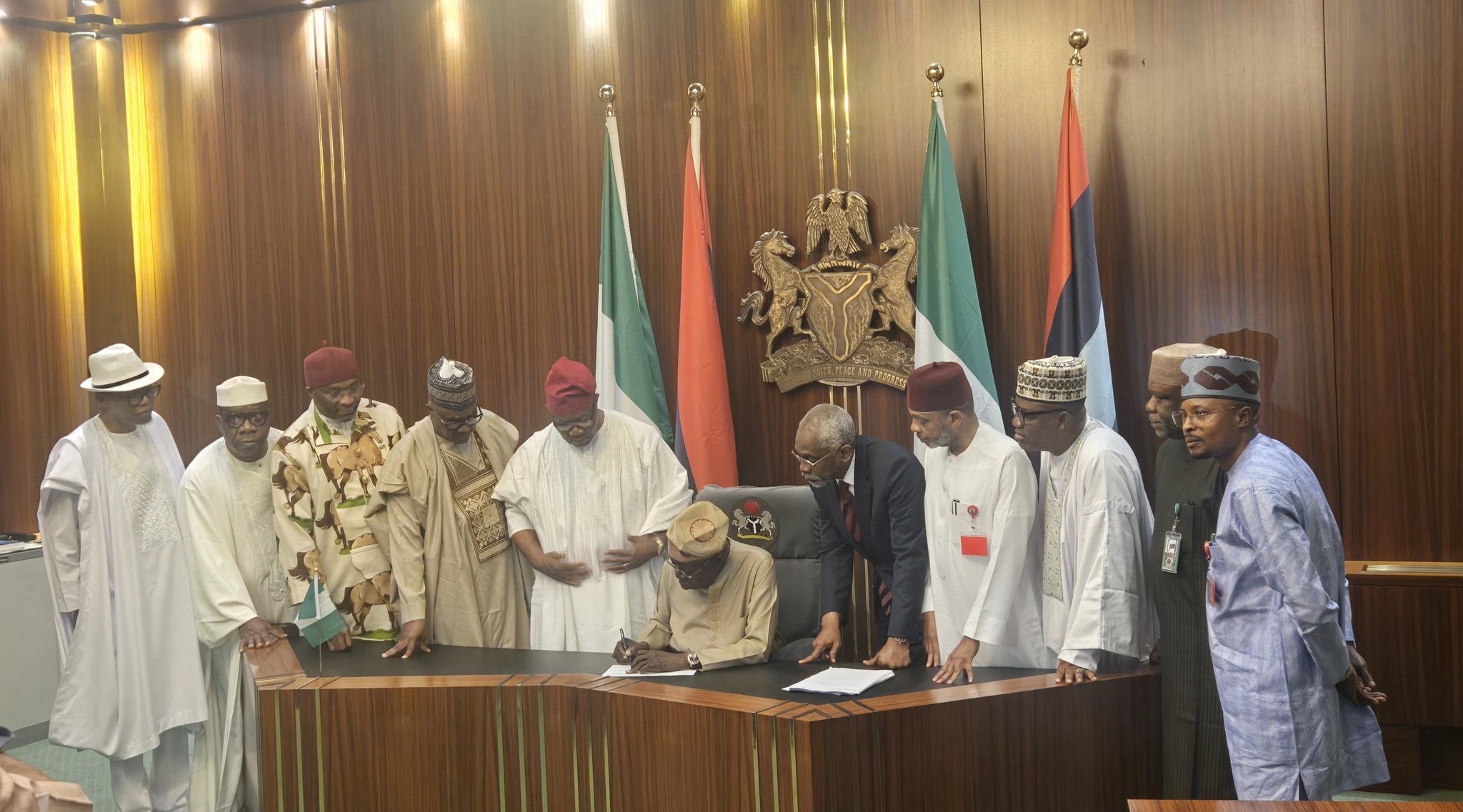
President Bola Tinubu on Wednesday, February 18, signed into law the Electoral Act 2026 (Amendment) Bill.
The development follows the passage of the legislation by the National Assembly on Tuesday after months of debate, review and amendments by both chambers.
The signing ceremony took place at the State House around 5:00 p.m., with top National Assembly leaders, including the Senate President, Godswill Akpabio Speaker of the House of Representatives, Tajudeen Abbas; and the Chief of Staff to the President, Femi Gbajabiamila, present.
Tinubu said the essence of democracy was to have very solid discussions committed to national development and nation-building, essential for the stability of the nation.
“It’s not as important as the history aspects of this. What is crucial is the fact that you manage the process to the extent there will be no confusion, no disenfranchisement of Nigerians, and that we are all going to see democracy flourish.
“No matter how good the system is, it’s managed by the people, promoted by the people, and the result is finalised by the people,” the president said.
“And when you look at the crux of various arguments, maybe Nigerians should question our broadband capability. How technically are we today? How technically will we be tomorrow to answer the call of either real-time or not?
“As long as you appear personally, as a manual voter in any polling booth, a ballot paper is given to you manually, you decide in a corner and thumbprint the passing of your choice, you cast your votes, without hindrance and any interference, ballots are subsequently counted manually, sorted, and counted manually.
“It’s just the arithmetic accuracy that is to enter into Form EC8A. It’s the manual, essentially. The transmission of that manual result is what we’re looking at,” the president added