

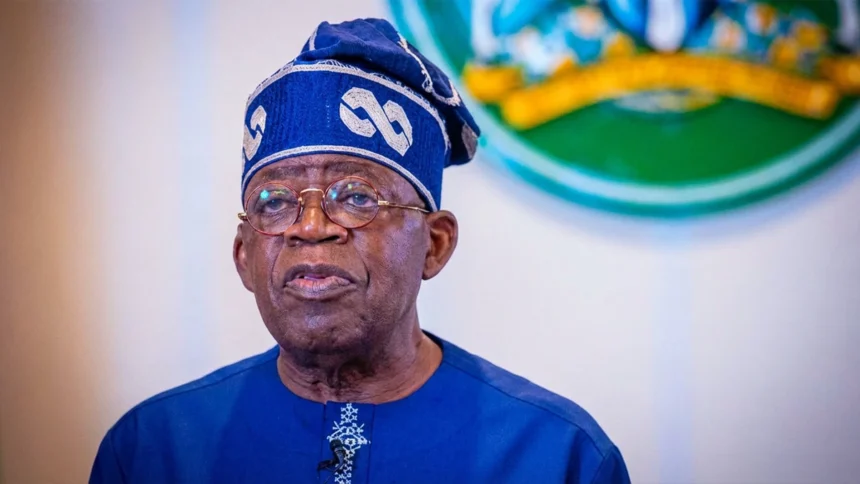
President Bola Tinubu on Thursday, October 1, admitted that some Nigerian families still struggle for the next meal, the next school fee, the next medical bill, or simply enough money to get to work, but added that their circumstances did not begin with the reforms of the last three years.
He said this in his nationwide broadcast to mark Nigeria’s 66th Independence anniversary, stating that his administration cannot erase in four years what accumulated over generations.
He said: “I am also conscious that millions of our fellow citizens cannot wait for tomorrow. Some Nigerian families still struggle today for the next meal, the next school fee, the next medical bill, or simply enough money to get to work. Their circumstances did not begin with the reforms of the last three years. Their struggle is the accumulated consequence of decades of low productivity, inadequate infrastructure, insufficient opportunity and institutions that too often failed those who needed them most.
“We cannot erase in four years what accumulated over generations. But we can change its course. We can build an economy that steadily lifts people out of poverty while ensuring that those who remain vulnerable are not abandoned along the way.
“That is why we are strengthening direct support for the poorest households and improving the National Social Register so that assistance reaches those who genuinely need it.
“It is why the Nigerian Education Loan Fund is ensuring that the child of a low-income family need not surrender the dream of higher education simply because his parents cannot afford the fees.
“It is why CREDICORP is giving working Nigerians access to consumer credit, allowing people to acquire vehicles, solar systems, digital devices and other essential assets without first having to accumulate years of savings.
“That is why, working with our states and local governments, we will continue to strengthen primary healthcare, basic education, and the essential public services poorer Nigerians depend on most. Since 2023, we have paid salaries and pensions on time and in full. We have reformed the national pension program to benefit retirees and the vulnerable.
“These programmes are not substitutes for prosperity. They are a bridge to aid our nation’s citizens on their path towards it. Our objective is not to manage poverty more efficiently.”