


By Olatunbosun Obafemi
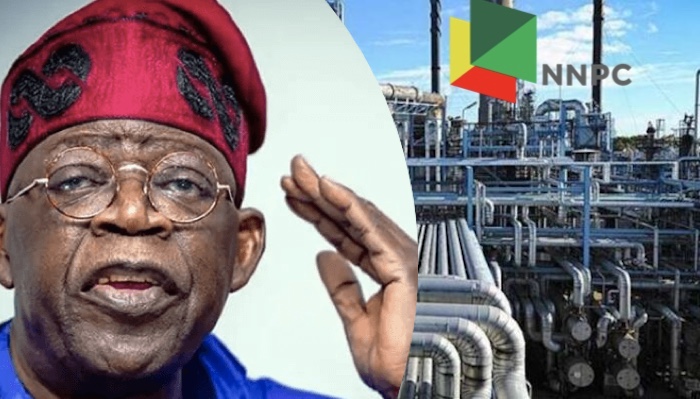
In a decisive move aimed at revitalizing Nigeria’s oil and gas sector, President Bola Ahmed Tinubu on Thursday inaugurated a new board for the Nigerian National Petroleum Company Limited (NNPC Ltd), tasking them with transforming the nation’s energy fortunes and propelling economic recovery.
Describing the appointees as “the best Nigeria has,” Tinubu urged the board to act swiftly and ambitiously. “Show the world we can turn our own fortunes around – not tomorrow, but today,” he said during the inauguration ceremony in Abuja, held just ahead of the APC National Summit.
At the helm is Bashir Bayo Ojulari, the new Group Chief Executive Officer, renowned for leading Renaissance Africa Energy’s $2.4 billion acquisition of Shell’s Nigerian assets. Ahmadu Musa Kida, an oil industry veteran with stints at Elf and Total, takes on the role of non-executive chairman.
They are joined by an elite roster of industry figures including former NLNG CEO Babs Omotowa, Austin Avuru, and David Ige. The board’s composition reflects geopolitical balance and a national mandate to act.
President Tinubu laid out bold targets: increase crude output from the current 1.7 million barrels per day (bpd) to 1.9 million by year-end, hit 2 million bpd by 2027, and reach 3 million by 2030. On gas, the goal is 10 billion cubic feet per day by the end of the decade. Refining capacity is also under the spotlight, with expectations to raise domestic output to 200,000 bpd by 2027 and 500,000 by 2030.
“This is not an aspiration; it’s a command,” Tinubu declared.
The appointments have already drawn international attention. Minister of State for Petroleum Resources, Heineken Lokpobiri, said he received calls from fellow ministers and OPEC officials who described the team as Nigeria’s last best hope. “If they fail, we’ll have to look to Mars,” he quipped.
NNPC Ltd has reportedly begun intensive strategy sessions, with Ojulari announcing an early production uptick of 200,000 barrels over the past two months.
For a sector long weighed down by inefficiency and opacity, the board’s success could mark a turning point. But as observers have noted, ambition must be matched by execution.
The clock has started. Nigeria’s energy future – and economic revival—may well depend on how this team performs.