

By Bosun Obafemi
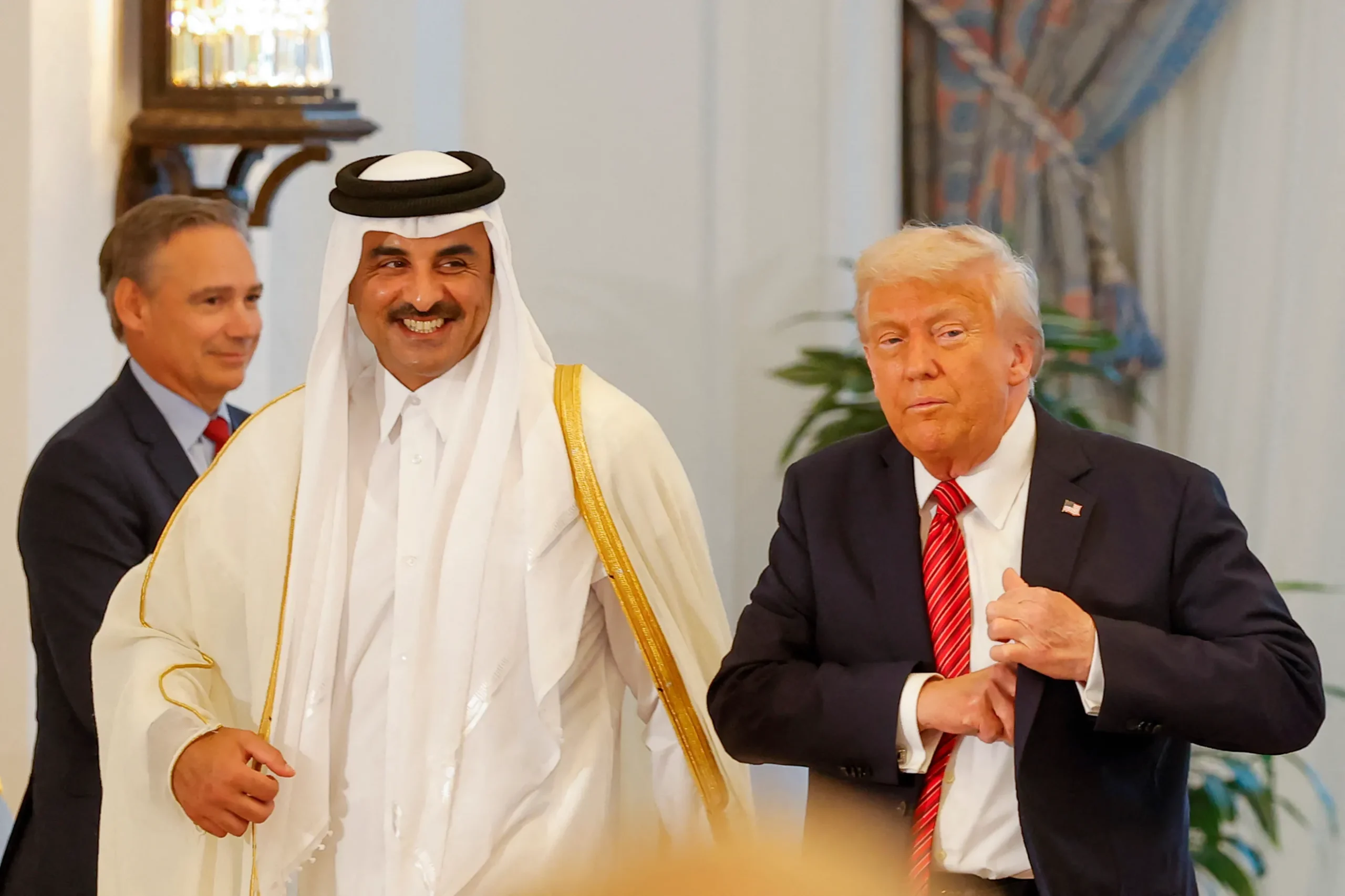
President Donald Trump has concluded the second leg of his Middle East tour in Doha, Qatar, marking a significant chapter in U.S.-Qatar relations. The visit, part of a four-day trip through Saudi Arabia, Qatar, and the United Arab Emirates, was Trump’s first official state visit since returning to office in January. The agenda focused heavily on economic cooperation and defense partnerships, though it was also clouded by controversy over a luxury aircraft offer from Qatar.
At the heart of the visit was the announcement of economic agreements valued at over $1.2 trillion. A standout deal included a $96 billion order from Qatar Airways for up to 210 Boeing 787 Dreamliner and 777X aircraft powered by GE Aerospace engines. This order is projected to support 154,000 U.S. jobs annually, with over one million jobs expected to be created during the aircrafts’ production.
Additional agreements included:
- McDermott: An $8.5 billion commitment for energy infrastructure with QatarEnergy.
- Parsons: Up to $97 billion in engineering and infrastructure projects.
- Quantinuum and Al Rabban Capital: A $1 billion joint venture for quantum technology and workforce development.
- Raytheon (RTX): A $1 billion contract to supply counter-drone defense systems.
- General Atomics: Nearly $2 billion for MQ-9B remotely piloted aircraft.
- Security Partnership: A Statement of Intent outlining over $38 billion in defense investments, including enhancements to Al Udeid Air Base.
These deals build on a growing economic relationship. In 2024, bilateral trade reached $5.64 billion, resulting in a $2 billion surplus for the U.S. Qatar’s greenfield investments in the U.S. reached $3.3 billion in 2023, spanning hospitality, IT, tourism, and energy. Since 2019, QatarEnergy has invested $18 billion in U.S. energy projects, including contributions to the Golden Pass LNG Terminal and the Golden Triangle Polymers Plant.
The visit also emphasized the U.S.-Qatar strategic defense partnership. Qatar hosts Al Udeid Air Base, the largest American military installation in the Middle East. In 2024, the two nations extended their defense cooperation agreement by 10 years, reinforcing Qatar’s 2022 designation as a Major Non-NATO Ally.
Trump’s talks in Doha likely covered regional flashpoints, including mediation in the Gaza conflict and discussions on easing U.S. sanctions on Syria under the Caesar Act. Qatar’s ongoing ties with Syria’s President Ahmed al-Sharaa were expected to play into these discussions, as Trump reiterated his intention to ease sanctions to encourage regional stability.
The visit was not without controversy. Qatar reportedly offered Trump a customized Boeing 747-8 aircraft, valued at $400 million, to be used as Air Force One. Trump brushed off concerns over ethics, calling the offer a matter of national prestige and stating it would be “stupid to turn down.” He emphasized the symbolic value of having the most impressive aircraft among Gulf leaders.
The offer has sparked debate over constitutional ethics, particularly in relation to the emoluments clause. A White House spokesperson defended the offer, insisting no favors were expected in return. Meanwhile, a Qatari official stated that the offer was still under review and no final decision had been made.
The situation has drawn added scrutiny due to the Trump Organization’s expanding business footprint in Qatar. Eric Trump recently finalized a deal to develop the Trump International Golf Club outside Doha, which will include luxury villas and an 18-hole course. Jared Kushner’s private equity firm has also reportedly received funding from Qatari sovereign wealth sources, fueling concerns over potential conflicts of interest.

Trump’s visit to Qatar was marked by historic economic agreements and renewed defense commitments, even as ethical concerns clouded some aspects of the trip. It reinforced a transactional approach to diplomacy, focused on tangible economic and military outcomes. While the long-term impact of the deals remains to be seen, the visit has undeniably deepened U.S.-Qatar ties at a time of shifting geopolitical dynamics.