

By Olatunbosun Obafemi
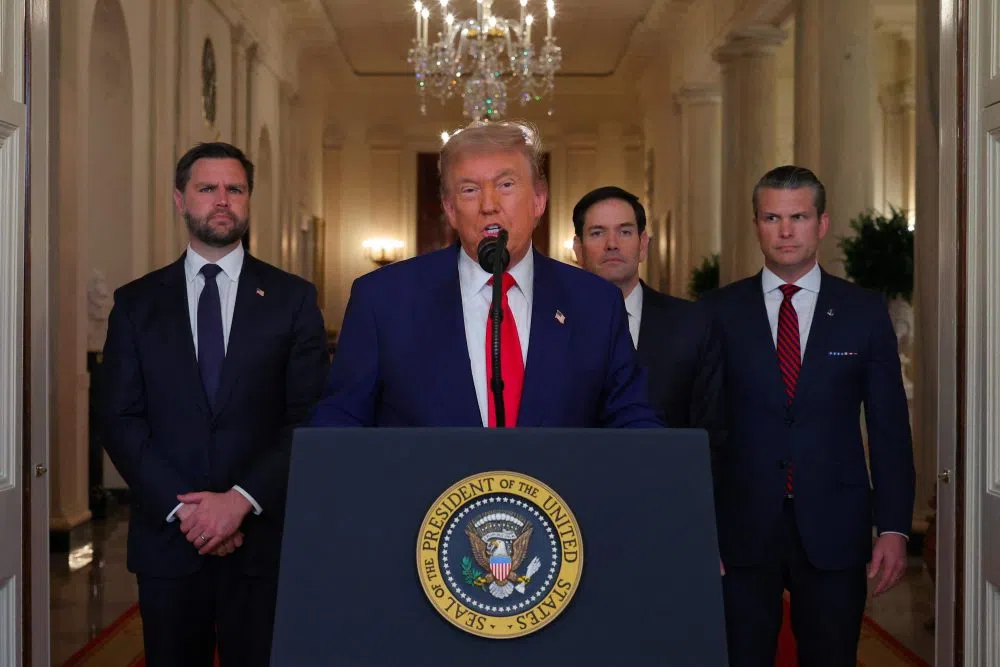
New satellite imagery confirms that U.S. airstrikes have inflicted severe damage on Iran’s major nuclear facilities, including the deeply buried Fordow enrichment site. President Donald Trump called the June 21 operation a “spectacular military success,” claiming that the strikes “completely and totally obliterated” Iran’s nuclear enrichment capabilities.
The operation—codenamed Midnight Hammer—targeted three key sites: Fordow, Natanz, and Isfahan. According to General Dan Caine, Chairman of the Joint Chiefs of Staff, initial battlefield assessments suggest “extremely severe damage and destruction” at all three locations, though full evaluations are ongoing.
At Fordow—previously considered impregnable due to its location under a mountain—imagery from Maxar and Planet Labs shows multiple large craters, extensive ash cover, and blocked tunnel entrances. Fordow’s underground network had long eluded Israeli strikes, but U.S. forces employed 14 GBU-57/B “bunker buster” bombs—30,000-pound munitions used in combat for the first time.
The strikes were part of a carefully choreographed attack. A U.S. submarine launched over two dozen Tomahawk cruise missiles at aboveground structures in Isfahan, followed by B-2 stealth bombers entering Iranian airspace. U.S. fourth- and fifth-generation aircraft swept ahead to suppress Iranian defenses. No shots were reportedly fired at American aircraft during the mission.
Speaking on Sunday, Defense Secretary Pete Hegseth said the U.S. had “achieved destruction of capabilities” at Fordow. “Iran’s nuclear ambitions have been obliterated,” he said.
Meanwhile, Israel continued its strikes on Iran, prompting retaliatory missile attacks on several Israeli cities. Iranian Foreign Minister Abbas Araghchi condemned the U.S. action as “outrageous,” warning of “everlasting consequences.”
President Trump stated further U.S. military action is possible if Tehran refuses to return to negotiations, signaling a new phase of heightened confrontation between the U.S. and Iran.