By Nchetachi Chukwuajah
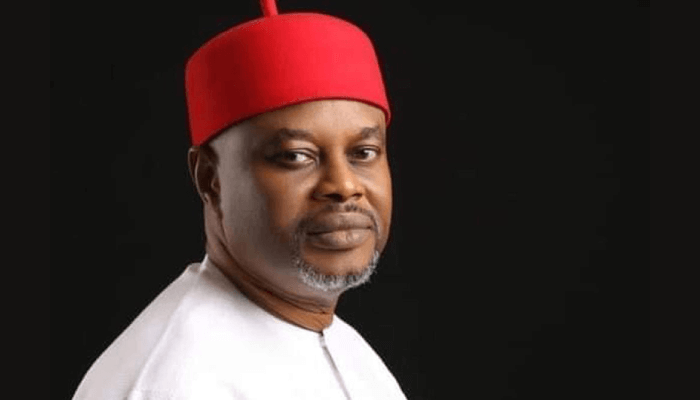
The Minister of Innovation, Science and Technology, Geoffrey Uche Nnaji, on Tuesday, October 7, resigned his office following an alleged certificate forgery scandal.
His resignation adds to the growing list of ministers who have thrown in the towel or have been sacked, particularly since Nigeria’s return to democracy in 1999, which has the likes of the former Minister of Finance, Kemi Adeosun, for a similar scandal.
While several of these high-profile ministerial resignations and sacks are often punctuated by scandals or political ambition, they have shaped Nigeria’s democratic landscape and raised questions about enforcement of the rule of law where applicable.
With the recent addition to the list, Impact Nigeria Newspaper highlights the number of Nigerian ministers who have resigned their offices or were sacked since 1999.
First on the list is Fabian Osuji, a former Minister of Education, who was sacked in 2005 by former President Olusegun Obasanjo over allegations of bribery during a United Kingdom (UK) education partnership bid.
Osuji was followed by Professor Adenike Grange, a former Minister of Health, who resigned in 2008 under President Umaru Yar’Adua’s administration amid an alleged N300 million vaccine procurement fraud scandal. The minister had claimed that she was ill-advised by directors.
Similarly, the then Minister of State for Health, Gabriel Aduku, resigned in 2008 alongside Grange over the same fraud scandal.
In 2012, the then Minister of Power, Barth Nnaji, was forced out by former President Goodluck Jonathan over alleged interference in the Afam Power Plant bidding, although he claimed he voluntarily resigned.
Perhaps, one of the high-profile resignations is that of Stella Oduah, a former Minister of Aviation, who resigned in 2014 after a N255 million bulletproof BMW scandal, which she was later cleared of.
Similar in scale to Uche Nnaji’s is the resignation by a former Minister of Finance, Kemi Adeosun, in 2018 under late former President Muhammadu Buhari. Adeosun resigned following a National Youth Service Corps (NYSC) exemption certificate forgery scandal.
In 2021, a former Minister of Power, Saleh Mamman, resigned after an indictment by the Economic and Financial Crimes Commission (EFCC) over a N2 billion COVID-19 fund mismanagement case.
In the build-up to the 2023 general election, 10 ministers under late former President Buhari resigned in 2022 to contest political offices, following his directive in this regard. The ministers who resigned the Attorney General of the Federation and Minister of Justice, Abubakar Malami; the Minister of Niger Delta Affair, Godswill Akpabio; Minister of Transportation, Rotimi Amaechi, and Minister of State, Niger Delta Affairs, Tayo Alasoadura.
Others are the Ministers of Science, Technology and Innovation, Ogbonnaya Onu; Women Affairs, Pauline Tallen; State, Petroleum Resources, Timipre Sylva; State, Mines and Steel Development, Uche Ogar; State for Education, Chukwuemeka Nwajiuba; and Labour, Chris Ngige.
In January 2024, President Bola Tinubu suspended the Minister of Humanitarian Affairs and Poverty Alleviation, Betta Edu, over the alleged diversion of more than N585 million of public funds into a personal bank account.
In October 2024, President Tinubu also sacked five ministers, including the Minister of Women Affairs, Uju Kennedy-Ohanenye; Minister of Tourism, Lola Ade-John; Minister of Education, Tahir Mamma; Minister of State, Housing and Urban Development, Abdullahi Gwarzo; and Minister of Youth Development, Jamila Ibrahim.